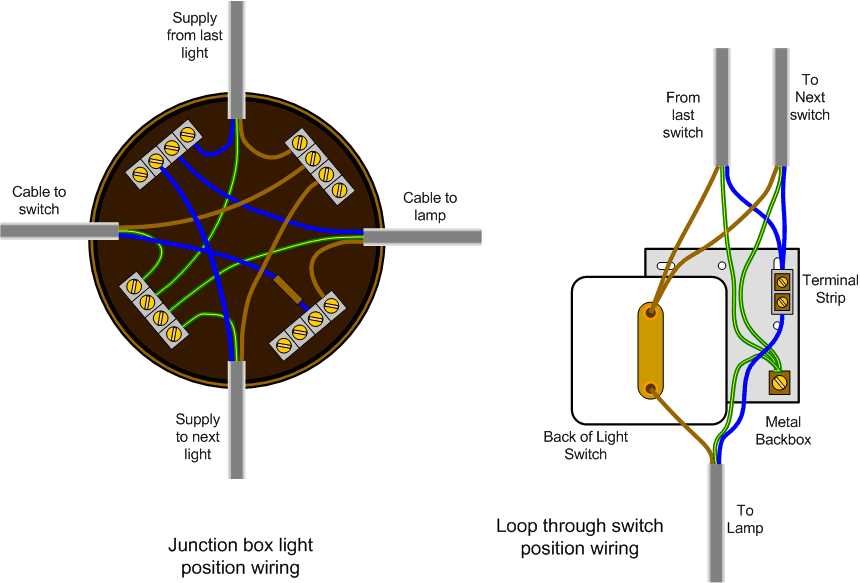
Start by identifying the key components involved in any typical domestic setup. You’ll need to understand how the wires are organized, particularly the connections for power supply, switches, and light fixtures. This knowledge is essential for safe installation and troubleshooting.
The first thing to check is the wiring layout. In the UK, you’ll usually encounter a system where the live wire connects to the switch, and the neutral wire goes directly to the light fitting. The earth wire should always be properly connected to ensure safety against electrical shocks.
Once you know the basics, focus on the power supply lines. Ensure that your connections for the live wire (typically red or brown) and neutral wire (blue) are secure and follow the standard UK color coding. Double-check that your grounding is connected to a solid metal point to prevent faults.
Another important aspect is the switch configuration. Depending on your circuit setup, you might be dealing with a simple single-pole switch or a more complex multi-way switch system. Understanding how the switch controls the flow of electricity to the fixture is key to ensuring correct operation.
Lastly, before proceeding with the actual installation, make sure to test your connections. After wiring everything, turn on the power and verify that each switch works as intended and that all lights are functioning. If something doesn’t work, go back to check the connections and ensure no loose wires or short circuits exist.
House Wiring System in the UK
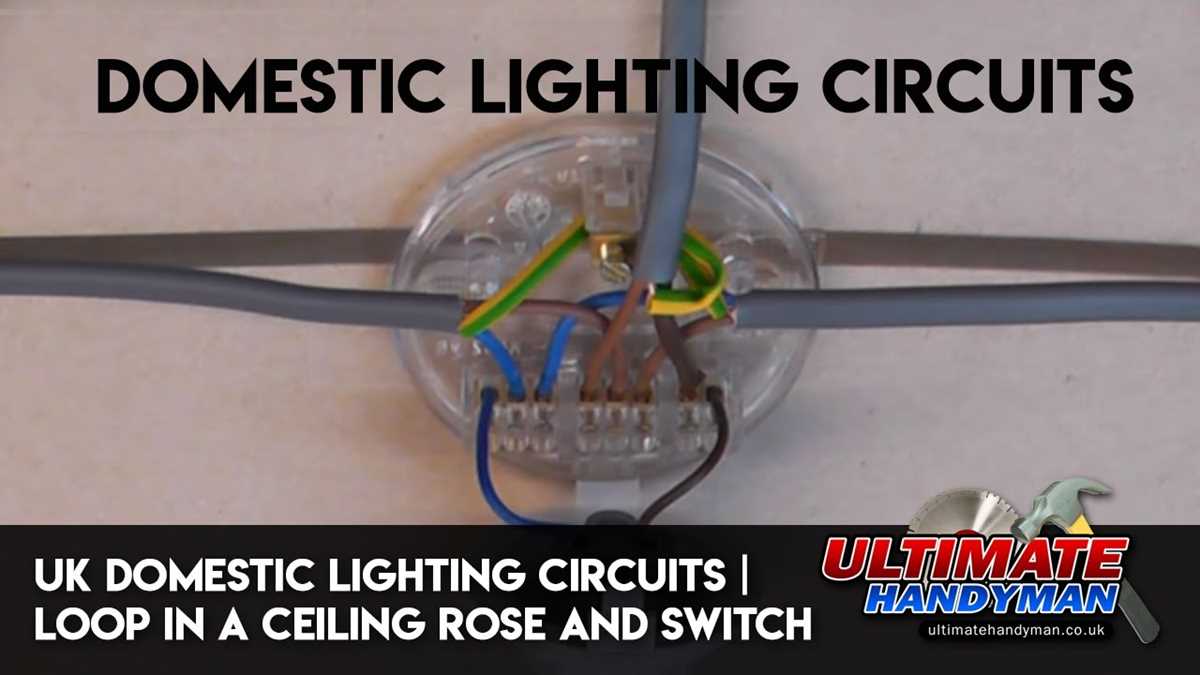
The wiring setup in a typical UK residence follows a standardized pattern, with specific attention paid to power, neutral, and grounding connections. Understanding the basic structure is key to ensuring safe and functional installations.
In a standard setup, the live wire is usually colored brown, and the neutral wire is blue. These wires should be connected correctly to avoid short circuits or electrical faults. The earth wire, typically green and yellow, provides protection against electrical shocks and must always be securely grounded to a metallic surface.
Switch Configuration and Placement
For any electrical setup, the positioning and configuration of switches are critical. A common system involves a single-pole switch that controls one light or a multi-way switch to control lights from multiple locations. When installing a switch, ensure the correct connection of the live wire to the switch, ensuring that it interrupts the power flow safely when off.
- Brown wire: Connects to the live terminal of the switch
- Blue wire: Connects directly to the neutral terminal of the light fixture
- Green/Yellow wire: Grounding connection for safety
Common Problems and Troubleshooting Tips
During installation, wiring faults such as loose connections or incorrect wire pairing can lead to malfunction. If lights flicker or switches don’t work properly, check all connections for security. A multimeter can be used to test the continuity of the wires, ensuring proper flow of electricity.
Additionally, if there is no power in some parts of the system, verify that the power is reaching the fixture from the switch. If the live wire isn’t connected properly, the system won’t receive electricity, causing a failure. Always ensure that each component is correctly wired according to the color codes and connection points.
Understanding the Basic Wiring Layout for Domestic Lighting
The first step in setting up any electrical system is understanding the basic layout. Typically, the system follows a simple configuration: the live wire, neutral wire, and earth wire. Each one plays a different role, and all must be correctly connected to ensure safety and functionality.
The live wire (brown) is the main conductor, supplying power to the fixtures. It is connected to the switch, which controls the flow of electricity. The neutral wire (blue) completes the circuit, allowing the current to return to the distribution board. The earth wire (green/yellow) ensures that in case of a fault, the system is safely grounded, preventing potential electric shocks.
Before connecting, ensure all wires are of the correct gauge and rated for the specific load. The live and neutral wires are typically run in parallel to the lighting points, with the earth wire connecting to the metal casings of fixtures and switch boxes.
At the switch, the live wire is interrupted when turned off, stopping the current from flowing to the light. A common mistake is confusing the switch terminals; the live wire should be connected to the terminal marked for the incoming live supply, and the outgoing live should be connected to the fixture’s live terminal.
It’s also important to correctly identify the terminals on light fixtures. The terminals are usually marked for live (L), neutral (N), and earth (E). Ensure that each wire is connected securely to the corresponding terminal to avoid short circuits or malfunction.
In multi-way switching systems, such as controlling lights from two or more locations, travelers (wires that connect the switches) must be correctly connected. These systems require more attention to detail in both the layout and the wiring of the switches to avoid cross-wiring or incorrect connections.
If you’re using a dimmer switch, make sure it’s designed for the specific load of your lighting system. Some dimmers are only compatible with certain types of bulbs, like LED or incandescent, and using the wrong combination could lead to malfunction.
Lastly, always double-check the connections before powering up the system. Test the functionality by flipping the switch and confirming that the light turns on and off correctly. Use a multimeter to check for voltage across the live and neutral terminals, ensuring everything is wired as per the plan.