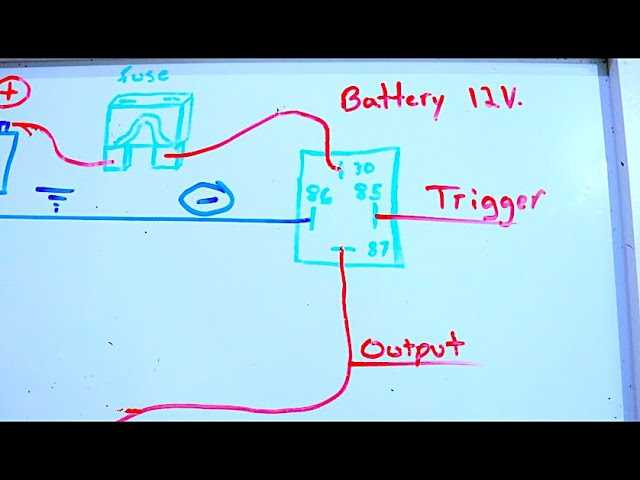
Ensure the control coil receives stable power between 5V and 12V to prevent overheating and maintain consistent activation. Verify the coil resistance before applying voltage to avoid accidental damage.
Attach the load terminals correctly by connecting the common terminal to the power source and the normally open contact to the device. Use insulated connectors to reduce the risk of short circuits.
Test switching action with a multimeter by monitoring continuity between common and output terminals while energizing the coil. This confirms proper engagement and identifies misconnected contacts.
Secure all connections with a small terminal block or solder joints to minimize vibration-induced disconnections. Ensure wires are rated for at least 1.5 times the current drawn by the connected device.
Relay 4 Pin Connection Guide and Practical Applications
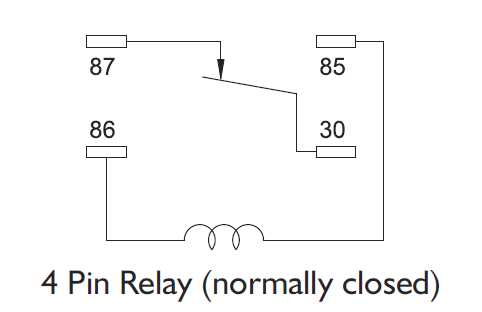
Connect the control coil terminals to a stable DC source rated at 5–12V and verify proper polarity to prevent coil burnout. Use fast-acting fuses or current-limiting resistors when driving inductive loads to protect both the switch and the power supply from voltage spikes.
Integrate the load contacts into switching applications by connecting the common contact to the supply line and the normally open contact to the device. This setup is suitable for small motors, LED arrays, and home automation systems, allowing safe isolation of control electronics from high-current paths.
Identifying Relay Pins and Understanding Coil Function
Locate the coil terminals first by checking for the pair of leads that show low resistance, typically between 50Ω and 400Ω for standard 5V–12V coils. Mark these as control connections to prevent confusion with the switching contacts.
Measure the coil resistance with a multimeter to confirm the control side. Values outside the expected range may indicate damage or incorrect orientation. Use a current-limited power source to energize the coil and observe mechanical actuation without exceeding rated voltage.
Identify the contact terminals by looking for the common, normally open, and normally closed leads. These are often positioned opposite the coil terminals and are larger gauge to handle load currents from 1A to 10A depending on the model.
- Common (COM): Connects to the supply or load.
- Normally Open (NO): Remains disconnected until the coil is energized.
- Normally Closed (NC): Provides continuity when the coil is de-energized.
Test the switching behavior using a low-current test device or LED circuit. Apply voltage to the coil and verify that the NO contact closes while the NC opens. This confirms proper identification and prevents damage to high-current loads.
Document the terminal layout and coil orientation for repeated installations. Consistent labeling reduces errors in automotive, industrial, and home automation applications where multiple four-terminal switches are used in parallel systems.