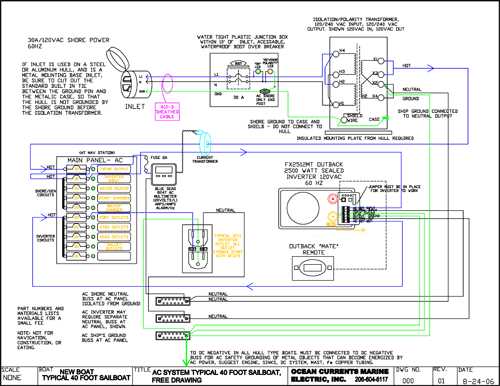
Install dual battery banks with clear positive and negative leads to maintain uninterrupted energy supply and reduce voltage drop during extended voyages. Ensure each connection uses marine-grade terminals and corrosion-resistant fasteners for long-term durability.
Route all conductors along reinforced channels to prevent abrasion and chafing against hull surfaces. Label circuits for navigation lights, bilge pumps, and cabin outlets to allow rapid troubleshooting and minimize risks during maintenance.
Integrate dedicated breakers for each load to isolate faults without affecting other systems. Use insulated bus bars for combining multiple sources and maintain a clear separation between AC and DC pathways to avoid interference and voltage irregularities.
Verify all junctions with a clamp meter before sealing panels, ensuring continuity and correct polarity. Document every connection point and terminal type for future upgrades or replacements, keeping the layout consistent with standard marine safety practices.
Marine System Layouts and Connection Guidelines
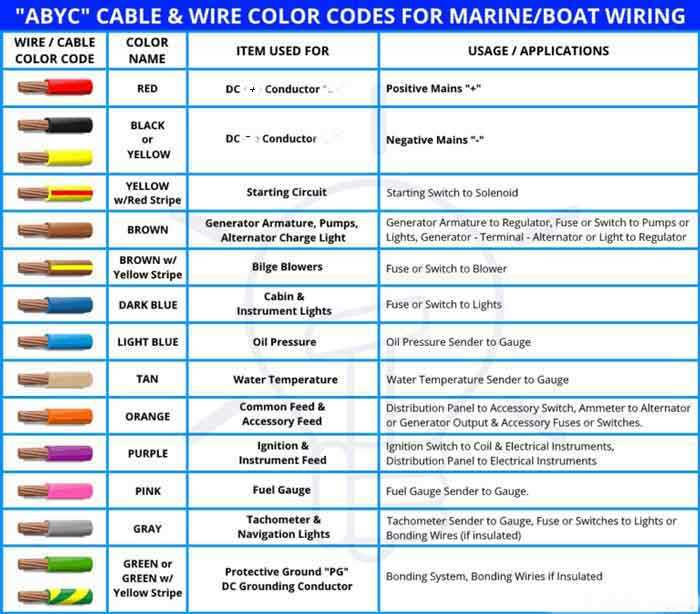
Position main power distribution panels near the centerline to reduce conductor length and voltage drop to navigation, cabin, and deck loads. Ensure all positive and negative paths are clearly separated and color-coded for rapid identification during maintenance or emergency shutdowns.
Maintain proper spacing between high-current and signal circuits to prevent interference and overheating. Use labeled bus bars for grouped circuits and install circuit protection devices at the origin of each run to isolate faults quickly while maintaining system integrity throughout the vessel.
Planning Battery and Shore Power Connections for Marine Vessels
Locate battery banks close to the vessel’s center of gravity to minimize movement impact and reduce the length of positive and negative runs. Use properly rated terminal studs and bus bars, and include clear labeling for each battery to facilitate charging and maintenance.
Integrate a battery isolator or automatic relay to manage multiple banks efficiently. This allows the starting battery to remain dedicated while auxiliary batteries provide power to onboard systems without risk of cross-draining or overloading any single source.
Shore power connections should use marine-grade inlet sockets and cables with a correctly sized overcurrent protection device at the entry point. Maintain secure grounding and bonding to prevent stray current corrosion, and route cords to avoid sharp bends or chafing against structural components.
Implement a clearly documented connection plan using color-coded terminals for AC and DC sources. Include circuit breakers and fuses near both the source and critical load points to allow rapid isolation in case of fault, ensuring both safety and uninterrupted operation of essential systems.