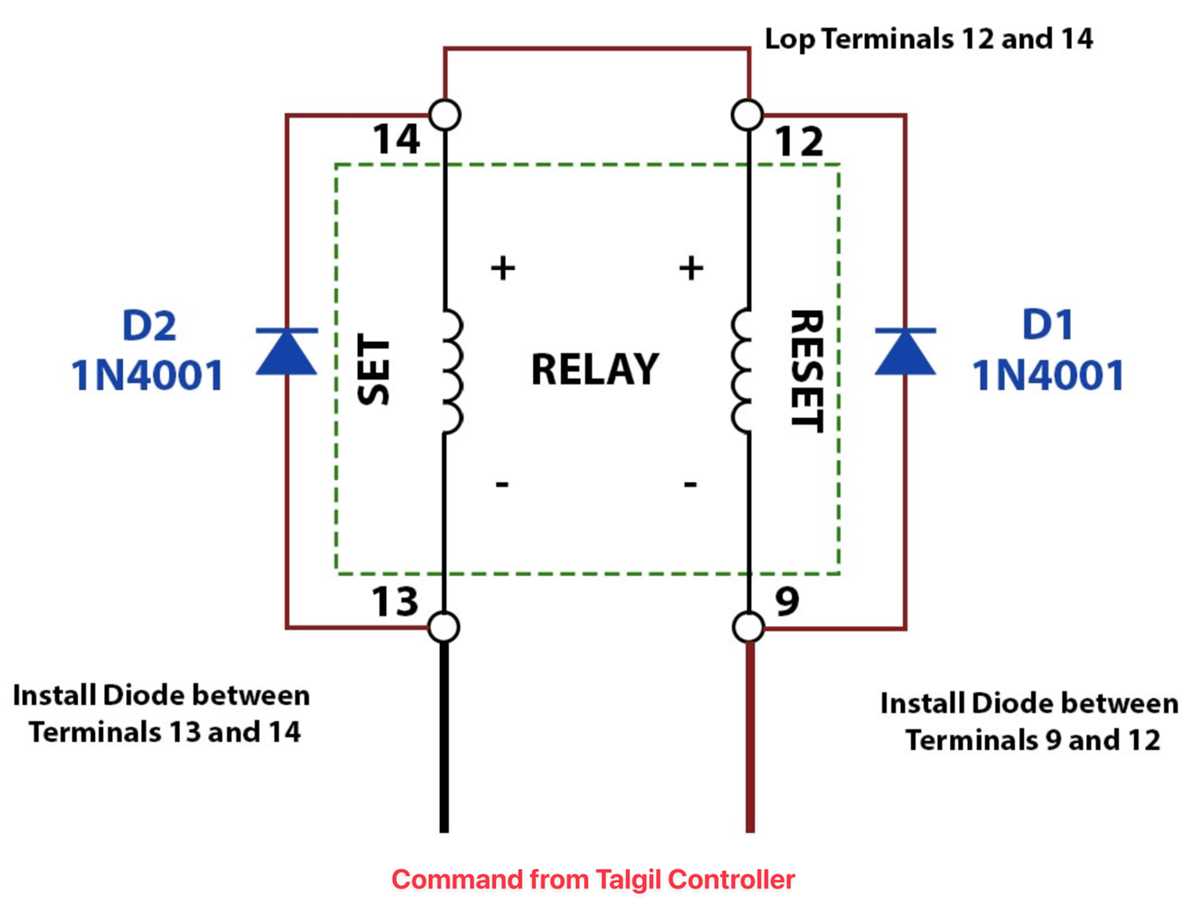
Always verify terminal labels before making any connections. Identifying the coil input, normally open, and normally closed points ensures correct operation and prevents damage to circuits.
Use a multimeter to confirm continuity across the contacts before applying power. Measuring resistance at the control points helps detect faulty components early and avoids short circuits.
Secure all fastenings and use insulated connectors for contact points exposed to vibration. Proper mechanical stability reduces the risk of accidental disconnections and improves long-term reliability.
Follow voltage ratings precisely for each component. Applying higher or lower currents than specified can cause overheating, reduce lifespan, or trigger unintended switching in connected equipment.
Relay Wiring Diagram Guide for Accurate Connections
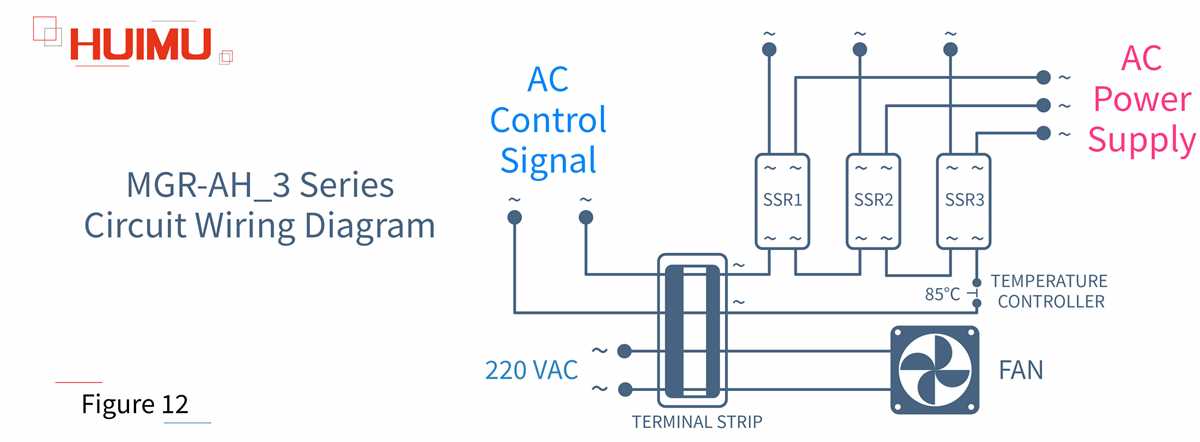
Connect control and load terminals precisely according to the component markings. Use a color-coded approach for power, ground, and switched lines to avoid misfires. Confirm each link with a continuity test before energizing the circuit to prevent accidental shorts or component burnout.
Label each contact point and maintain a reference sheet for multiple devices in a panel. Small errors in placement can trigger unwanted switching, so double-check coil polarity and switching paths. Using insulated terminals and secure fasteners increases operational stability under vibration or thermal stress.
Identifying Relay Terminals and Their Functions
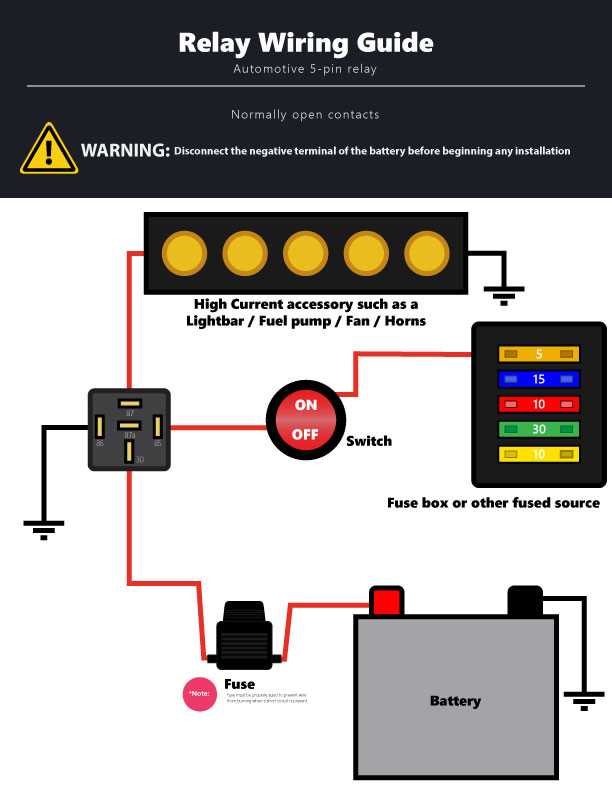
Start by recognizing coil connections which activate the switch mechanism. Marked usually with A1 and A2, these terminals must receive the correct voltage to trigger movement. Use a multimeter to check for continuity across these points before applying current.
Distinguish the contact terminals by identifying normally open (NO), normally closed (NC), and common (COM) points.
- NO closes when the coil is energized
- NC opens when the coil is energized
- COM serves as the central connection for switching
Labeling them prevents cross-connections in complex circuits.
Verify load ratings on each terminal before linking devices. Exceeding specified amperage or voltage can damage contacts, produce heat, or degrade insulation. Check manufacturer specifications for maximum switching capabilities and ambient temperature tolerances.
Keep a reference chart for multiple switching units in control panels.
- Note terminal positions
- Record polarity requirements
- Indicate voltage ranges
This ensures consistent setup and reduces troubleshooting time when expanding or maintaining the system.