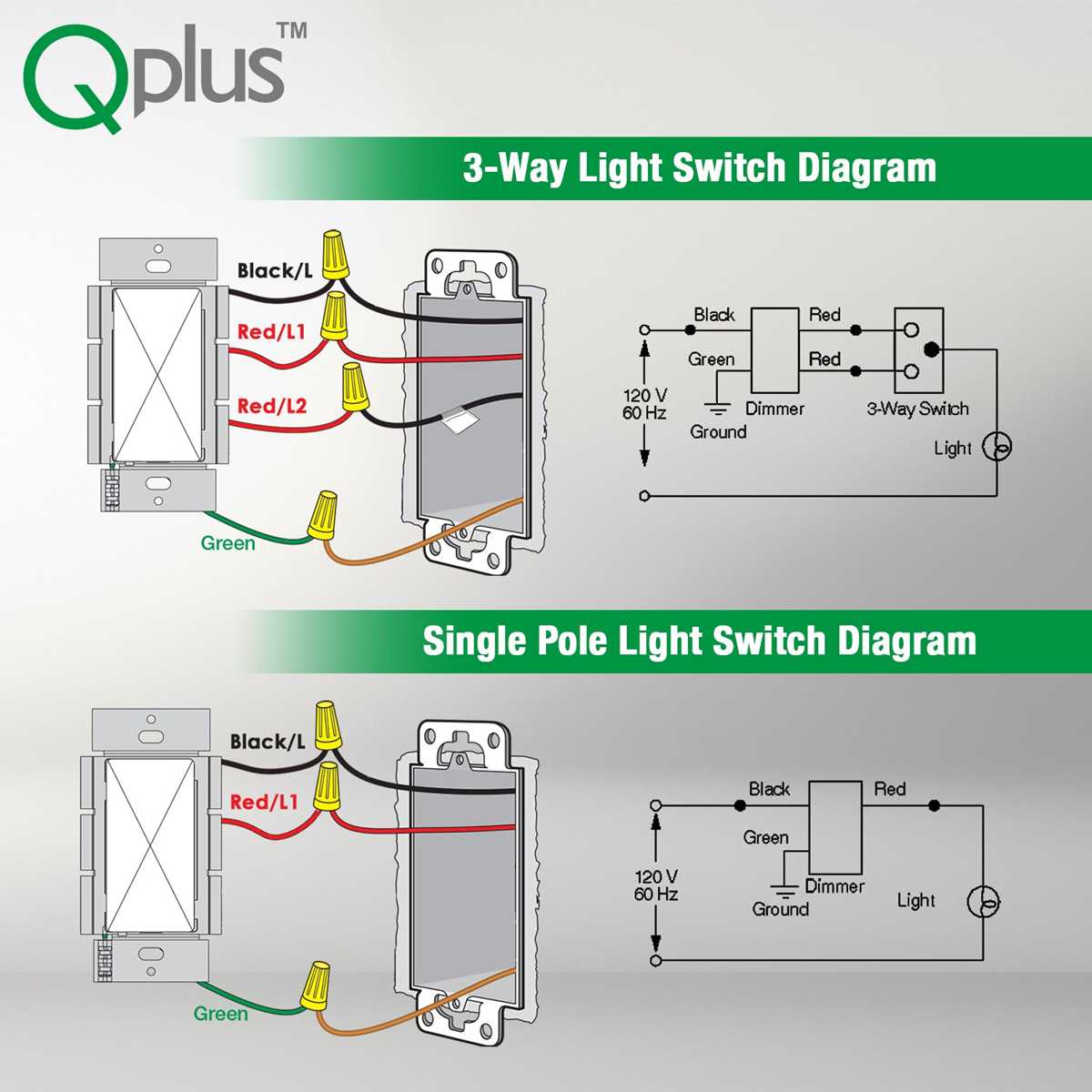
Choose a trailing-edge brightness regulator rated 5–150 W designed specifically with solid-state light emitters; this type maintains stable output at low load levels and prevents flicker. Connect the incoming phase conductor (L) from the distribution line to the terminal marked “L” on the wall controller. The outgoing conductor leading toward the ceiling luminaire attaches to the terminal labeled with an arrow or “LOAD”. This arrangement places the regulator in series with the phase path while the neutral conductor travels directly toward the lighting fixture.
In many European residential circuits operating at 230 V / 50 Hz, only two conductors appear inside the wall box: phase input and phase output toward the luminaire. Under such conditions the brightness regulator operates without a neutral connection. Some modern electronic regulators include an additional terminal marked “N”; this contact allows stable operation with very small loads such as 3–10 W solid-state lamps. When this terminal exists, route a neutral conductor from the junction box into the control module.
Load compatibility demands attention. Many solid-state emitters contain internal drivers that react poorly to leading-edge control methods used with incandescent lamps. A regulator using reverse-phase control maintains smoother voltage transitions and reduces audible coil noise. Typical installation supports up to 8–12 lamps at 8 W each on a single regulator rated near 100 W, leaving margin that prevents overheating of internal triac or MOSFET components.
Inside the wall enclosure maintain conductor length near 10–12 cm, strip insulation about 8–10 mm, and tighten terminal screws firmly to avoid resistive heating. After energizing the circuit, rotate or press the wall controller gradually from minimum brightness toward maximum; stable illumination without pulsing indicates correct conductor placement and compatible lamp drivers.
LED Dimmer Switch Wiring Diagram With Line Load Neutral and Ground Connections
Connect the incoming phase conductor (Line) from the distribution panel to the terminal marked “L” on the brightness controller module, while the outgoing conductor toward the luminaire attaches to the terminal labeled “Load”. This arrangement positions the control unit directly in the phase path so voltage modulation occurs before power reaches the lighting fixture. Use copper conductors with a cross-section of 1.5 mm² in residential circuits rated near 230 V / 50 Hz.
Neutral Conductor Routing
Route the neutral conductor from the junction box directly toward the lighting fixture and, if the controller includes an “N” terminal, connect the same neutral branch to that point. Electronic brightness regulators often rely on this additional reference conductor when operating with very small loads such as 5–12 W semiconductor lamps. Without this path the internal control electronics may fail to maintain stable brightness levels, producing flicker at low output.
Attach the protective earth conductor to the green or brass terminal on the metal frame of the control unit and continue the same grounding path toward the lighting enclosure. A continuous earth route keeps exposed metal parts at equal potential and supports protective devices in case insulation failure occurs. Recommended conductor insulation colors in many European installations include brown (phase), blue (neutral), green-yellow (earth).
Terminal Layout and Load Capacity
Typical wall controllers designed with semiconductor light sources accept loads between 3 W and 150 W. When connecting multiple lamps, add the rated wattage of each unit; for example, ten luminaires rated at 9 W create a combined load of 90 W, which remains within the safe range of a 150 W controller. Maintain a margin of at least 20–30% below the device maximum to reduce thermal stress inside the wall box.
Strip conductor insulation approximately 8–10 mm, insert the wire fully into the terminal clamp, and tighten screws with moderate torque so the copper core does not deform. After energizing the circuit, rotate or press the wall control gradually across its adjustment range. Smooth brightness variation without pulsation confirms correct phase, load, neutral, and grounding connections.
How to connect line load neutral and ground wires to an LED dimmer switch
Turn off the circuit breaker and connect the incoming phase conductor (Line) from the electrical panel to the terminal marked “L” on the wall brightness controller. The conductor heading toward the lighting fixture attaches to the terminal labeled Load. This placement inserts the control module directly into the phase path so the device regulates voltage delivered to the luminaire.
Neutral conductor connection
Many modern brightness regulators include a neutral terminal that stabilizes operation with low-power semiconductor lamps. If this terminal exists, link it with the neutral conductor coming from the junction box and continue the same conductor toward the luminaire.
- Use the blue conductor as neutral in most European installations.
- Strip insulation approximately 8–10 mm.
- Insert the conductor fully into the terminal clamp.
- Tighten the screw until the copper core holds firmly without deformation.
Grounding conductor attachment
Attach the protective earth conductor to the green or brass grounding screw on the metal frame of the control unit. This conductor links the wall box, device frame, and lighting enclosure so fault current flows safely to ground rather than through exposed metal surfaces.
- Use a green-yellow conductor with cross-section near 1.5 mm².
- Create a small loop at the wire end.
- Place the loop under the grounding screw.
- Tighten firmly and verify the wire cannot move.
Restore power after installation and rotate or press the wall controller gradually across its adjustment range. Smooth brightness change without flicker indicates correct phase, load, neutral, and earth connections, while unstable light output usually points to reversed phase routing or incompatible lamp drivers.