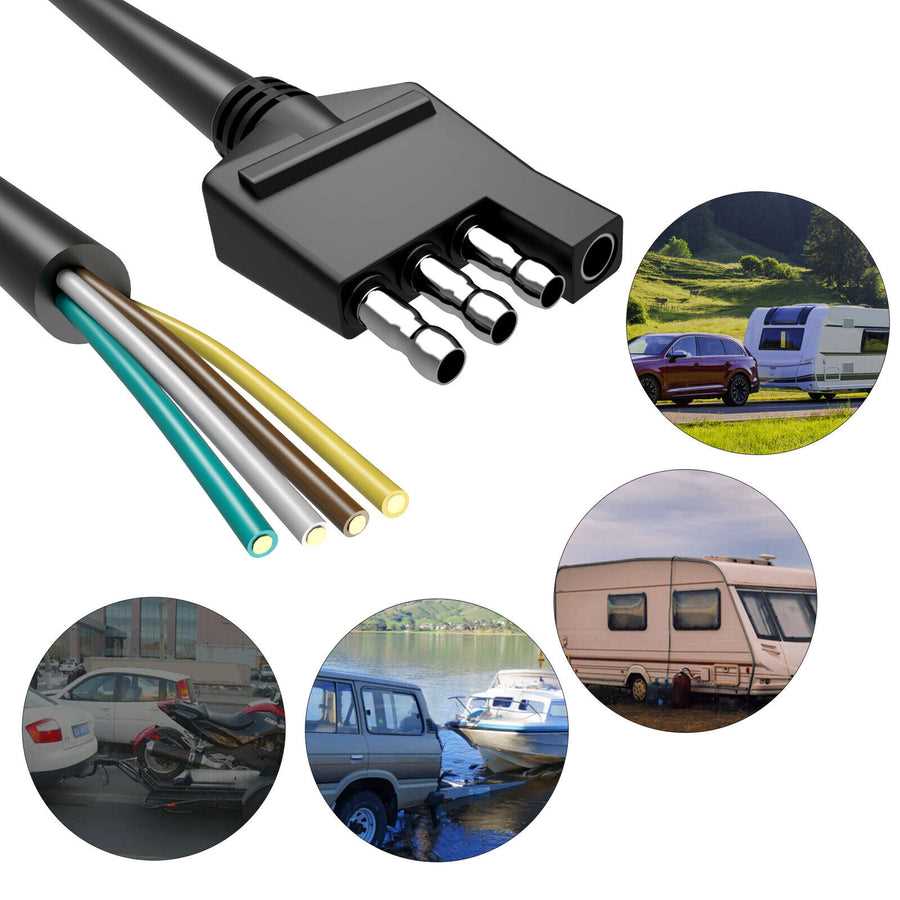
Match each color to its designated role: green for right signaling, yellow for left signaling, brown for running lights, and white for grounding. Misalignment of these leads to nonfunctional indicators or short circuits.
Use quality terminals and corrosion-resistant metals to secure connections. Loose attachments cause intermittent failures and can damage the vehicle’s electrical system.
Confirm continuity before final assembly: test each line with a multimeter to ensure correct flow. This prevents accidental cross-connections that could trigger blown fuses or erratic light behavior.
Route the wiring harness away from heat sources and moving parts to avoid insulation wear. Protect exposed sections with split loom tubing or heat-resistant sleeves for long-term reliability.
Label each lead at both ends to simplify future troubleshooting. Clear markings reduce confusion when replacing bulbs or diagnosing faults during seasonal maintenance.
4 Pin Trailer Connector Setup
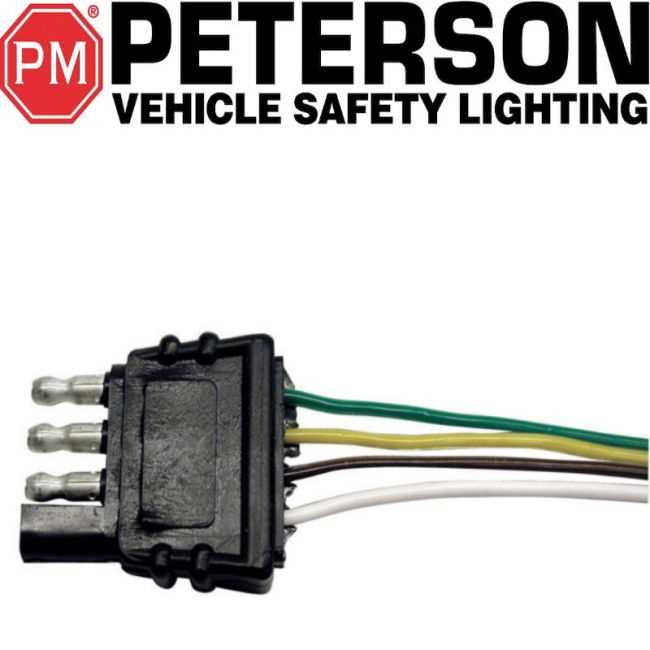
Use a green lead for the right-side signal and brake lights, a yellow line for the left side, a brown cable for tail lights, and a white ground wire attached to the frame. Ensure each metal terminal is fully seated to prevent flickering or intermittent power loss. For long hauls, apply dielectric grease to prevent corrosion at the metal junctions and maintain consistent contact under vibration.
When routing the harness along the chassis, keep it away from sharp edges and heat sources. Secure with zip ties at intervals of 12–18 inches to reduce strain and prevent sagging. Test each circuit with a 12V tester before connecting the towed unit, verifying illumination patterns match the vehicle’s brake, running, and turn signals. Proper alignment of color-coded leads eliminates confusion and avoids electrical shorts.
Identifying Each Wire and Its Function
Begin with the brown line–it carries the constant illumination for side lamps and running lights. Ensure it is securely attached and free from corrosion to maintain uninterrupted power flow.
The yellow strand transmits the signal for left-side indicators. Check continuity with a multimeter before connecting to any lamp assembly to prevent short circuits.
Green conducts current to the right-side flashing lights. It should be routed separately from ground paths to avoid accidental cross-contact, which may trigger both indicators simultaneously.
White serves as the grounding channel. Confirm it is firmly connected to the vehicle’s chassis at a clean metal point; poor grounding often causes erratic lighting behavior.
For inspection, label each conductor using shrink tubing or colored tags. This method simplifies future troubleshooting and reduces the risk of swapping functions during maintenance.
Verify each path individually by activating its corresponding light while measuring voltage at the wire’s end. Any drop below the rated threshold signals corrosion or loose connection.
Protect exposed copper with dielectric grease to prevent oxidation, especially at junctions where wires meet clamps or terminals. This prolongs service life and stabilizes signal flow.
When assembling the interface, avoid twisting multiple strands together. Maintain separate routes for each current flow to minimize interference and ensure each lamp responds precisely to its command.