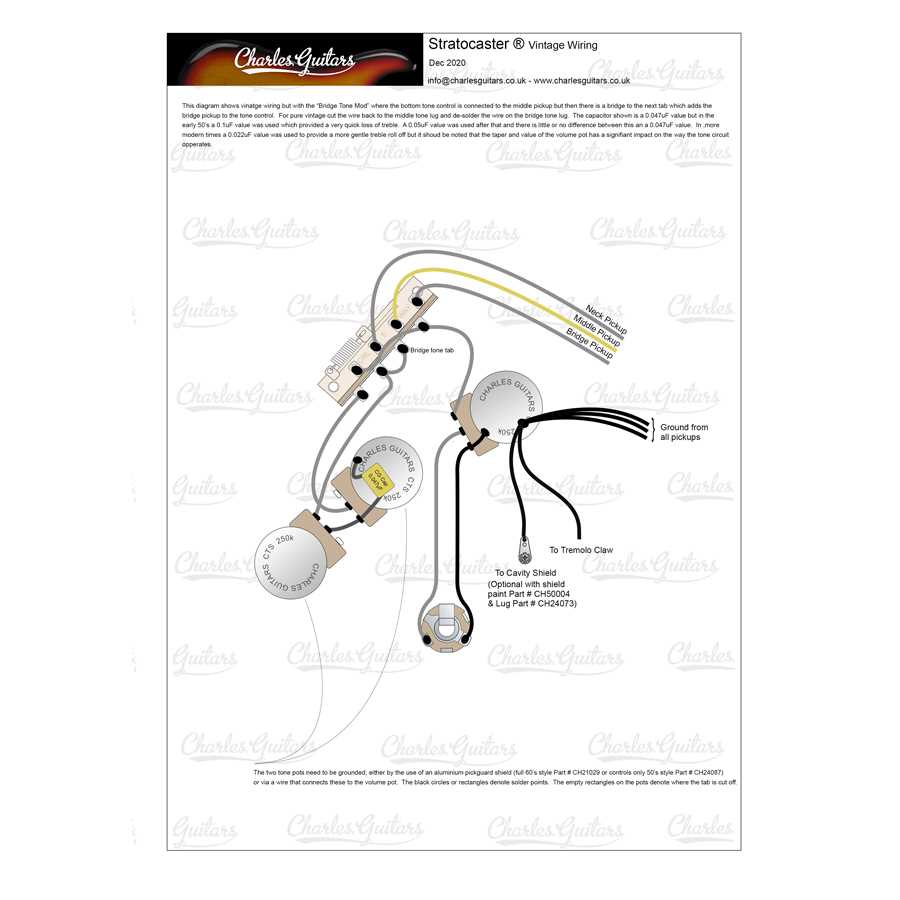
Use a precise connection layout built around a five-position pickup selector that separates hot conductors, ground paths, and pickup outputs into clearly defined lugs. A practical rule: route the signal lead from each pickup toward individual selector contacts, while a shared ground line runs directly toward the back of the volume potentiometer. This arrangement reduces signal loss and keeps each pickup combination predictable.
A typical electric guitar setup with three single-coil units relies on five selectable contact stages. Position one activates the bridge pickup, position two links bridge plus middle units in parallel, the third engages the middle pickup alone, the fourth blends middle plus neck units, and the fifth activates the neck pickup. Maintain short conductor lengths between pickups and the selector contacts; excess length increases resistance and noise pickup.
Use insulated copper leads rated near 22 AWG. Tin every lug before attaching conductors, then secure each lead with minimal solder to avoid bridging adjacent contacts. Keep the ground network unified: pickup grounds, shielding foil, and potentiometer casings should connect through a single grounding point. Such routing produces stable tone selection across all five pickup combinations while minimizing hum and signal interference.
5-Position Selector Connection Layout
Use a five-position pickup selector with two independent poles and eight lugs plus a common terminal. Connect the hot lead from the first pickup to lug 1, the second pickup lead to lug 3, and the third pickup lead to lug 5. Link the common terminal of pole A directly to the volume potentiometer input. Ground shielding braid and pickup ground leads onto the rear casing of the volume control using short 22-24 AWG conductors to reduce resistance and unwanted hum.
Terminal Logic and Contact Order
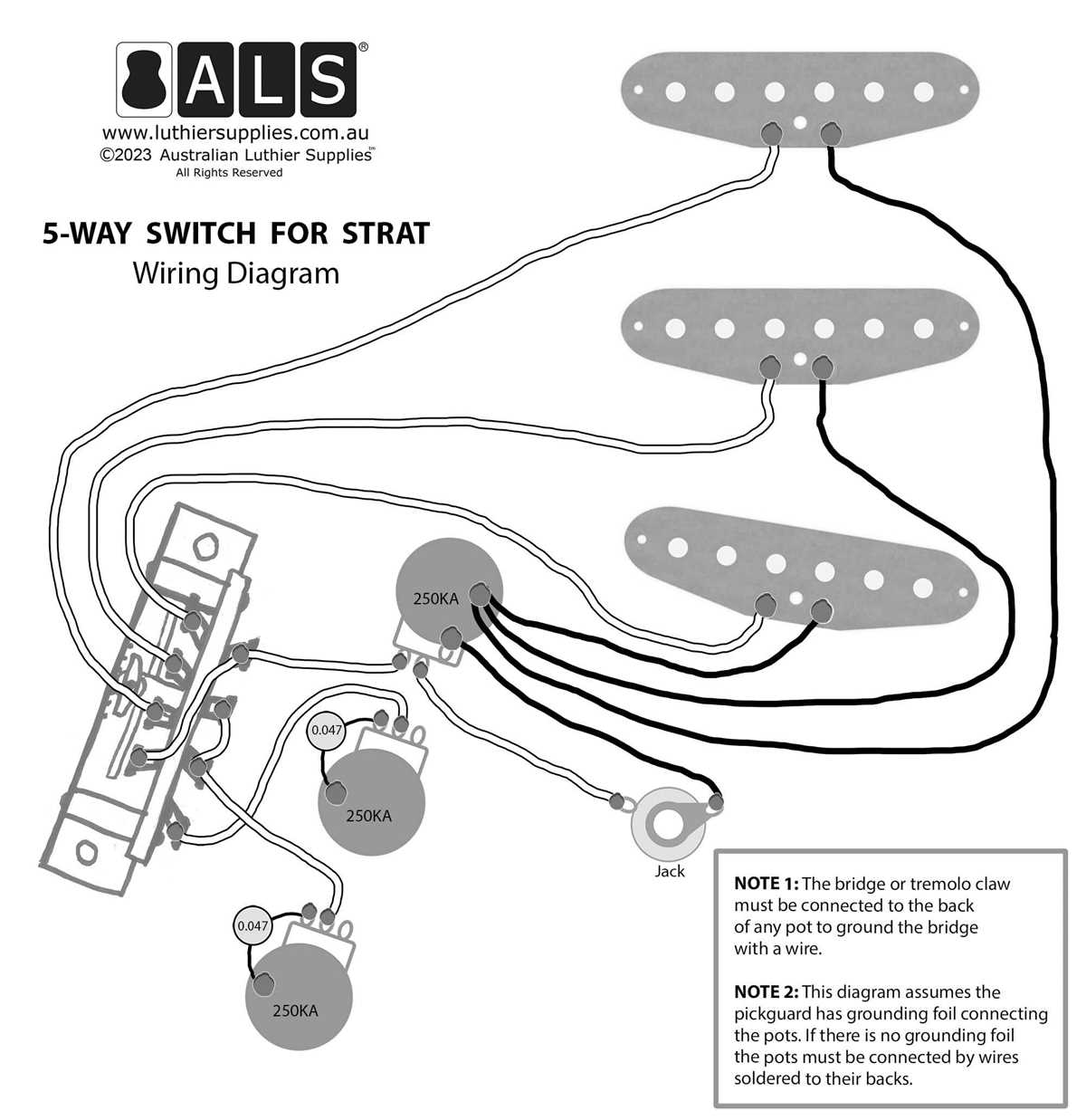
Inside the selector body, the moving contact bridges sequential lugs during lever travel. Position 1 links common A with lug 1 only; position 2 bridges lugs 1 and 3 simultaneously; position 3 activates lug 3 alone; position 4 joins lugs 3 and 5; position 5 connects lug 5 exclusively. Pole B usually manages tone control routing. Attach tone capacitor input lead to lug 2 on pole B, then connect pole B common to the tone potentiometer outer lug. This arrangement allows tone shaping across neck and middle pickups while leaving bridge pickup brighter.
Use stranded copper conductors rated near 300 V insulation with diameter near 0.5 mm. Keep conductor length under 120 mm between selector and potentiometers; longer runs increase capacitance and may dull high frequencies above ~4 kHz. Twist paired signal and ground leads lightly along the cavity path. Secure connections using rosin-core solder heated around 350 °C; contact time should stay under 3 seconds per lug to avoid melting the plastic carrier.
Practical Layout Inside the Control Cavity
Mount the five-position selector so lug rows face the cavity interior; this orientation prevents conductor stress during pickguard installation. Route pickup leads along the cavity wall, not across the selector body. Maintain at least 5 mm spacing between signal lugs and grounded shielding paint or foil. After soldering, check continuity using a multimeter: each lever position must show near-zero resistance (0–0.3 Ω) between the active lug and the common terminal while inactive lugs remain open circuit.
Identifying Terminals and Pole Links on a Standard 5-Position Selector
Use a multimeter in continuity mode and rotate the 5-position selector across each detent; observe which metal lugs connect to the common tab during every click. Most units include two identical pole sections placed side-by-side, each containing one common contact plus several selectable lugs. The common contact often appears slightly separated or located at one end of the terminal row. Manufacturers also stamp tiny numbers or letters near the solder tabs; these marks help trace pole groups without guessing.
Recognizing Pole Groups and Common Contacts
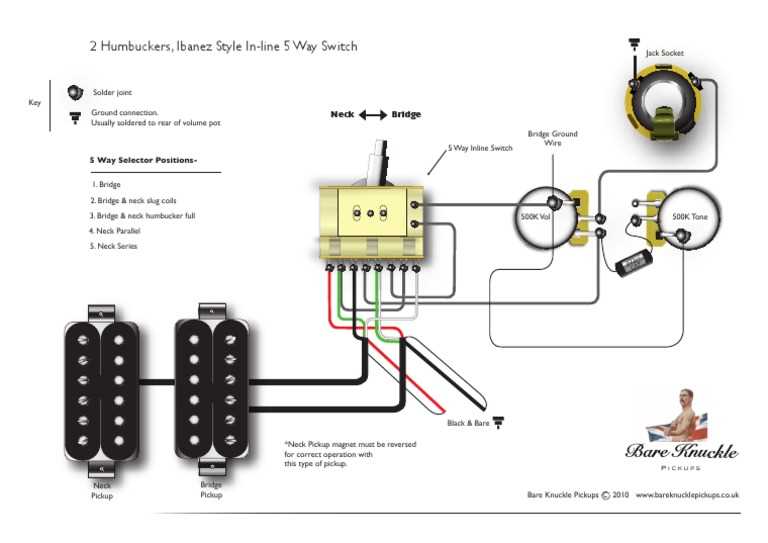
- Locate the isolated lug positioned slightly away from the cluster; this tab usually acts as the common terminal.
- Identify two mirrored rows of contacts; each row represents one electrical pole.
- Count selectable lugs in each row. Typical units contain four active contacts plus one unused position used during mechanical travel.
- Check metal traces or rivets on the underside; these often reveal internal linkage patterns.
Mechanical movement connects the common tab to different lugs depending on lever position. Mapping this pattern avoids connection mistakes during assembly or repair.
Quick Continuity Mapping Procedure
- Place one probe on the common tab of pole A.
- Move the lever to position 1 and test each lug until continuity appears.
- Repeat measurement at positions 2–5, writing results in a small table.
- Repeat the same test with the second pole section.
Finished notes reveal the exact contact sequence. This small test also exposes unusual layouts used in some import selectors where lug order differs from classic designs.