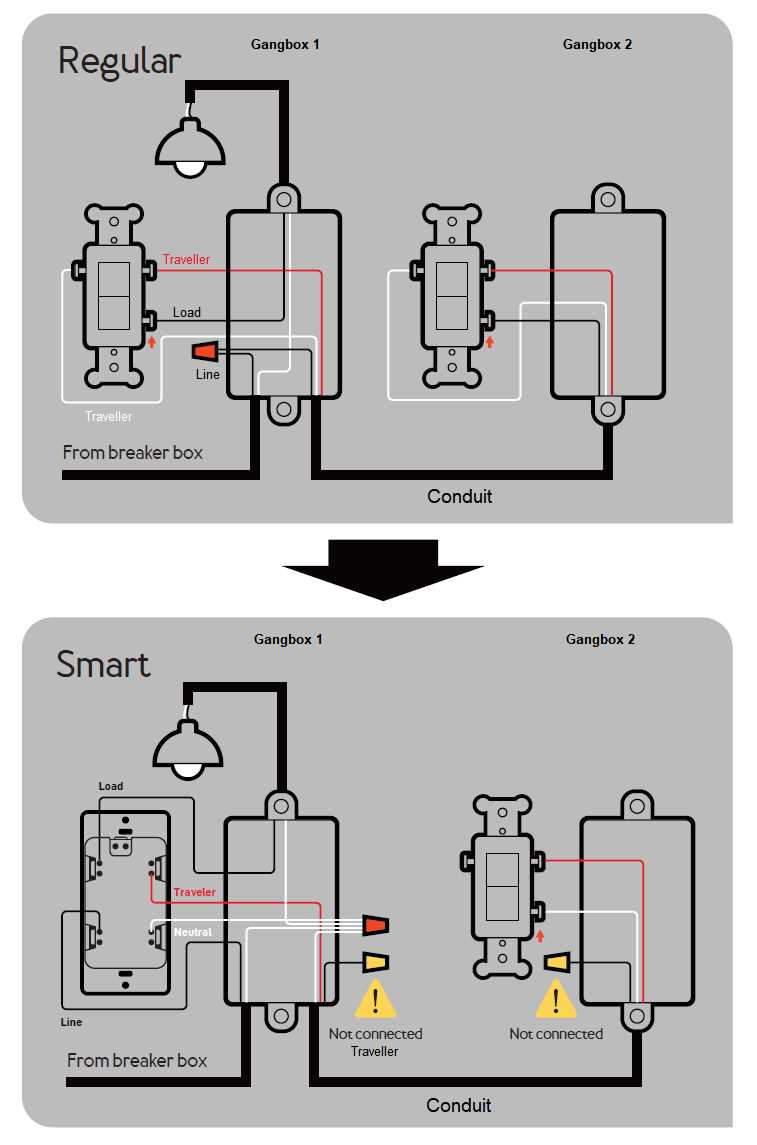
Use color-coded conductors to connect the two control devices. Identify black, red, and white wires before attaching them to the correct terminals to prevent circuit faults.
Position the devices at opposite ends of the room or hallway so that the lighting can be operated from multiple locations. Ensure that the mounting boxes are securely fastened and level with the wall surface.
Test each connection with a voltage detector before completing the installation. Confirm that the hot, neutral, and traveler lines are properly aligned to avoid flickering or short circuits during operation.
Label all terminals and maintain a small diagram on paper for future maintenance. Marking the source, load, and traveler points reduces errors when modifying or troubleshooting the circuit later.
Connecting a 3 Point Lighting Control
Identify all conductors before connecting. Use a voltage tester to verify which lines carry current and label black, red, and white wires for the incoming, outgoing, and traveler paths.
Mount the control units firmly in the wall boxes. Ensure the screws are tight and the devices sit flush to avoid loose connections that could cause sparks or intermittent operation.
Link the travelers between both units using the same gauge wire, typically 14/3 for a 15-amp circuit or 12/3 for 20-amp. Maintain consistent color coding to prevent confusion during future maintenance.
Connect the load line to the terminal marked for the fixture side. Confirm that the line is not sharing a terminal with the source to avoid backfeeding the circuit.
Attach the neutral conductor directly to the fixture if required, keeping the white wires joined with a wire nut. This completes the circuit loop and ensures proper illumination without flickering.
Secure ground connections to each metal box and device. Use green screws or a bare copper wire to maintain safety and reduce the risk of electric shock.
Test operation after all connections are complete. Flip each device individually and together to ensure the light responds correctly from both positions, correcting any reversed traveler lines immediately.
Identifying Conductors and Terminals for a 3 Point Light Control
Use a voltage tester to determine which wire carries current from the power source. Mark this conductor clearly as the line to prevent incorrect connections that can trip breakers.
Separate travelers from neutral by color and function. Red and black usually serve as travelers between devices, while white indicates a neutral return path to complete the circuit.
Inspect terminal screws for tightness and corrosion. Clean or replace any oxidized contacts to ensure reliable electrical contact and reduce heat buildup.
Check the common terminal on each control point. This screw typically has a different color, often darker, and connects to either the incoming power or the fixture load.
Testing Individual Conductors
Measure voltage between each traveler and neutral to verify continuity. A reading of 120 volts indicates a live path, confirming which terminals to attach each conductor to.
Label each line immediately after identification. Use tape or permanent marker to mark line, traveler, and load connections, preventing errors when tightening screws.
Final Inspection Before Installation
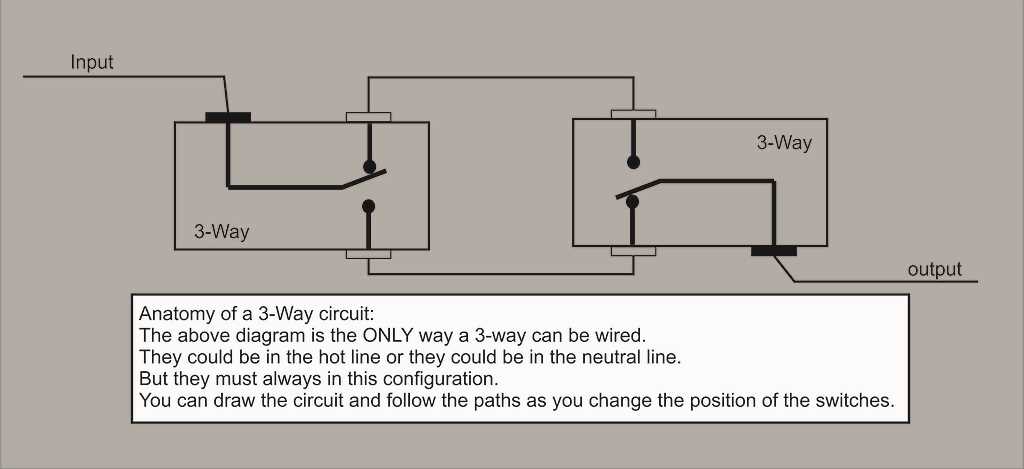
Double-check all markings and conductor positions in the wall boxes. Ensure no bare wire is exposed beyond the terminal, and all travelers are connected consistently on both ends.
Test for grounding by confirming that each metal box and device is properly bonded. Ground wires should be attached securely to green screws to protect against electrical faults.