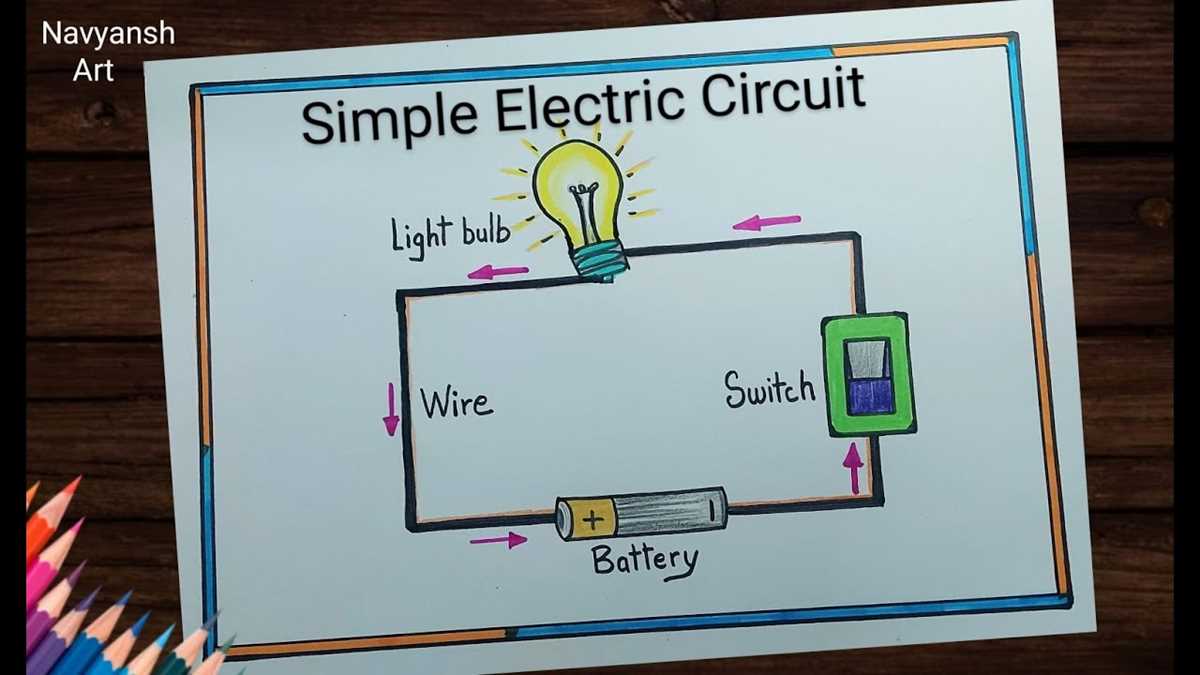
Use a symbolic electrical layout whenever you need to understand how components connect and how current moves through a system. This type of drawing replaces physical shapes of parts with standardized symbols and straight lines that represent conductors. Such a layout allows quick identification of power sources, loads, switches, and control elements.
A typical schematic representation shows elements like resistors, capacitors, switches, batteries, and semiconductors. Each element has a specific symbol defined by international standards such as IEC or ANSI. Lines between symbols represent conductive paths where electric current flows from a power source through loads and back to ground or the negative terminal.
Reading this type of electrical map requires attention to symbol orientation and connection points. For example, a resistor symbol placed between two conductors indicates voltage drop along that path, while a switch symbol inserted in the same line indicates a point where current flow can be opened or closed. Junction dots mark points where conductors intersect and share electrical continuity.
Engineers, technicians, and students rely on these graphical layouts during troubleshooting, equipment assembly, and system design. By tracing the connection paths from the power source to each component, it becomes possible to locate faults such as open conductors, short paths, or incorrectly placed parts without dismantling the entire device.
What Is a Circuit Diagram and How Electrical Symbols Show Component Connections
Use a symbolic electrical layout whenever you need to understand how electronic parts connect without examining the physical hardware. This graphical representation replaces real component shapes with standardized icons and straight conductor lines. By tracing these lines, a reader can follow the path of electrical current from a power source through loads and back to the return path.
Common graphical symbols used in electrical schematics
Each component inside an electrical system has a distinct symbol recognized in international standards such as IEC 60617 or ANSI Y32. These icons allow engineers and technicians to read a schematic drawing regardless of language.
- Resistor – zigzag or rectangular symbol showing resistance in a conductor path
- Capacitor – two parallel plates representing energy storage in an electric field
- Battery or power source – long and short parallel lines indicating voltage supply
- Switch – movable contact symbol showing open or closed current flow
- Diode – arrow-shaped element showing one-direction current flow
Connection lines between these icons represent conductive paths. Intersections marked with a filled dot show electrical continuity, while crossing lines without a dot indicate no electrical connection. This distinction prevents misinterpretation when many conductors pass through the same area of the drawing.
Reading component connections in a schematic layout
Follow the electrical path step by step from the voltage source through each symbol. A typical interpretation process looks like this:
- Locate the power supply symbol
- Trace the conductor line leaving the positive terminal
- Identify components placed along that path
- Continue tracing until reaching ground or the return line
This approach reveals component roles inside the electrical network. For example, a resistor placed before an LED indicates current limiting, while a switch placed in series with a motor symbol controls power delivery to the load.
Common Electrical Symbols Used in Circuit Diagrams and What Each Symbol Represents
Identify each graphical mark before tracing any electrical path. Standardized icons replace real component shapes, allowing a reader to understand the structure of an electrical network quickly. International standards such as IEC 60617 and ANSI symbol catalogs define how each element appears on a schematic drawing.
Power sources and conductive paths
Energy sources appear through simple linear symbols. A battery is drawn as alternating long and short parallel lines that represent positive and negative plates. A direct current supply may appear as a circle with polarity marks. Straight lines between components represent conductive paths, while a filled junction dot indicates that conductors are electrically connected at that point.
Ground reference points appear as a set of descending horizontal lines or a triangular symbol. This mark indicates a common return path or reference potential used across the electrical layout. Many systems include multiple ground points connected to the same reference node.
Passive and active component symbols
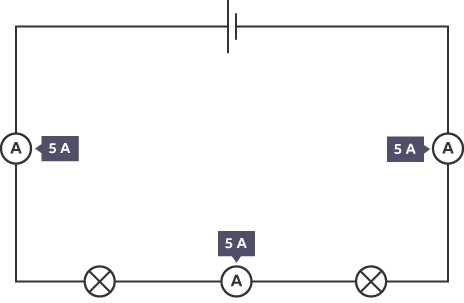
Passive components control current, voltage, or stored energy. The resistor symbol appears as a zigzag line in American notation or a rectangular block in IEC style. Capacitors are shown as two parallel plates, sometimes with one curved plate for polarized versions. Inductors appear as a sequence of loops representing magnetic windings.
Semiconductor devices have directional shapes. A diode symbol contains a triangle pointing toward a vertical line, indicating permitted current direction. A light-emitting diode adds two small arrows pointing outward, representing emitted light. Transistors use three terminals labeled base, collector, and emitter; arrow direction identifies current flow type.
Control components also appear frequently in electrical layouts. A switch symbol shows a break in the conductor with a movable contact arm. Relay contacts use a similar representation but link to a coil symbol that controls the switching action.
Accurate interpretation of these symbols allows quick identification of component roles within an electrical assembly. By recognizing the icons and following the connecting lines, a technician can determine power flow, switching points, and load placement without seeing the physical hardware.