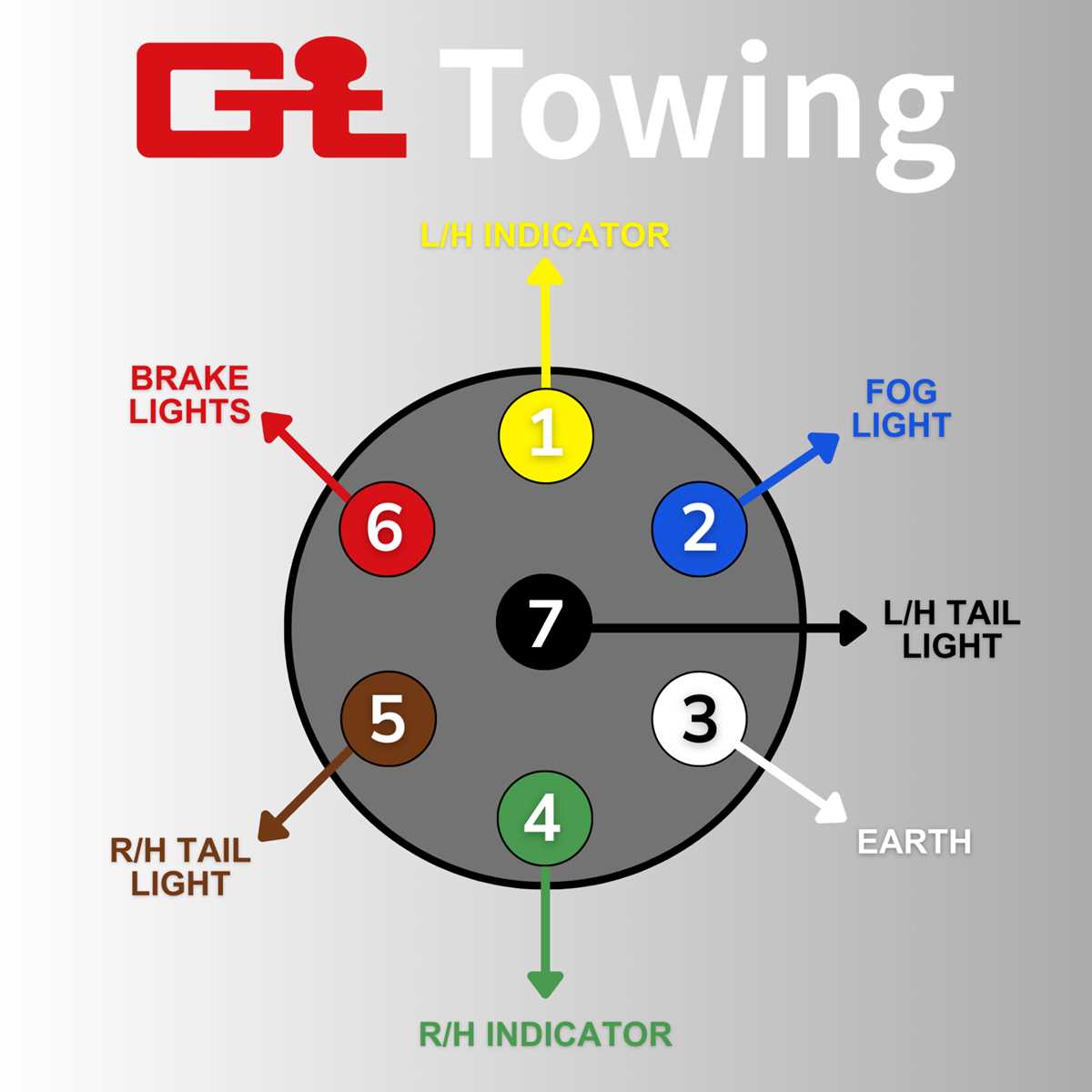
Match each wire to the correct terminal based on standard color coding to ensure proper operation of brake lights, turn signals, and auxiliary power. Incorrect connections can cause shorts or malfunctions in the lighting system.
Secure all terminals and use insulated crimps to prevent corrosion and loose contacts. Verify that the ground wire is attached to a clean metal surface to maintain reliable current flow.
Test each function individually before attaching the towed unit. Use a multimeter or test lamp to confirm continuity for the brake, indicator, and tail light circuits, and inspect the connection for voltage drops under load.
Label each conductor clearly to simplify maintenance and future troubleshooting. This helps quickly identify circuits for reverse lights, auxiliary power, and fog lamps without guesswork.
7 Pin Connector Electrical Layout for Towing Units
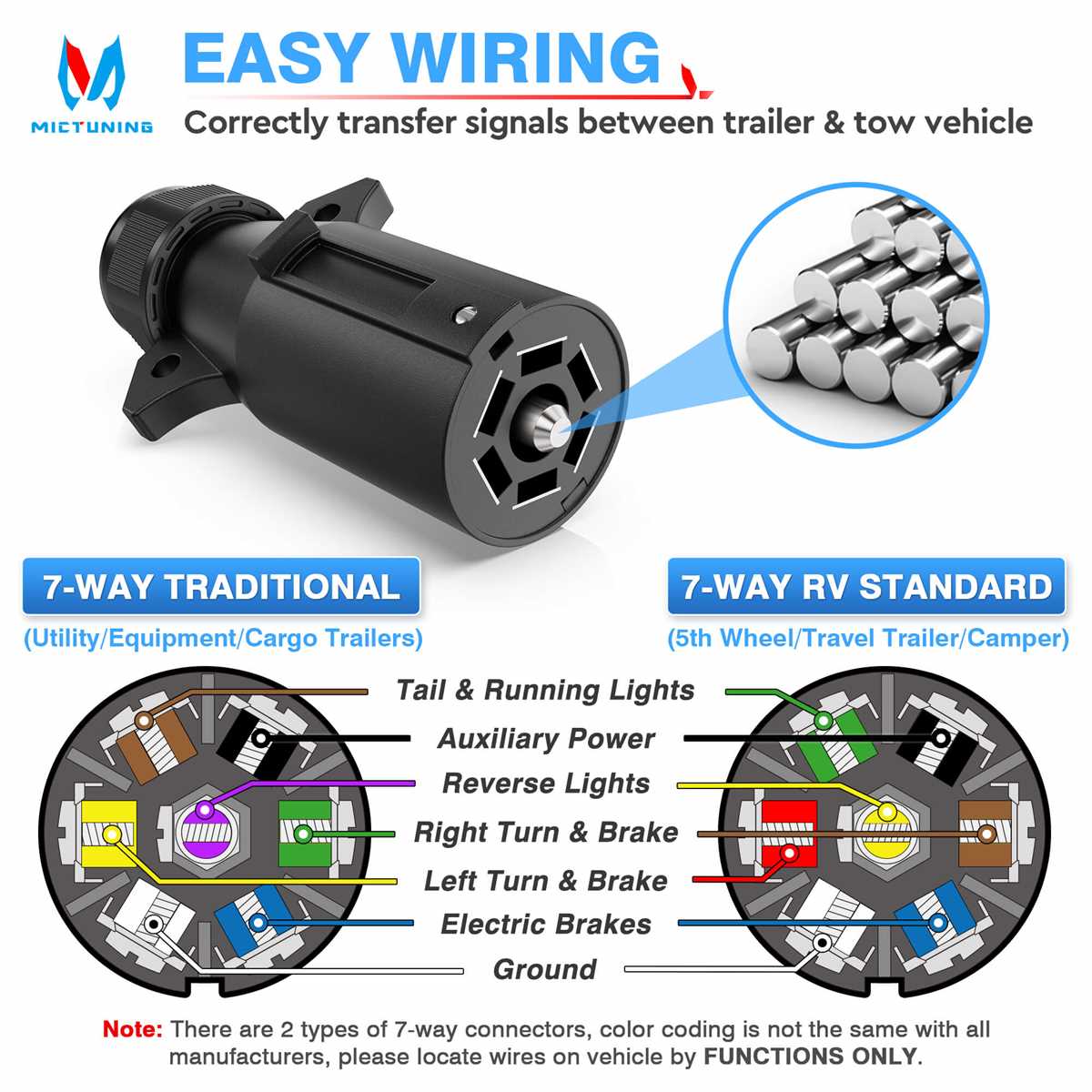
Start by identifying each terminal on the connector using the standardized color codes. Ensure the brown wire connects to the tail lights, yellow to the left indicator, green to the right indicator, and white to the ground chassis point.
Use ring terminals for solid connections and avoid twisting bare wires together, which can loosen under vibration. Secure all conductors with heat-shrink tubing to prevent corrosion and accidental shorts.
- Connect the blue wire to the electric brake controller output if applicable.
- Attach the red wire to auxiliary power for devices like interior trailer lights or battery charging circuits.
- Link the black wire to reverse lamps, confirming the supply activates only when the towing vehicle is in reverse.
- Verify the green/yellow wire combination for fog lamps or marker lights according to regional regulations.
Check continuity on each circuit with a multimeter before mounting the connector housing. This ensures each light function responds correctly and prevents troubleshooting after assembly.
Secure the entire harness along the frame using cable ties or clamps to prevent rubbing against moving parts. Keep the bundle away from heat sources like exhaust pipes.
Perform a full functional test by connecting the towing unit to the vehicle and operating all lights, brakes, and auxiliary circuits. Inspect the connector for any loose terminals or voltage drops under load.
- Confirm that all indicator lamps flash at the correct rate.
- Verify brake lights illuminate with the proper intensity.
- Check auxiliary circuits for stable voltage without flickering.
Document each wire’s function on a schematic label inside the junction box. This allows future maintenance or expansion without risk of cross-connection.
Identifying Pins and Color Codes for 7 Pin Connectors
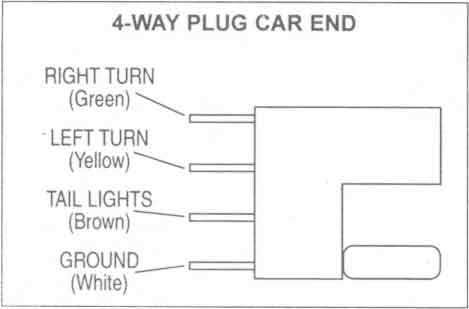
Start by matching each terminal to its standard function. Brown is for tail lamps, yellow for left turn signals, green for right turn signals, and white for the chassis ground connection.
Blue wires are reserved for electric brake activation, while red conductors supply auxiliary power for onboard devices or battery charging circuits. Black is often used for reverse illumination to trigger backup lamps when the vehicle is in reverse gear.
Verify that the green/yellow combination, if present, powers fog or marker lights according to local regulations. Incorrect placement can result in blown fuses or non-functional lamps.
Use a multimeter to confirm each connection before final assembly. Measure continuity between the power source and the corresponding light to ensure correct pin identification and eliminate the risk of cross-connection.
Label each terminal clearly on the connector housing or harness. This practice simplifies maintenance, replacement, and troubleshooting, particularly when multiple functions share the same harness bundle.
Secure all wires with insulated crimps and protective sleeves. Proper strain relief and insulation prevent accidental shorts and preserve consistent electrical contact under vibration and environmental exposure.