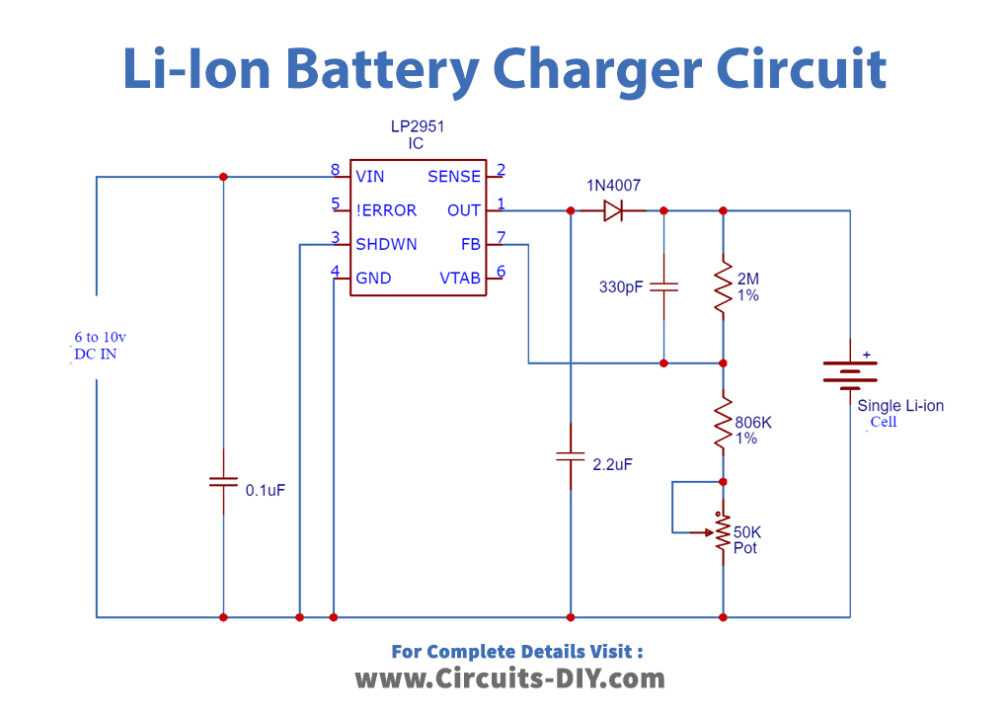
Set the maximum voltage to 4.2 volts per cell and limit current before connecting any lithium-based power cell to a power supply. These energy storage units require a two-stage process: a constant current phase followed by a constant voltage phase. Direct connection to a raw power adapter can raise voltage above the safe limit and damage the cell.
A common solution uses a small controller IC such as TP4056. This chip regulates current during the first stage and then holds the output at 4.2 V while current gradually drops. The charge rate is set with a single resistor connected to the PROG pin. For example, a 1.2 kΩ resistor typically sets the current near 1 A, while 2 kΩ lowers it to roughly 580 mA.
Protection components are often placed between the power cell and the load. A small protection board containing DW01 controller and dual MOSFET disconnects the cell if voltage rises above about 4.3 V, drops below roughly 2.4 V, or if current becomes too high. This board prevents damage during faults or short circuits.
The schematic layout usually includes a USB or DC input, controller IC, current-set resistor, indicator LEDs, and connections to the lithium energy cell. Tracing the path from the input connector through the controller chip to the output terminals helps identify how voltage regulation and current limiting operate during the full power refill process.
Li Ion Battery Charging Circuit Diagram With Current Control and Protection Parts
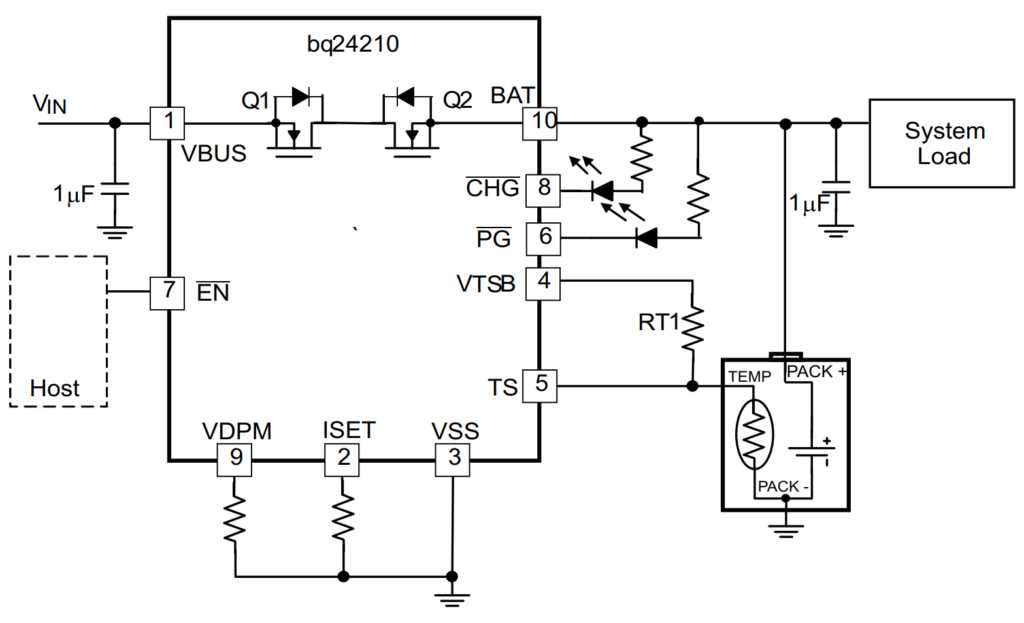
Limit the voltage to 4.2 V per lithium cell and restrict current before connecting a power source. A typical layout uses a controller IC that manages two phases: constant current and constant voltage. During the first stage the controller supplies a fixed current, and once the cell reaches about 4.2 V the regulator holds that level while current gradually decreases.
A widely used controller chip is TP4056. This integrated controller contains voltage regulation, current control, and status outputs for indicator LEDs. The device operates from a 4.5–5.5 V input, which allows direct use with USB power adapters or regulated DC supplies.
The charge rate is determined by a resistor connected to the PROG pin. Typical values include:
- 1.2 kΩ → about 1 A current
- 2 kΩ → about 580 mA
- 3 kΩ → about 400 mA
- 10 kΩ → about 130 mA
Protection modules are usually connected between the lithium cell and the load. These small boards include a monitoring IC such as DW01 combined with dual MOSFET transistors that disconnect the cell during abnormal conditions.
Protection functions normally include:
- Over-voltage cutoff around 4.3 V
- Under-voltage cutoff around 2.4 V
- Over-current detection
- Short-circuit shutdown
The internal layout usually contains the following elements connected in sequence:
- 5 V input connector or USB port
- Controller IC with current-set resistor
- Status LED outputs showing power and full level
- Protection board with MOSFET switch pair
- Lithium energy storage cell
Tracing the path from the input supply through the controller IC and then through the protection module helps verify correct connections. If the cell does not reach 4.2 V, check the current-set resistor, input supply stability, and the MOSFET protection stage for disconnection.
Constant current and constant voltage stages used in Li ion battery charging circuits
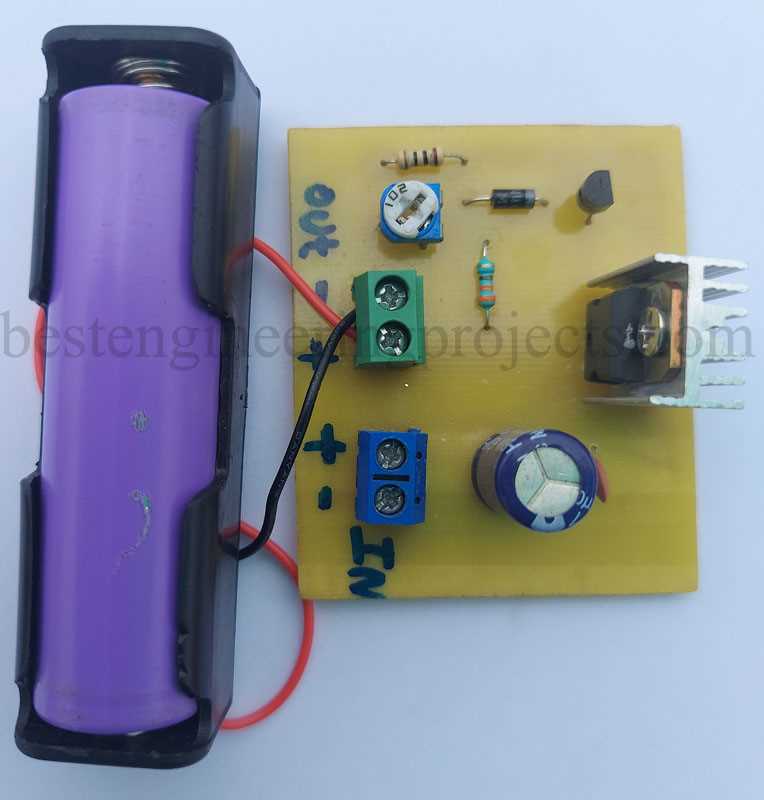
Set the regulator to deliver a fixed current until the lithium cell reaches about 4.2 volts. During this first phase the controller limits current using a sense resistor or an internal reference. Typical rates range from 0.5C to 1C, meaning a 2000 mAh cell receives 1–2 A. The voltage gradually rises while the controller keeps the current stable. This stage restores most of the stored energy and usually completes when the terminal level approaches the maximum allowed value.
After the cell reaches 4.2 V, the controller switches to constant voltage mode. The regulator holds the output at that fixed level while the current steadily drops as the cell fills. Termination normally occurs once the current falls to about 3–10% of the initial rate. For example, a 1 A charge process may stop near 50–100 mA. This method prevents over-voltage and reduces stress on the lithium chemistry while allowing the cell to reach full capacity.
Key components in Li ion charger circuits including TP4056 module resistors and protection IC
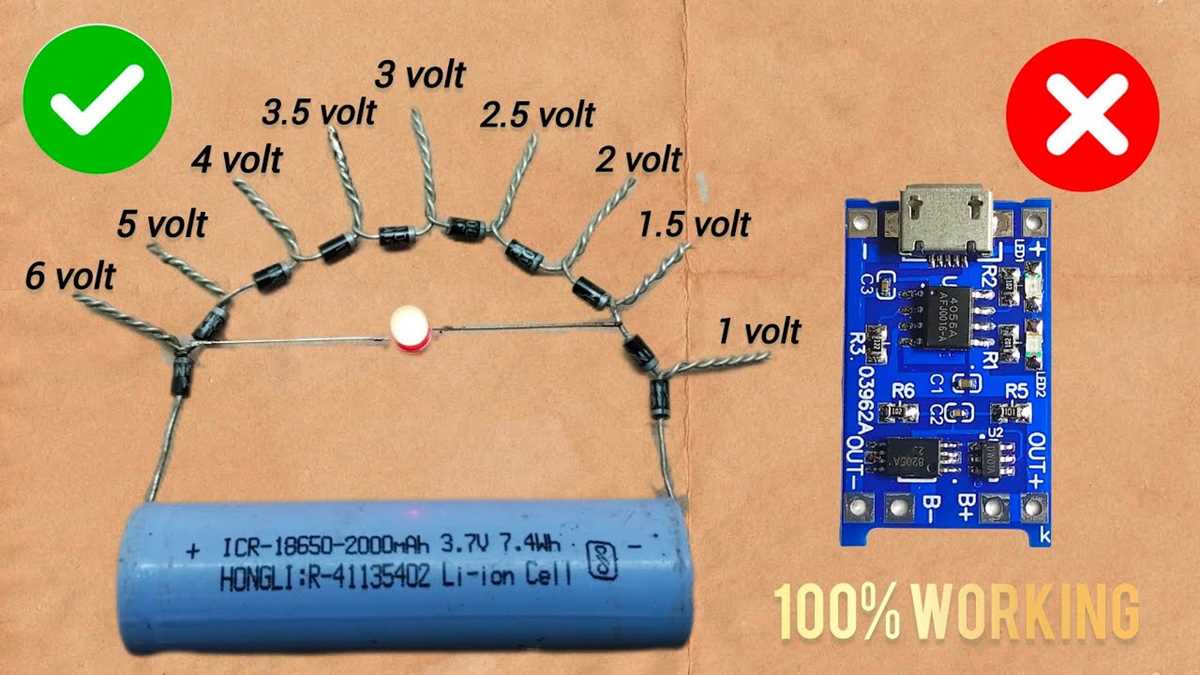
Select a controller chip designed for single lithium cell power packs before building the board. A widely used option is the TP4056, which manages constant current and constant voltage stages while limiting the output to about 4.2 V. The device also includes temperature monitoring, status outputs for indicator LEDs, and automatic termination once current falls below the programmed threshold.
The module usually operates from a 5 V input source such as USB power adapters. Inside the board, the controller chip regulates current through an external resistor connected to the PROG pin. Changing this resistor directly sets the maximum current delivered to the cell.
Typical PROG resistor values and resulting current
| Resistor value | Approximate current |
|---|---|
| 1.2 kΩ | 1000 mA |
| 2 kΩ | 580 mA |
| 3 kΩ | 400 mA |
| 10 kΩ | 130 mA |
Indicator LEDs connect to the controller outputs labeled CHRG and STDBY. One LED lights during the energy refill process, while the second activates after current drops below the termination threshold. These signals help confirm that the controller finished the process correctly.
Protection controller and MOSFET stage
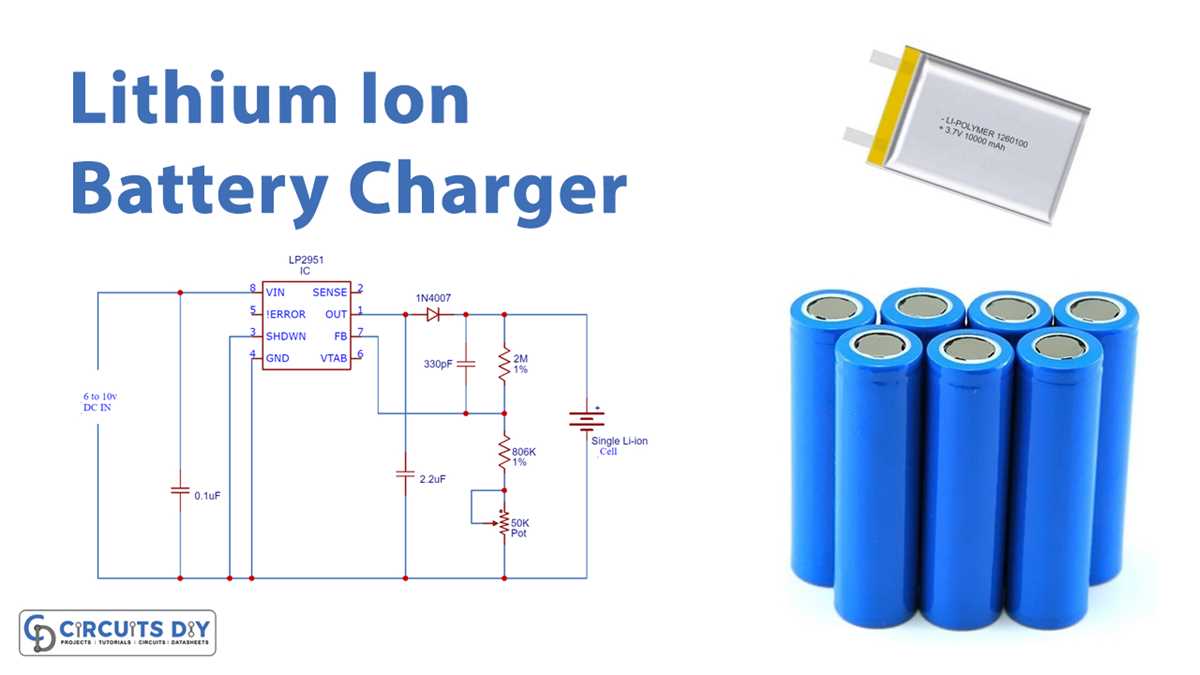
A small protection board is often connected between the lithium cell and the load. This module typically contains the DW01 protection controller paired with a dual MOSFET package such as FS8205A. The controller constantly monitors voltage and current conditions.
| Protection function | Typical trigger level |
|---|---|
| Over-voltage cutoff | ≈4.3 V |
| Under-voltage cutoff | ≈2.4 V |
| Over-current protection | 2–3 A depending on MOSFET |
| Short circuit shutdown | Instant disconnect |
The full module usually includes input capacitors, the controller IC, current-set resistor, indicator LEDs, and the protection stage. Following the connection path from the 5 V input through the controller and protection module helps confirm proper layout and prevents damage to the lithium energy cell.