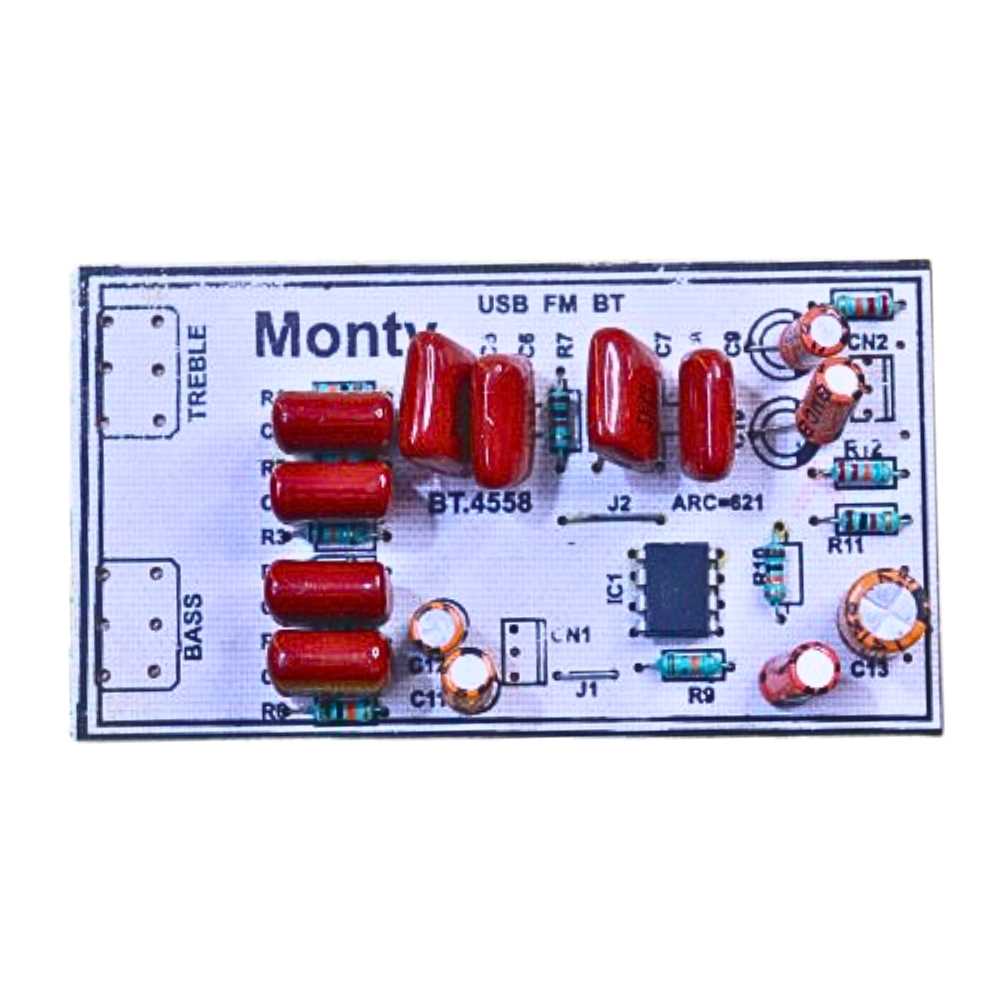
Connect the input directly to the first stage of the dual op-amp using low-resistance leads to minimize noise and preserve signal integrity. Use 1% tolerance resistors for the gain network to maintain stable amplification across frequencies.
Place coupling capacitors between stages with values ranging from 0.1µF to 1µF to block DC offsets while allowing full audio bandwidth. Film capacitors are recommended for audio clarity.
Ensure proper power decoupling by adding 100nF ceramic capacitors close to each supply pin to prevent oscillations and voltage spikes. Check that the ground paths are short and direct to reduce hum and interference.
Adjust feedback resistance between the op-amp output and inverting input to fine-tune gain. Start with 10kΩ for moderate amplification and increase gradually for higher levels, monitoring for distortion.
Test the signal with a low-impedance source and an oscilloscope to verify waveform integrity and frequency response. Identify any unwanted peaks or dips and adjust component values accordingly.
Mount all components on a stable board with adequate spacing to prevent crosstalk. Keep high-gain stages away from power supply traces to maintain signal purity.
JRC4558 Preamp Component Layout and Connections
Position the dual operational amplifier at the center of the board to minimize lead lengths and reduce parasitic capacitance. Align the IC pins so that input and output terminals are easily accessible for resistors and capacitors.
Use low-resistance film resistors for the gain network and place them as close to the amplifier pins as possible. This reduces noise pickup and maintains stable amplification across the intended frequency range.
Arrange coupling and bypass capacitors adjacent to their respective nodes to prevent high-frequency oscillations. Typical values range from 0.1µF to 10µF depending on the stage and signal level requirements.
Create a clear power supply layout with decoupling capacitors positioned near the IC’s positive and negative supply pins. Include at least a 100nF ceramic capacitor and a 10µF electrolytic capacitor in parallel for broad-frequency filtering.
- Input connections: Use shielded leads if possible to reduce hum.
- Output connections: Route away from input traces to prevent feedback.
- Ground connections: Establish a single point ground close to the IC to avoid ground loops.
Verify each feedback loop connection with an ohmmeter before powering the board. Ensure that resistors bridge the inverting input and output with no unintended shorts or open paths.
After assembly, test the signal path stage by stage using a low-voltage signal source and an oscilloscope to confirm amplitude consistency and waveform fidelity. Adjust resistor or capacitor values only if measurable distortion or frequency response issues appear.
Understanding Pin Configuration and Signal Flow
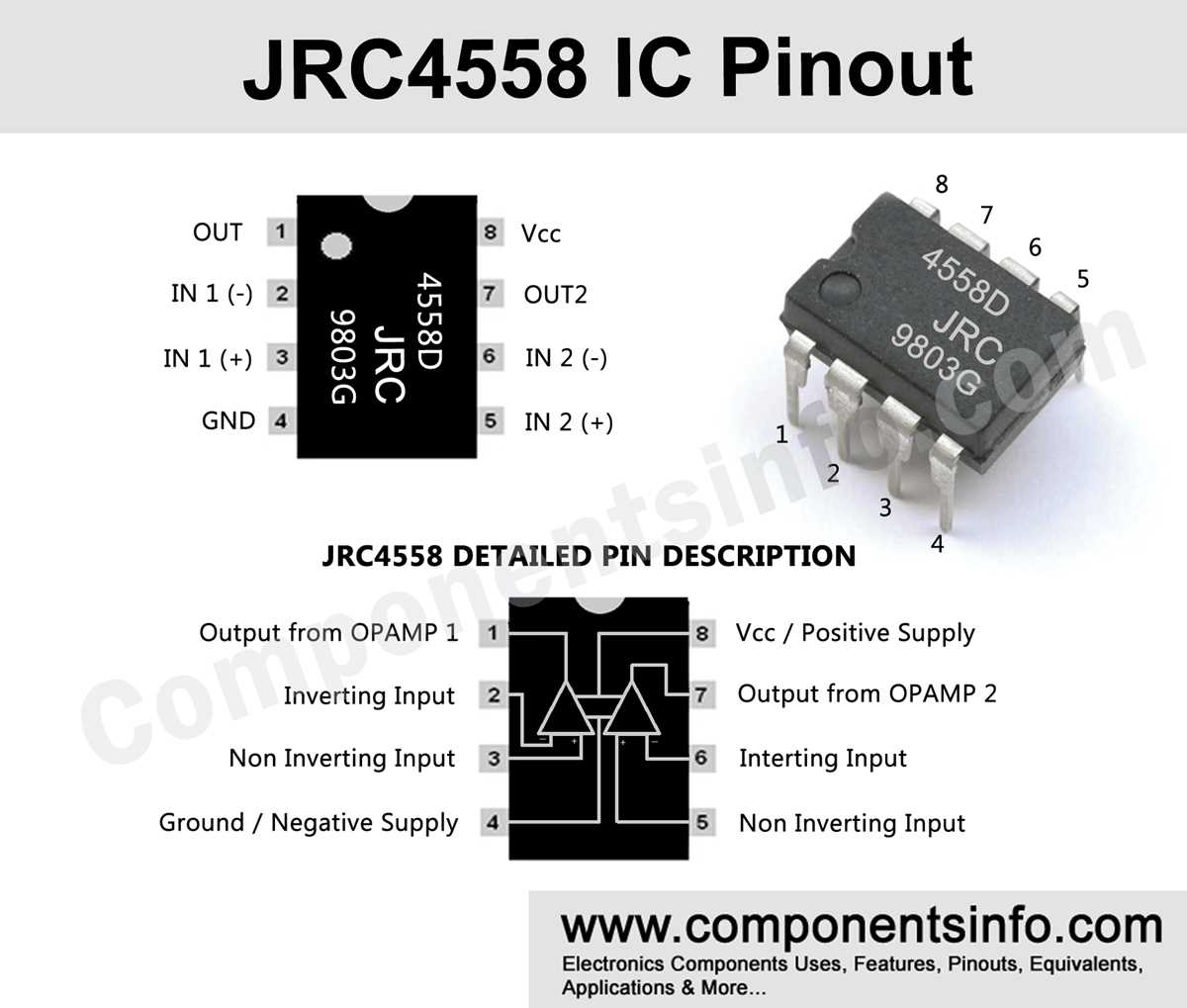
Identify the input and output terminals first to ensure the amplifier stages receive the correct signal direction. The non-inverting input should connect to the signal source through a coupling component, while the inverting input manages feedback loops with resistive elements.
Power pins require precise voltage placement to maintain linear operation. Connect decoupling components near the supply terminals to stabilize high-frequency response and prevent oscillation, and verify polarity before powering the board.
Trace the signal path from input to output carefully to detect potential bottlenecks. Each stage should maintain proper amplitude without introducing noise; use short, direct traces and avoid crossing paths that could induce crosstalk between stages.