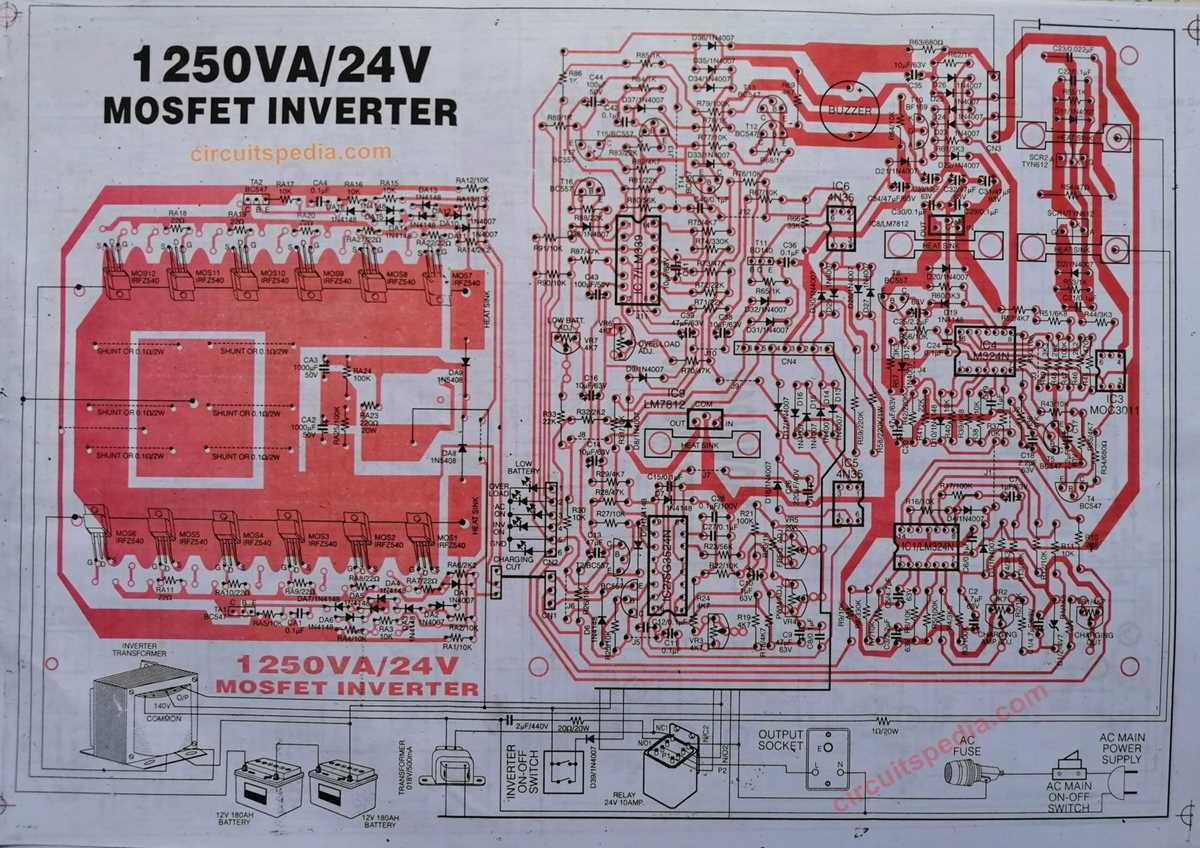
Use a transformer rated for 300–800 W and a switching stage built on power MOSFETs when assembling a DC-to-AC supply unit that also replenishes an energy storage pack. A typical setup relies on a push-pull or H-bridge switching block driven by an oscillator operating around 50–60 Hz or a high-frequency driver followed by a step-up transformer.
The energy storage pack usually operates at 12 V or 24 V. During AC input availability, a rectifier bridge converts mains voltage into DC, which feeds a charge control section. This stage often uses a voltage regulator such as LM317 or a dedicated charge controller IC that limits current and maintains correct voltage levels.
Charging voltage must remain around 13.6–14.4 V for a 12-volt lead-acid storage pack. Exceeding this level produces overheating and electrolyte loss. Current limiting resistors or adjustable regulators keep the flow within safe range, commonly 2–10 A depending on storage capacity.
A relay or automatic transfer module switches the load between mains supply and the DC-AC conversion stage. When utility power disappears, the relay connects the load to the transformer output driven by the MOSFET switching block.
Proper heat sinking on the MOSFET stage and rectifier bridge prevents thermal shutdown and extends component life.
Inverter With Battery Charger Circuit Diagram Using Transformer MOSFET and Charging Section
Select a step-up transformer rated slightly above the intended load, commonly 500 W to 1 kW. The low-voltage winding connects to a MOSFET switching stage that converts DC from a storage pack into alternating pulses which feed the transformer primary.
The switching block often uses two or four power MOSFET transistors such as IRF3205 or similar devices capable of handling currents above 50–80 A. These transistors operate in push-pull configuration driven by an oscillator built on a timer IC or PWM controller.
Typical switching stage connections include:
- Gate leads connected to the oscillator output through 100–220 Ω resistors
- Source pins tied to the negative supply rail
- Drain terminals connected to opposite ends of the transformer primary
- Center tap of the primary winding connected to the positive supply line
AC input charging section feeds the storage pack when mains supply is available. The AC line passes through a step-down transformer followed by a bridge rectifier that converts alternating voltage into DC.
- Bridge rectifier rated for 25–35 A
- Filtering capacitor typically 2200–4700 µF
- Voltage regulator or control module maintaining 13.6–14.4 V for a 12-volt storage pack
A relay transfer stage routes power between utility input and the DC-AC conversion unit. During normal utility supply, the relay connects the load directly to mains and sends rectified DC to the storage pack charging section.
When utility supply disappears, the relay releases and links the load to the transformer secondary driven by the MOSFET switching block. This change usually occurs within a fraction of a second, maintaining power to connected equipment.
Transformer primary and MOSFET switching connections in an inverter power stage
Connect the center tap of the transformer primary winding to the positive DC supply and attach each outer primary lead to the drain terminals of two power MOSFETs. Source pins link to the negative rail, while gate terminals receive alternating drive signals through 100–220 Ω gate resistors. This arrangement forms a push-pull switching stage that alternately energizes each half of the primary winding. For a 12-volt system delivering several hundred watts, the primary current can exceed 30–60 A, so wide copper traces and short conductor paths reduce heat and voltage drop.
Use MOSFET devices rated at least 55–75 V drain-source voltage and high current capacity such as IRF3205 or similar components. Install large aluminum heat sinks and place fast recovery diodes across the primary winding to absorb voltage spikes generated during switching transitions. Gate signals typically come from a timer IC oscillator operating near 50–60 Hz or from a PWM driver when high-frequency conversion is used.