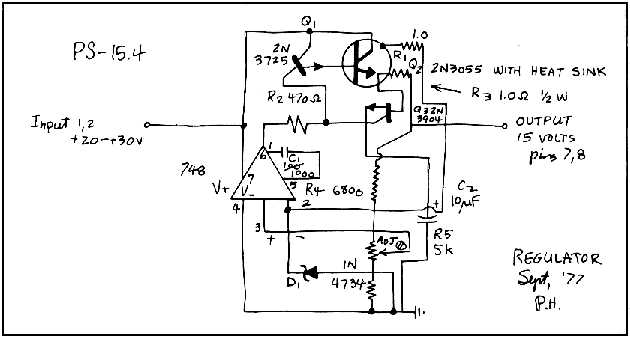
Start by selecting a clear framework for your design. Use a grid-based approach to place components like resistors, capacitors, and transistors, ensuring that connections follow a logical path and avoid overlapping lines. Keeping lines straight and using right angles improves readability and reduces errors.
Label each element distinctly with standardized symbols and values. Annotate voltages, currents, and reference points near each component to make troubleshooting straightforward. Consistent labeling prevents confusion when multiple similar components appear in the layout.
Organize pathways methodically to maintain signal clarity. Group related elements into functional blocks and separate high-voltage and low-voltage sections to prevent interference. Use directional arrows or junction dots to indicate the flow of electricity and connection points clearly.
Double-check connections visually before finalizing the illustration. Cross-verify with component datasheets and circuit specifications to confirm each node is correctly linked. A meticulous inspection at this stage reduces the risk of miswiring during assembly or testing.
Utilize annotation for clarity by including reference numbers, component types, and polarity indicators where applicable. This makes replication or modification easier for anyone reviewing the layout, ensuring that the electrical intent is preserved without ambiguity.
How to Construct a Functional Electrical Layout
Start with a clear plan of component placement. Position resistors, capacitors, transistors, and ICs logically to minimize crossing lines and maintain neat pathways. Maintain consistent spacing to avoid congestion, which reduces errors during assembly or simulation.
Use standardized symbols for each component type. Resistors should appear as zigzag lines or rectangles, capacitors as parallel lines, and diodes with arrows indicating current direction. Accurate representation prevents misinterpretation by collaborators or software tools.
Label every node with voltage or signal names. This includes power rails, ground connections, and intermediate junctions. Clear labeling ensures that connections are unambiguous and testing points are easy to identify during troubleshooting.
Implement a hierarchical approach for complex assemblies. Divide sections into functional blocks such as amplification, filtering, or switching. Each block can be represented as a single module with defined input and output terminals, simplifying the overall layout.
Wire Routing Techniques
Use straight lines for conductive paths, avoiding sharp angles where possible. Horizontal and vertical alignments enhance readability. Differentiate signals by line thickness or annotation for analog, digital, and power lines, ensuring clarity for interpretation or simulation.
Check for connectivity errors with continuity tools or simulation software before finalizing. Unconnected pins, shorts, or missing paths can disrupt performance. Correct these early to prevent costly adjustments during prototype construction.
Maintain a legend or key for symbols, line styles, and annotations. This reference accelerates comprehension for anyone reviewing the layout and guarantees uniformity if multiple engineers collaborate on the project.
Identifying and Labeling All Components Clearly
Assign unique identifiers to each element, using standard notation such as R1, C2, L3, or Q4. Consistency in labeling prevents misinterpretation during assembly or testing.
Position labels adjacent to their corresponding symbols without overlapping lines. If multiple connections converge, shift the text slightly to avoid confusion while maintaining proximity.
Component Values and Ratings
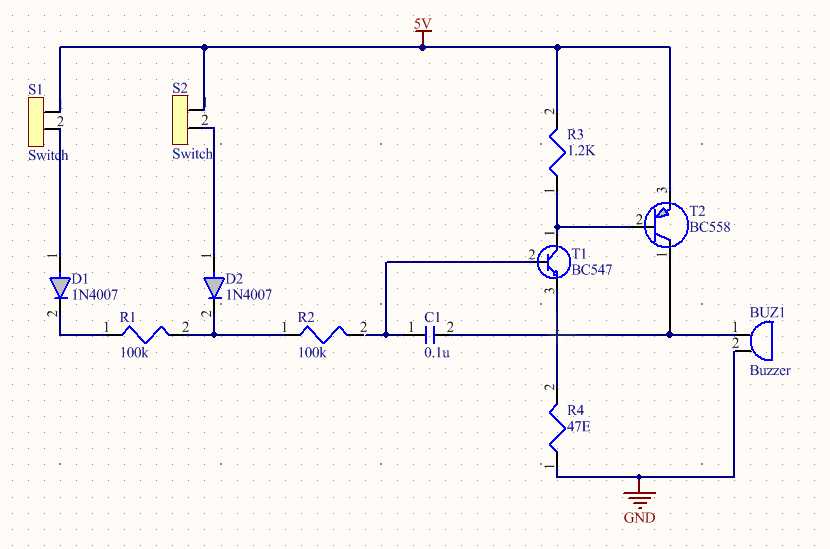
Include explicit values and tolerances next to resistors, capacitors, and inductors. Example: R1 = 10kΩ ±1%, C2 = 100nF 50V. For semiconductors, specify type and package, e.g., 2N3904 (TO-92).
- Voltage sources: Indicate exact voltage, polarity, and current limits.
- Diodes: Note part number and forward voltage.
- Transistors: Include configuration (NPN/PNP) and gain range.
Use directional arrows for components with polarity, such as LEDs, electrolytic capacitors, or diodes, and ensure the marking aligns with physical orientation.
Number connectors and terminals sequentially. For multi-pin ICs, label pins according to the manufacturer datasheet to avoid miswiring. Include pin functions if they are non-obvious.
Cross-Referencing and Notes
Link components to reference sheets or BOM (Bill of Materials) entries using a footnote system or numbered references. Brief annotations, like “test point” or “measure voltage here,” enhance clarity for anyone reviewing the schematic.
Regularly review the layout to confirm no duplicate identifiers exist and every part has a corresponding label. Maintaining an organized labeling scheme reduces errors during prototyping and production.