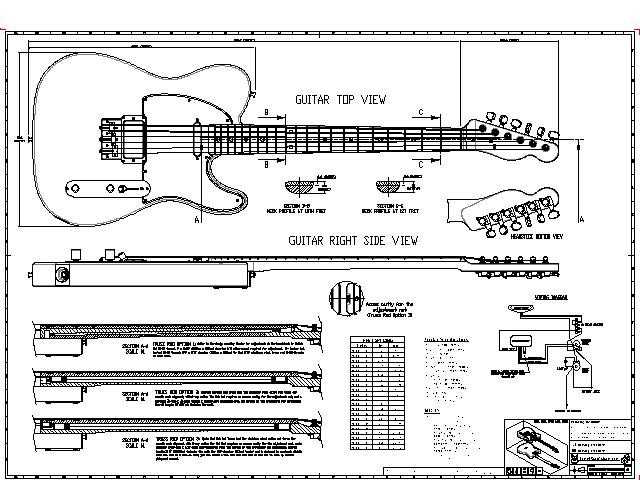
Connect the bridge pickup hot lead to the first lug of the three-position selector and attach the neck pickup hot lead to the opposite lug; the center terminal then routes the signal toward the volume potentiometer. Use a 250 kΩ audio taper pot for volume control and route its output to the tone circuit and jack terminal. This layout mirrors the standard control configuration used in classic single-cut electric guitars introduced during the early 1950s.
The tone circuit usually relies on a 250 kΩ potentiometer paired with a 0.047 µF capacitor. Solder one capacitor lead to the tone control outer lug while the other attaches to the casing of the same potentiometer, forming the ground path. Rotating the tone knob gradually redirects high frequencies through the capacitor, reducing treble while keeping midrange response stable.
Ground connections require attention. Attach pickup shielding, bridge plate ground wire, and the sleeve terminal of the output jack to the back of the volume potentiometer housing. Use short soldered connections and keep conductor length under 4–6 cm inside the control cavity. This layout reduces hum produced by single-coil pickups, which often measure around 6–7.5 kΩ DC resistance.
The three-position selector controls pickup combinations. Position one activates the bridge pickup alone, position two connects both pickups in parallel, and position three activates the neck pickup alone. This arrangement delivers bright attack from the bridge unit and warmer response from the neck unit, while the middle setting blends both signals through the shared volume and tone controls.
Fender Telecaster Wiring Diagram Guide With Pickup Selector Volume and Tone Connections
Connect the bridge pickup hot conductor to the first outer terminal of the three-position selector and attach the neck pickup hot conductor to the opposite outer terminal. The middle terminal of the selector carries the combined signal toward the volume potentiometer input lug. Use cloth or PVC insulated wire with diameter near 22 AWG, a common size inside classic solid-body guitar control cavities.
Three Position Pickup Selector Connections
The lever selector routes signal from the magnetic transducers toward the control circuit. Proper lug placement determines which pickup becomes active in each lever position.
- Position 1 – bridge pickup only
- Position 2 – bridge and neck units connected in parallel
- Position 3 – neck pickup only
- Common terminal – signal output toward volume potentiometer
Route the selector output wire to the first lug of a 250 kΩ audio taper volume potentiometer. The middle lug of this potentiometer sends signal toward the output jack tip contact. The third lug attaches to the back of the same potentiometer casing, creating the ground reference. This layout keeps signal flow simple and reduces unwanted noise.
Tone Control and Capacitor Path
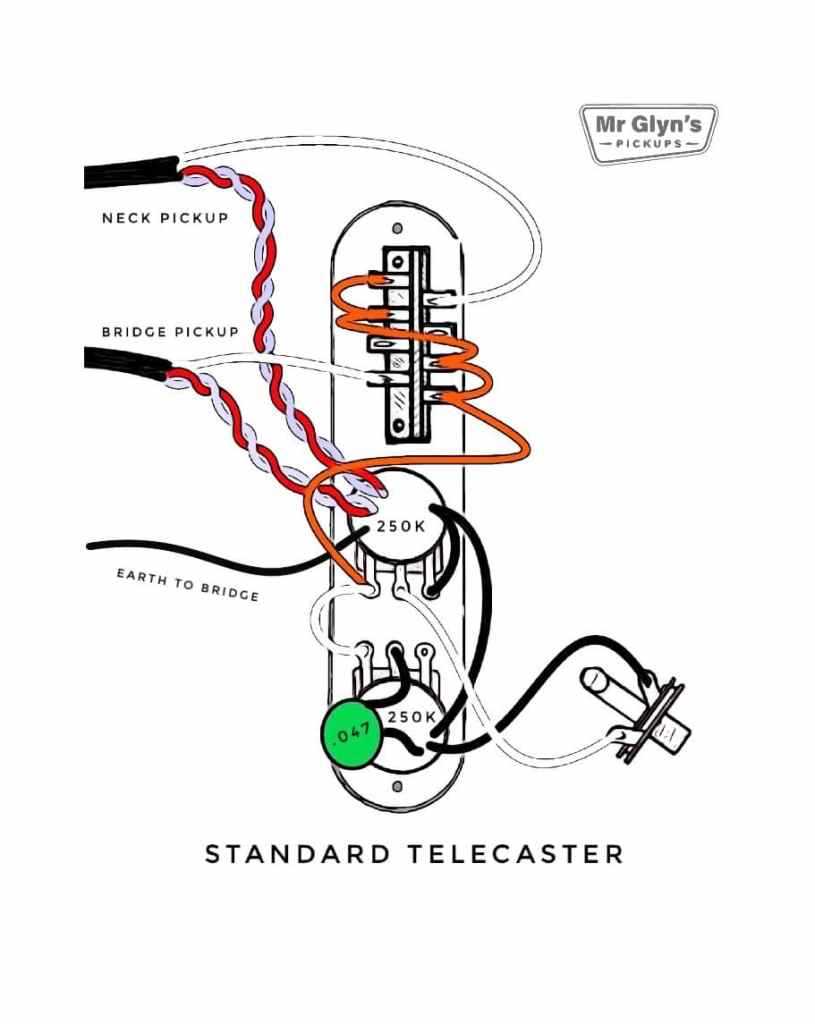
The tone circuit shapes high-frequency content through a capacitor connected to a second potentiometer.
- Solder a 0.047 µF capacitor between the tone potentiometer outer lug and its metal casing.
- Connect the remaining outer lug to the volume potentiometer input.
- Link both potentiometer casings using short ground wire.
- Attach the sleeve contact of the output jack to the same ground point.
Bridge grounding improves noise suppression in single-coil instruments. A thin bare conductor runs from the metal bridge plate into the control cavity and solders to the back of the volume potentiometer. Keep this connection shorter than 5 cm; long ground leads may introduce hum through electromagnetic interference.
Verify signal continuity before reinstalling the control plate. Measure pickup resistance using a multimeter: bridge unit commonly reads 6.0–7.2 kΩ while neck unit often measures 6.5–7.8 kΩ. Stable readings confirm correct solder joints and intact internal coils.
Standard Fender Telecaster Wiring Diagram With Three Way Pickup Selector and Two Knobs
Connect the bridge pickup hot lead to one outer terminal of the three-position blade selector and attach the neck pickup hot lead to the opposite outer terminal. The center terminal of this selector carries the combined signal toward the first potentiometer. In this classic single-cut electric guitar layout, the first knob controls output level while the second shapes high-frequency response.
Three Position Blade Selector Layout
The blade selector determines which magnetic pickup feeds the control circuit. Lever movement changes internal contacts that route the signal through the same output path leading to the volume control.
Position settings:
Position 1 activates the bridge pickup only, delivering sharp attack and pronounced treble. Position 2 connects both pickups in parallel, producing a balanced tone with moderate output. Position 3 activates the neck pickup, which typically produces warmer midrange response.
Volume and Tone Knob Connections
Route the selector output to the first lug of a 250 kΩ audio taper potentiometer. The middle lug sends signal to the output jack tip terminal, while the third lug attaches to the metal casing acting as ground. The tone knob uses another 250 kΩ potentiometer paired with a 0.047 µF capacitor. One capacitor lead connects to the tone potentiometer outer lug and the second lead solders to the casing, forming a treble-cut path.
Ground paths join at the back of the volume potentiometer. Solder pickup shielding, bridge ground wire, and the sleeve contact of the output jack to this point. Keep internal conductor length under 5–6 cm inside the control cavity to reduce electromagnetic noise that commonly affects single-coil pickup designs.