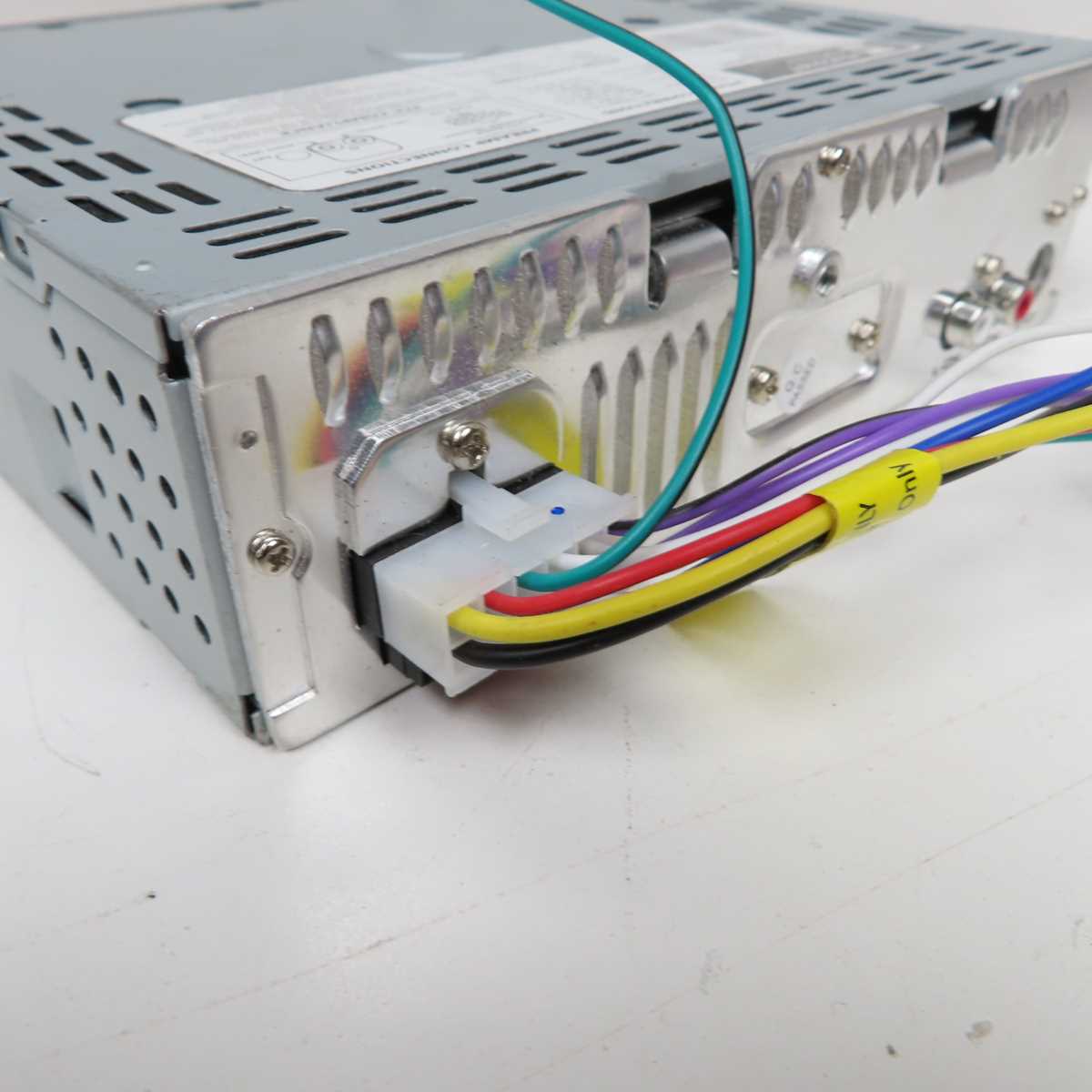
Match each harness lead by color before connecting the audio receiver to the vehicle electrical system. The constant power line usually appears in yellow and links to the battery feed that maintains memory for radio presets and clock settings. The ignition-controlled supply often uses a red conductor, delivering voltage only when the key switch moves to ACC or ON.
Ground must connect to bare metal on the chassis through the black lead from the receiver harness. Poor grounding produces noise, weak amplifier output, or random resets during engine start. Use a ring terminal and secure the connection to a factory bolt point whenever possible.
Speaker outputs follow paired color groups. Each pair contains a solid color for positive and a matching stripe version for negative. Typical sets include white and white with black stripe for the front left channel, gray and gray with black stripe for the front right channel, green pair for the rear left, and purple pair for the rear right.
Additional control leads appear in many receiver harnesses. The blue conductor activates an external amplifier or powered antenna, while the orange or orange with white stripe connects to dashboard illumination so display brightness follows the vehicle lighting switch.
Head Unit Connection Layout With Color Codes Power Leads and Speaker Connections
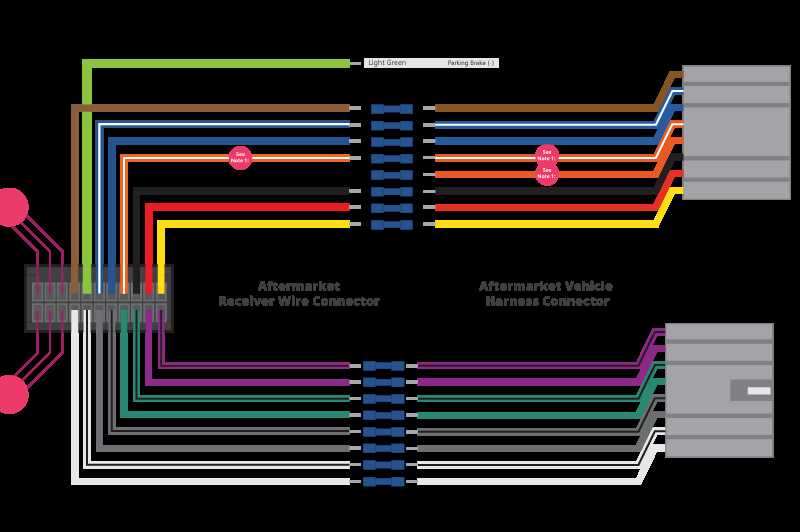
Connect the yellow lead to constant battery voltage and the red lead to the ignition controlled supply. The yellow conductor maintains memory for station presets and clock settings, while the red conductor powers the receiver only when the key switch moves to ACC or ON.
The ground connection must attach to bare chassis metal using the black lead. Scrape paint from the mounting point and secure the terminal under a factory bolt. Poor grounding often causes engine noise through speakers or sudden resets during engine start.
Speaker outputs appear as color pairs. Each pair includes a solid color for positive and the same color with a black stripe for negative. Typical channel mapping follows this pattern: white pair for front left, gray pair for front right, green pair for rear left, and purple pair for rear right.
Match each speaker lead carefully. Reversed polarity between channels weakens bass response and shifts sound balance inside the cabin. Positive conductors should connect to the speaker terminal marked with a plus sign or a larger tab.
Additional control leads handle external equipment. A blue conductor activates a power antenna or external amplifier. An orange or orange with white stripe lead links to dashboard illumination so display brightness follows the vehicle lighting switch.
Use crimp connectors or solder joints covered with heat shrink tubing. Loose twists wrapped only with tape often fail due to vibration and temperature changes behind the dashboard.
After connecting all harness leads, reconnect the battery and test audio channels one by one. Verify that front and rear speakers play from the correct positions and confirm that memory settings remain stored after turning the ignition off.
Head Unit Wire Color Codes for Power Ground Ignition and Illumination
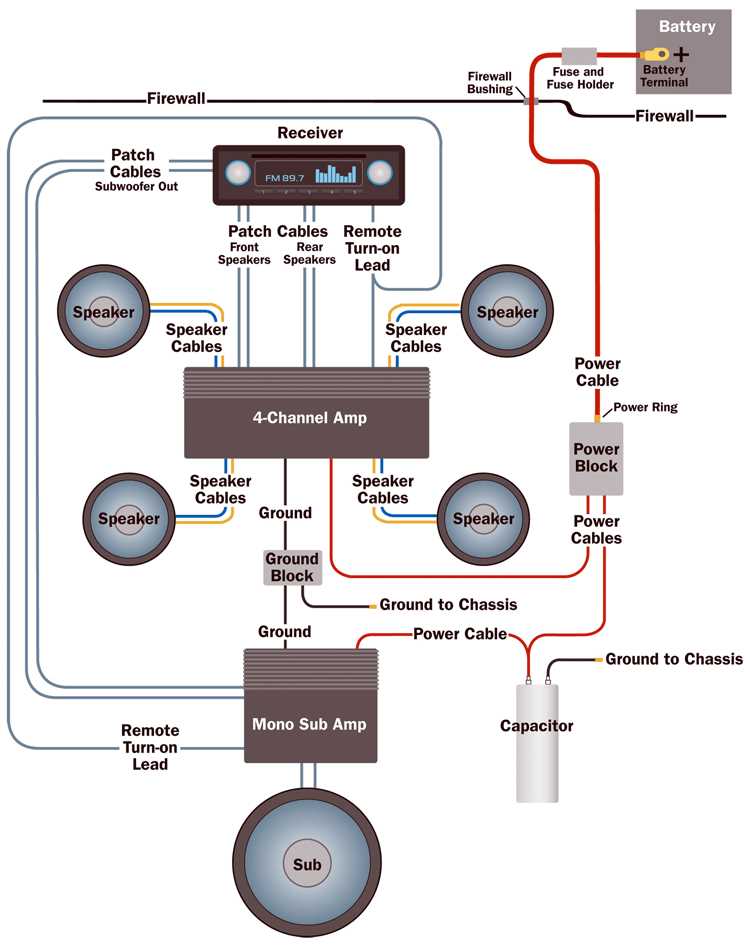
Identify the power supply conductors before connecting the audio receiver harness. These lines control memory retention, ignition activation, chassis grounding, and display lighting. Matching each conductor by color prevents blown fuses and startup failures.
The primary supply leads follow a widely used color convention. Most aftermarket receivers rely on these assignments:
- Yellow constant battery feed that maintains presets and clock memory
- Red ignition controlled voltage from the ACC or ON key position
- Black chassis ground connection attached to bare metal
- Orange or orange with white stripe dashboard lighting control
Connect the yellow conductor directly to a fused battery line. Voltage on this lead normally measures about 12.6 V with the engine off and around 13.7–14.4 V while the alternator operates.
The red conductor activates the receiver only after the key switch moves to the accessory or run position. If this line connects to constant voltage, the audio unit remains powered and may drain the battery within several hours.
Ground stability strongly affects sound quality. Secure the black lead to the vehicle body using a bolt and a ring terminal. Remove paint from the contact area to lower resistance and reduce alternator noise through speakers.
Illumination control allows the display brightness to follow dashboard lighting. The orange conductor receives voltage once the headlight switch turns on. Many receivers dim the display automatically after detecting this signal.
Additional control conductors may appear in the harness:
- Blue power antenna trigger
- Blue with white stripe external amplifier remote activation
Verify voltage with a multimeter before connecting any harness lead. Measuring each line prevents confusion between battery supply and ignition lines inside the dashboard connector.