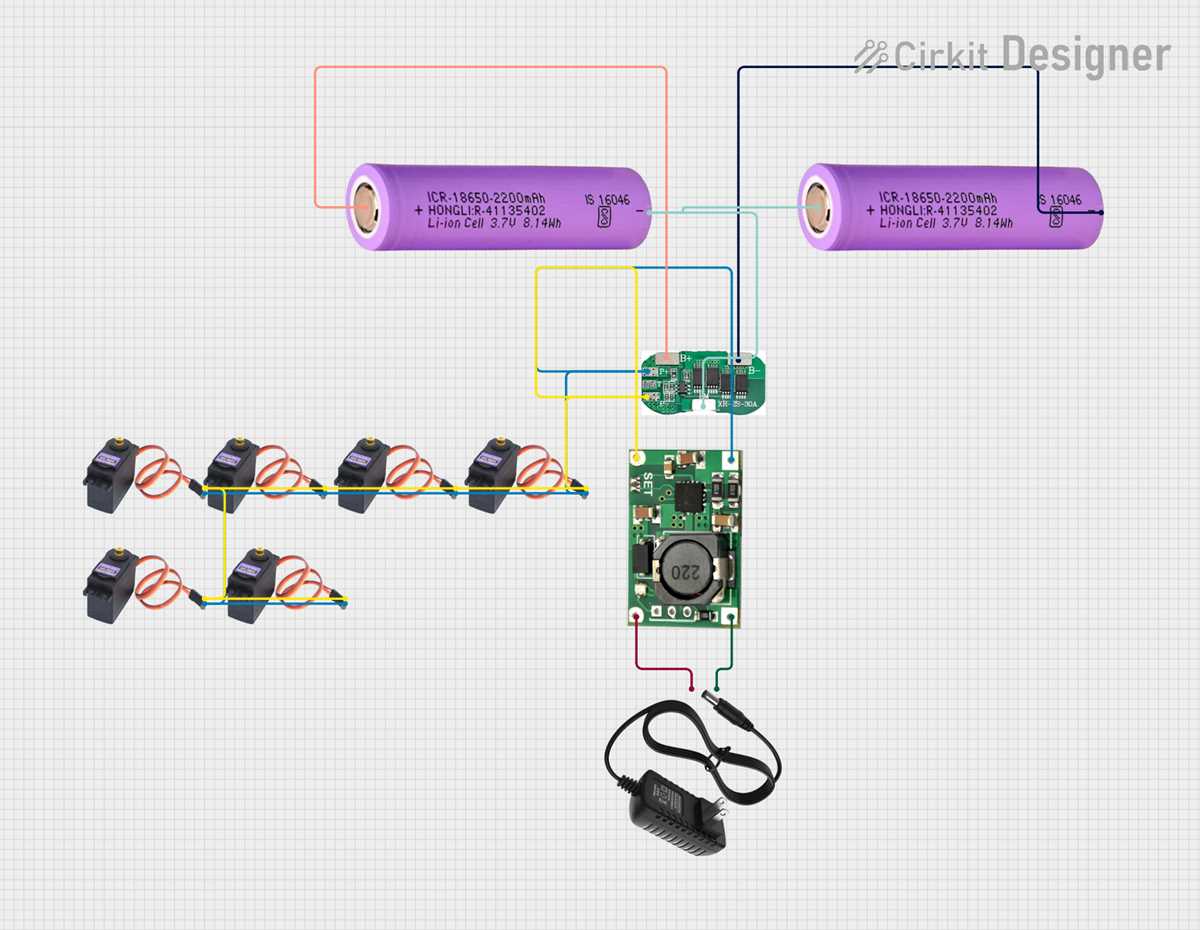
Use a protection board designed for three lithium-ion cells connected in series; this configuration produces about 10.8–12.6 V across the pack and requires monitoring of each cell node. Select a controller IC that measures the voltage of all three cells separately and disconnects the pack through dual MOSFET switches once any cell reaches roughly 4.20 V during charging or falls near 2.8–3.0 V during discharge. The wiring layout places sense lines at the junctions between cells (B1, B2, B3) while the pack terminals connect through the switching transistors to the load and charger.
The protection board normally integrates two N-channel MOSFETs in back-to-back orientation so current can be blocked in both charge and discharge directions. For packs rated near 10–20 A, transistors with RDS(on) below 8 mΩ reduce heating and voltage drop. A low-value shunt resistor, typically between 5 mΩ and 20 mΩ, feeds the controller’s current detection input. Once pack current exceeds the programmed threshold–often 30–60 A peak for small tools or lighting modules–the controller opens the MOSFET gate drive within a few milliseconds.
Cell balancing improves pack longevity. Many protection boards include passive balancing resistors around 50–100 Ω, allowing a bleed current of roughly 40–80 mA once a cell approaches 4.18–4.20 V. These resistors connect through small transistors driven by the monitoring IC. While modest, this bleed current gradually equalizes the voltage difference between cells during the final stage of charging.
Thermal monitoring is commonly added through an NTC thermistor (10 kΩ at 25 °C) attached near the cells. The controller halts charging above about 55–60 °C and blocks discharge near 70 °C. Copper traces carrying pack current should exceed 3–4 mm width for 10 A on standard 1-oz copper boards, or thicker copper should be used for higher current applications. This layout keeps voltage sensing accurate while maintaining safe operation of the three-cell lithium battery pack.
Design and Connection Guide for a Three-Cell Lithium Protection Board
Select a protection board rated for a three-cell lithium pack (nominal pack level about 10.8 V, fully charged near 12.6 V) and confirm that the chipset supports balancing at 30–60 mA per cell. A board built around controllers such as DW01-type multi-cell variants or similar supervisory ICs should include separate sense pads for each cell junction. Continuous discharge rating must exceed the planned load by at least 25 %. Example: for a 6 A device load, choose a board rated for 8–10 A continuous current.
Cell connection order determines whether the protection electronics survive the first power-up. Lithium elements must be wired sequentially from the lowest potential node toward the pack positive terminal. Each monitoring pad measures the voltage difference between neighboring junctions; reversing the order may destroy the controller instantly.
- Pad B- → negative terminal of the first cell
- Pad B1 → junction between cell 1 and cell 2
- Pad B2 → junction between cell 2 and cell 3
- Pad B+ → positive terminal of the third cell
Use copper traces or wires sized for expected current. For loads under 5 A, 22 AWG copper is adequate; for 10 A choose 18 AWG. Excessively thin conductors increase resistance, producing voltage drop and heat near the switching MOSFET pair that handles charge and discharge control.
Balancing resistors on most boards operate passively. When any cell exceeds roughly 4.18–4.20 V, the controller activates a small resistor network that bleeds several dozen milliamps from the highest cell. This equalizes the pack during charging. Passive balancing works slowly; a pack assembled from cells with capacity mismatch above 5 % will drift over repeated cycles.
- Measure each cell individually; voltage difference should stay below 0.03 V before assembly.
- Spot-weld nickel strips instead of soldering directly on lithium terminals.
- After wiring, verify node voltages with a multimeter before connecting the load port.
- Charge the pack through the board’s dedicated P+ and P- pads.
Protection thresholds depend on the controller configuration. Typical values used in many boards:
- Over-charge cutoff: 4.25 ± 0.05 V per cell
- Over-discharge cutoff: 2.7–3.0 V per cell
- Over-current trigger: 1.5–3× rated continuous current
- Short-circuit response time: 100–500 µs
Thermal placement affects reliability. Mount the board where airflow exists and avoid contact with insulating foam used around the cells. The MOSFET pair may dissipate several watts under heavy discharge; a small aluminum plate attached to the board ground plane reduces temperature rise.
Before integrating the pack into equipment, run two verification steps: charge the battery to 12.6 V while checking that no cell exceeds 4.22 V, then apply a controlled discharge until the board disconnects near 8.1–9.0 V pack level. These tests confirm correct monitoring and switching behavior.