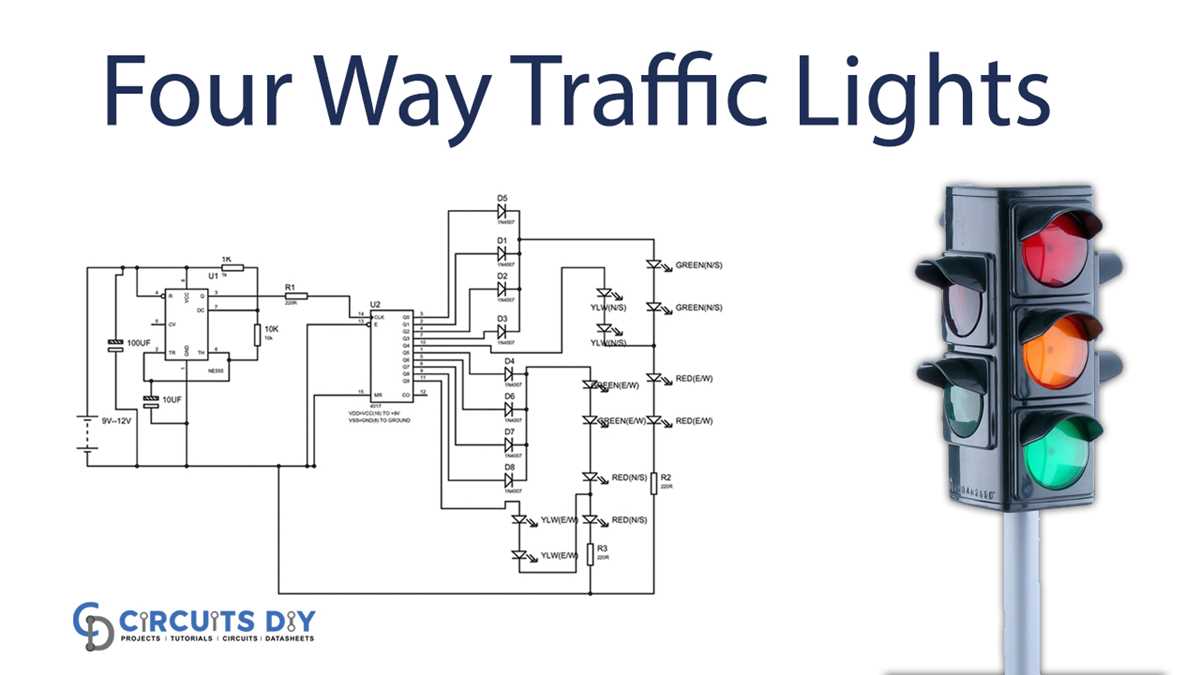
Connect each LED to the designated output according to the timing controller. Use current-limiting resistors to prevent burnout, with values calculated based on supply voltage and LED specifications.
Program timing intervals precisely using a microcontroller or timer IC. For a standard three-color sequence, set red to 5 seconds, yellow to 2 seconds, and green to 5 seconds, adjusting as needed for synchronization with other devices.
Ensure proper power supply and polarity for all components. Incorrect voltage or reversed connections can damage LEDs, resistors, or the controller chip, so verify each connection with a multimeter before powering the system.
Test the full sequence under operational conditions. Observe transitions between each state, ensuring no overlap or skipped steps. Adjust resistor values or timing settings if any LED flickers or delays unexpectedly.
Step by Step Control Signal Sequencing with Timing and Connections
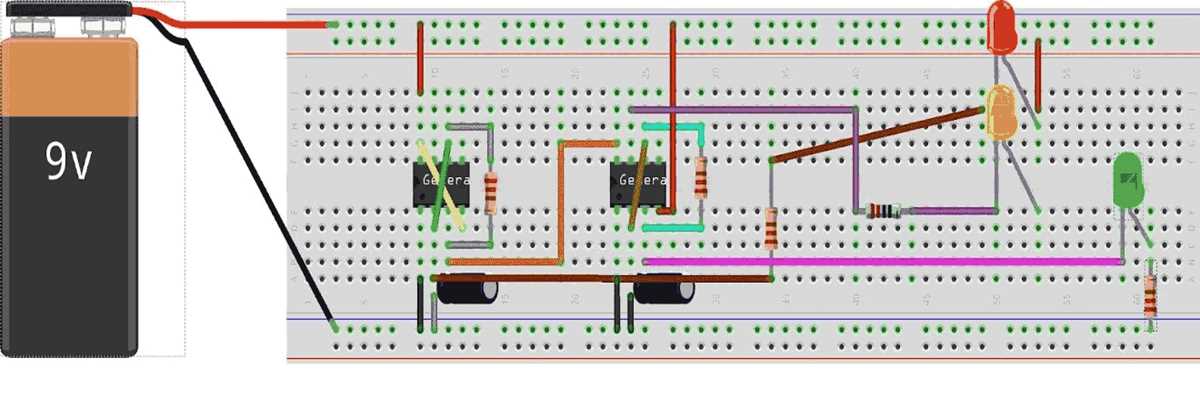
Connect each LED to the correct output terminal using current-limiting resistors rated based on the supply voltage and LED specifications. Red typically draws 20 mA, green 20 mA, and yellow 15-20 mA depending on brightness.
Set up the timing module with precise intervals to manage each LED state. Standard sequencing often uses 5 seconds for the first LED, 2 seconds for the transition LED, and 5 seconds for the last LED. Adjust intervals for coordination with other modules if needed.
Ensure consistent power supply with regulated voltage to prevent flickering or component damage. Verify polarity before connecting LEDs and timing elements to avoid reverse-bias failures.
Use soldered connections or reliable terminal blocks to secure all conductors. Loose contacts can cause intermittent operation and unpredictable state changes in the sequence.
Testing Individual LEDs
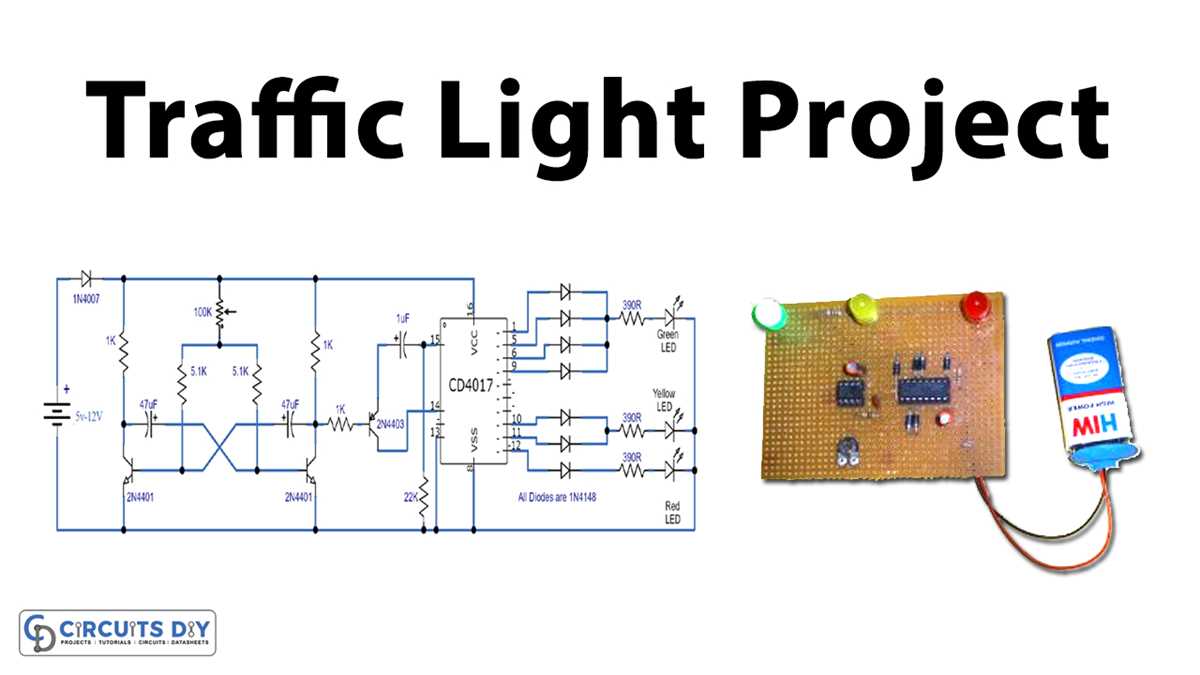
Power each LED independently to confirm correct polarity and brightness. Replace any component that fails to illuminate properly before integrating into the full sequence.
Monitor voltage drop across resistors and LEDs to ensure it matches calculated values. Minor adjustments may be needed to equalize brightness among all indicators.
Full Sequence Verification
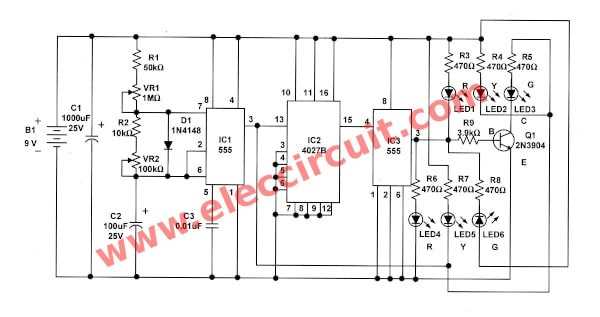
Run the complete sequence under normal supply and observe transitions between all states. Check that no LED overlaps incorrectly or remains on longer than intended. Adjust timing or wiring if the sequence is inconsistent.
Document each connection and timing setting to simplify future troubleshooting. Clear labeling helps maintain system reliability and allows easy integration with additional modules or expansion boards.
Identifying Components and Their Roles in the Control Setup
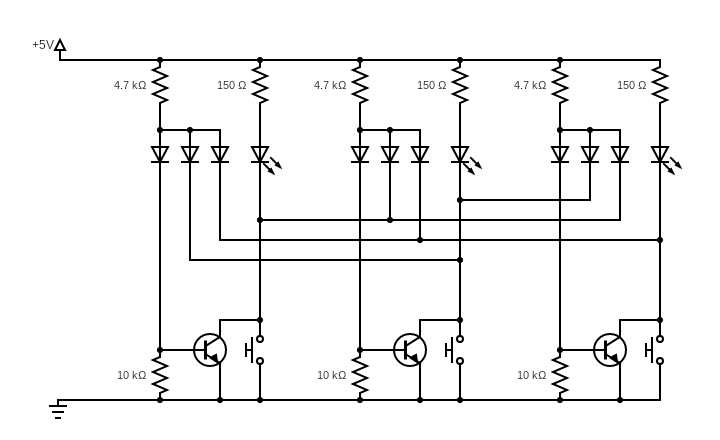
Start by selecting the LED indicators based on brightness and color specifications. Red, yellow, and green LEDs require 20 mA typical forward current and a forward voltage of 2-3.3V. Ensure consistent intensity across all indicators.
Choose resistors to limit current according to LED specifications. Calculate values using the formula R = (Supply Voltage – LED Voltage) / Desired Current. For a 5V supply with a 2V red LED at 20 mA, use a 150-ohm resistor.
Select the timing controller to manage sequences. Common options include 555 timer ICs or microcontrollers. Program precise intervals, such as 5 seconds for the first LED, 2 seconds for the transition, and 5 seconds for the final LED.
Include a regulated power source to stabilize all components. Ensure voltage matches LED and timing module requirements and include decoupling capacitors to prevent voltage spikes.
- LEDs: Provide visual indication of each stage.
- Resistors: Control current to prevent damage.
- Timing Module: Manages state duration and sequence.
- Power Supply: Provides stable voltage and current.
- Connecting Wires: Maintain secure paths between components.
Check switches or push buttons if included for manual override or testing. Ensure contacts are rated for the current drawn by the LEDs and timing module.
Use terminal blocks or soldered joints to secure all connections. Loose contacts can create intermittent operation or signal errors.
Document all component specifications and placement for future troubleshooting or expansion. Clear labeling helps maintain correct operation and simplifies modifications.
Test each component individually before integrating into the full setup. Verify LED operation, resistor values, timing intervals, and power supply stability to ensure reliable overall performance.