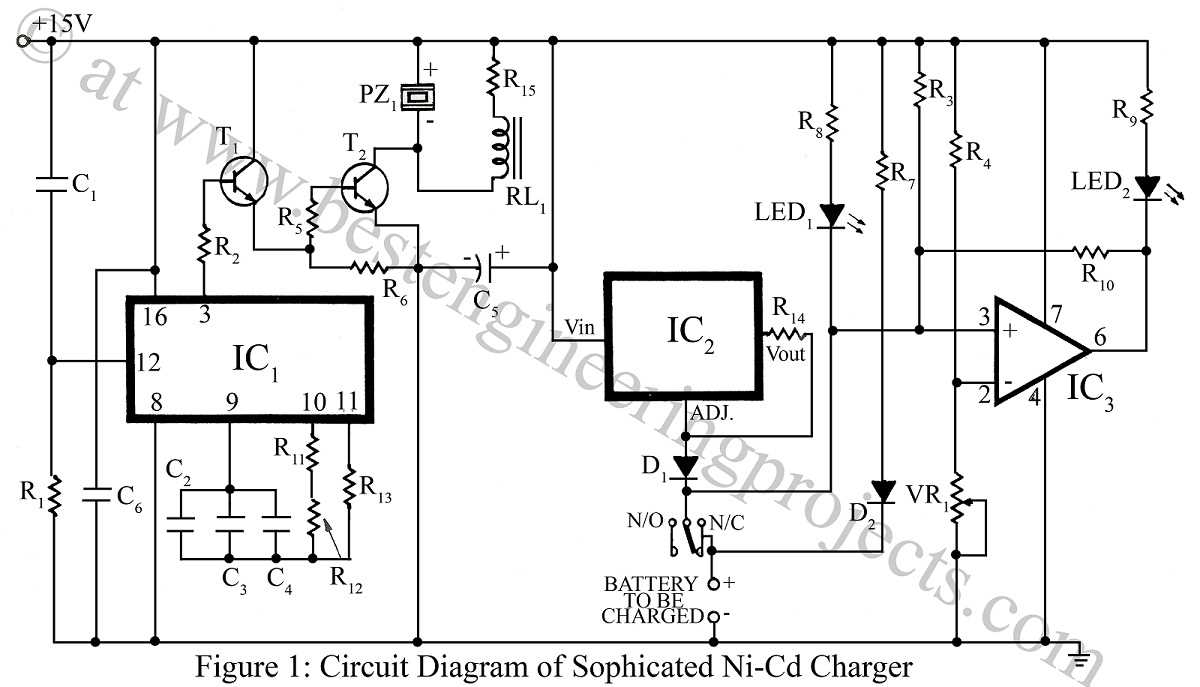
Use a step-down transformer rated 220 V to 12–15 V as the first stage in a battery power restoration device. The secondary winding feeds a bridge rectifier built from four diodes, commonly rated at 3–6 A. This stage converts alternating current from the mains into pulsating direct current that can be smoothed before reaching the accumulator terminals.
Place a filter capacitor between 2200 µF and 4700 µF directly after the diode bridge. This component reduces voltage ripple and stabilizes the output delivered to the regulation stage. Without this capacitor the ripple amplitude may exceed 3–5 V, which can stress battery cells and create unstable charging current.
Voltage stabilization typically relies on a linear regulator such as LM317 or a transistor-based control stage with a reference diode. Adjust the output through a resistor pair so the final voltage matches the battery type. For example, a 12 V lead-acid unit usually requires around 14.2–14.6 V during the charging phase.
Include a series resistor or current limiting transistor between the regulator output and the battery terminals. Charging current often stays within 0.1C of battery capacity; a 7 Ah accumulator therefore receives about 0.7 A. Add a fuse on the input side rated slightly above operating current to protect the power supply components from overload.
Battery Charger Circuit Diagram With Transformer Rectifier Filter and Voltage Control
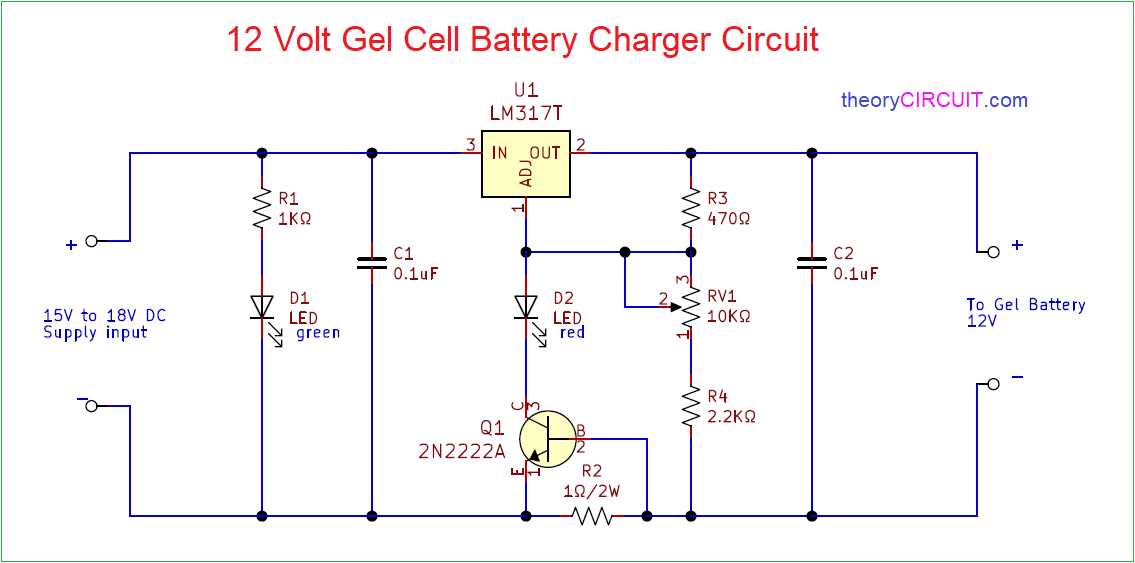
Use a step-down transformer rated 220 V to 15 V AC at the input stage of the battery power restoration unit. The secondary winding delivers alternating voltage suitable for conversion into direct current. A transformer rated around 2–3 A supports small lead-acid accumulators between 5 Ah and 12 Ah without overheating.
Route the secondary output toward a bridge rectifier composed of four silicon diodes. Popular components include 1N5408 or similar devices rated above 3 A continuous current. This rectification stage converts the alternating waveform into pulsating DC that feeds the smoothing stage.
Place an electrolytic capacitor after the rectifier bridge to stabilize voltage. Typical capacitance ranges between 2200 µF and 4700 µF with voltage rating near 25–35 V. Larger capacitance reduces ripple amplitude and keeps the output voltage close to the peak value generated by the transformer secondary.
Voltage regulation occurs through a linear control component such as LM317 or a transistor pair with a reference diode. Adjust the resistor network connected to the regulator so the output matches the battery type. A 12 V lead-acid accumulator normally receives about 14.4 V during the charging phase.
Add a current limiting resistor or transistor stage between the regulator output and the battery terminal. Charging current often follows the 0.1C rule; a battery rated at 10 Ah therefore receives roughly 1 A. This restriction prevents plate overheating and reduces gas generation inside the battery cells.
Place a fuse rated slightly above operating current on the primary side of the transformer. A 2–3 A fuse suits small household units connected to 220–230 V mains. This protective element disconnects the power supply during short circuits or component failure, preventing damage to the transformer and rectifier assembly.
How Transformer Rectifier and Capacitor Filter Connect in a Battery Charger Circuit
Connect the step-down transformer secondary directly to the two AC input terminals of a diode bridge. The transformer typically reduces mains voltage from 220–230 V to about 12–18 V AC, depending on the battery type. A unit rated near 2 A suits small accumulators used in backup power units or portable equipment.
Rectifier Bridge Connection
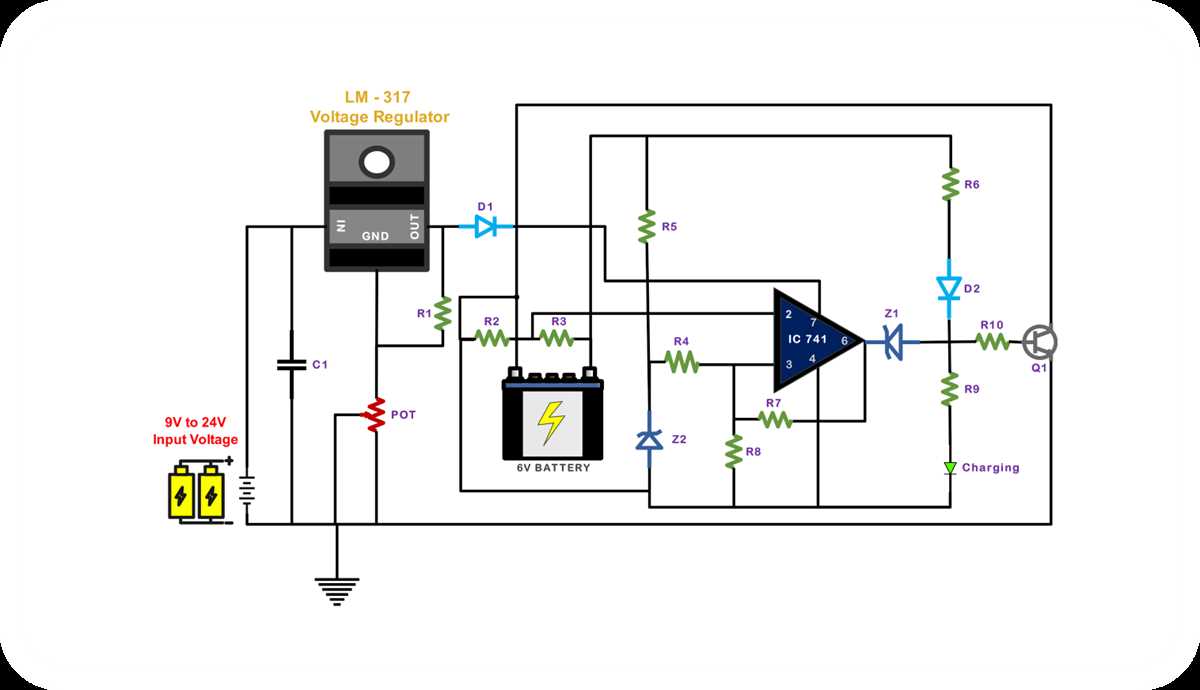
The diode bridge converts alternating voltage into pulsating direct current. Each diode must tolerate the expected current and reverse voltage produced by the transformer.
- Connect transformer secondary lead one to the first AC terminal.
- Attach transformer secondary lead two to the second AC terminal.
- The positive bridge terminal becomes the DC output toward the filter stage.
- The negative bridge terminal forms the ground reference.
Place an electrolytic capacitor across the positive and negative DC outputs immediately after the rectifier bridge. Typical values range between 2200 µF and 4700 µF with voltage rating near 25–35 V. This component stores charge during voltage peaks and releases it between peaks, reducing ripple amplitude and providing smoother DC supplied to the regulation stage and battery terminals.