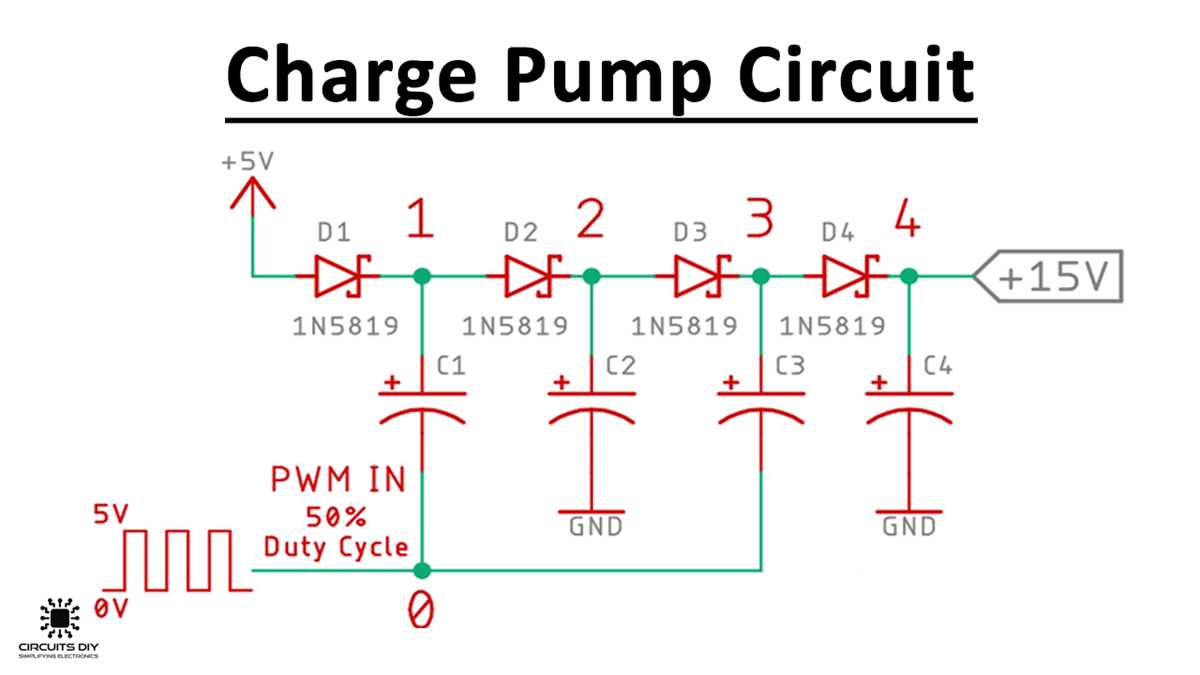
To step up or invert voltages in your electronics projects, a simple but effective approach is to use a voltage multiplier. This method uses capacitors and diodes to achieve higher voltages from a lower input. It’s common in small power supply units, like for embedded systems or where compact designs are necessary. If you’re building one yourself, knowing how to wire it for optimal performance is crucial.
The configuration typically involves an input capacitor, a set of diodes, and an output capacitor that handles the voltage conversion. One of the main advantages of this design is its efficiency at low power levels, making it suitable for applications where size and cost are a concern. However, correct component choice, such as the right diodes and capacitors, is vital to ensure that it operates within the desired voltage ranges.
With this setup, the output voltage can be multiplied by a set factor, and understanding how to scale this depending on your application is key. This type of solution is often found in devices like RF transmitters, portable electronics, and battery-powered gadgets that require higher output voltages from a smaller input. Once the basic design is mastered, adjustments for performance and stability are straightforward.
How a Voltage Multiplier Works
To boost voltage levels in electronic devices, a voltage multiplier uses capacitors and diodes in a specific arrangement. The input voltage is increased by the capacitors during a charging phase, and then transferred to the output using diodes. This type of power conversion is highly effective for low-power applications that require voltage steps without complicated circuitry.
The diodes in the system act as one-way valves for electrical current, ensuring that the voltage only moves in the correct direction. The capacitors store the energy and are responsible for the multiplication of voltage when switching between charging and discharging states. This design reduces the need for larger, more complex power supply units.
Key Components: Diodes and Capacitors
Diodes are critical components in this setup, directing current flow in a way that allows for voltage to be multiplied. These components need to be carefully selected for their forward voltage and current capacity to ensure smooth operation. Additionally, the capacitors must be rated for the appropriate voltage levels to handle the potential increase in voltage.
The configuration typically involves a combination of series and parallel connections of these components, depending on whether you need to step up or invert the voltage. For example, inverting circuits swap the positive and negative poles of the input, whereas step-up circuits simply multiply the voltage by a given factor.
Practical Applications
Voltage multipliers are commonly used in battery-powered devices, small electronics, and low-power applications. They are particularly useful in scenarios where the available voltage is insufficient to power certain components. For example, RF transmitters, small sensors, or portable devices that require an increased voltage often use this simple power boosting method.
For applications where size and cost are a concern, using this approach is an ideal choice. The components are compact, cost-effective, and easy to implement, making it an attractive solution for engineers working on projects with limited space or budget.
In conclusion, a well-designed voltage multiplication setup can efficiently provide higher voltages for small-scale devices. By choosing appropriate components and tuning the circuit for your specific needs, you can achieve reliable power conversion with minimal complexity and cost.
How to Design a Basic Voltage Doubling Circuit
To design a simple voltage-doubling setup, start with a DC voltage source and connect it to a capacitor and a diode. The key is to charge the capacitor during the first phase, then use the diode to direct the energy to the output during the second phase. This results in doubling the input voltage by alternating between storing and transferring charge through the components. Use capacitors with appropriate voltage ratings to ensure that they can handle the increased potential without breaking down.
For a basic design, arrange the components in a series configuration, with the capacitor in one leg of the circuit and the diode in the other. The capacitor charges during one half of the cycle, and when the diode allows current to flow, the voltage is transferred to the output, effectively increasing the voltage. This simple setup works well for low-power applications, such as battery-powered devices or situations where only small voltage increases are required.