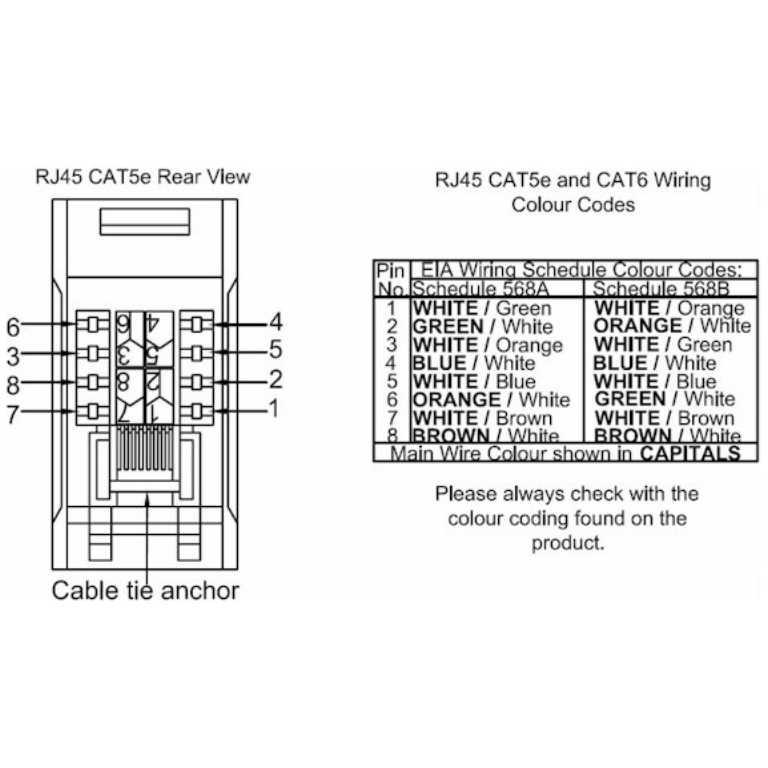
Follow standard color codes to terminate twisted pair cables correctly. Arrange the wires according to the T568A or T568B scheme to maintain consistent signal paths for reliable data transmission.
Trim and straighten conductors before inserting into the connector. Ensure each wire reaches the end of the plug and that insulation does not block the contacts for secure electrical connections.
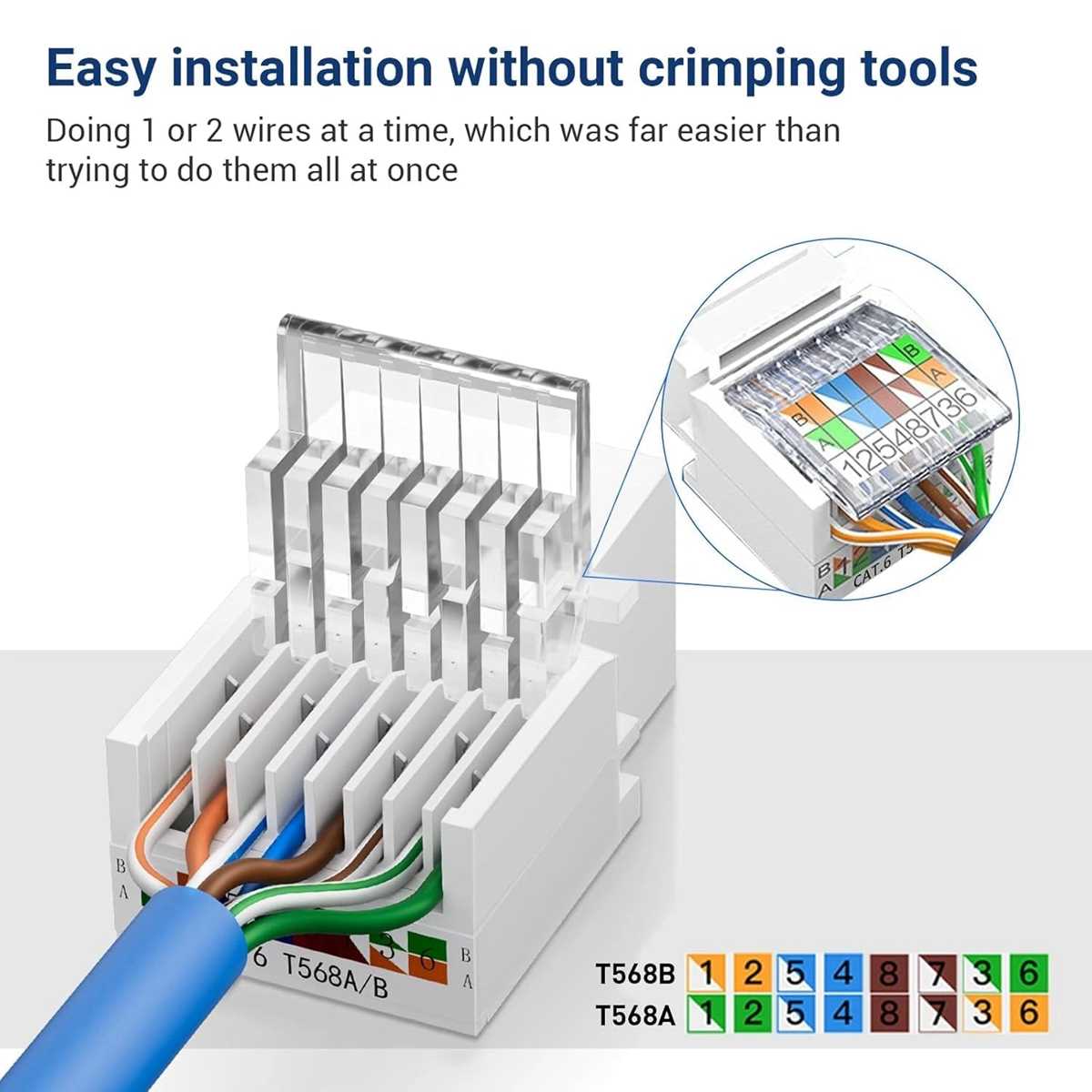
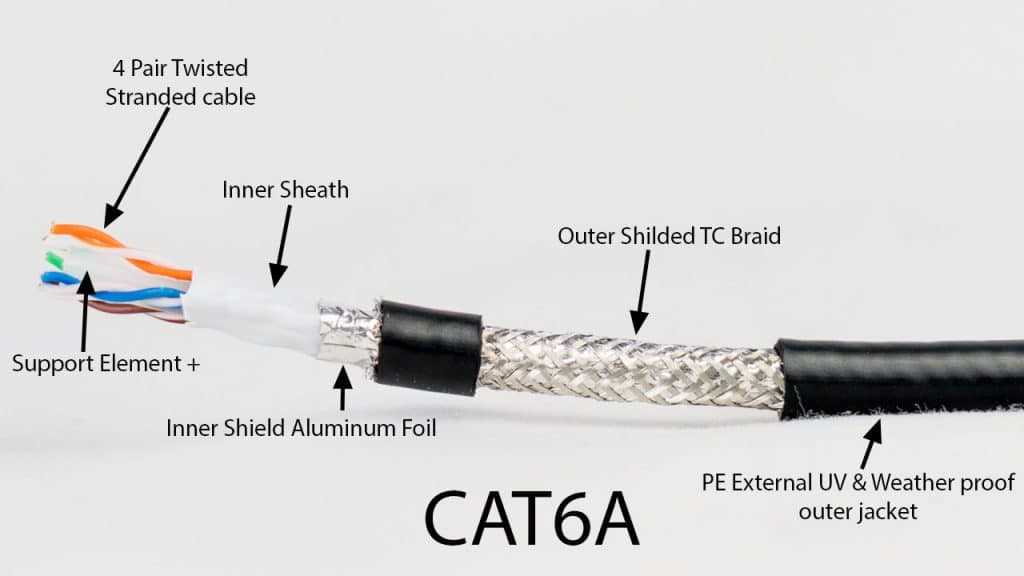
Check pair alignment to prevent crosstalk and interference. Keep twisted pairs together as much as possible and maintain proper separation between high-speed lines to preserve signal integrity.
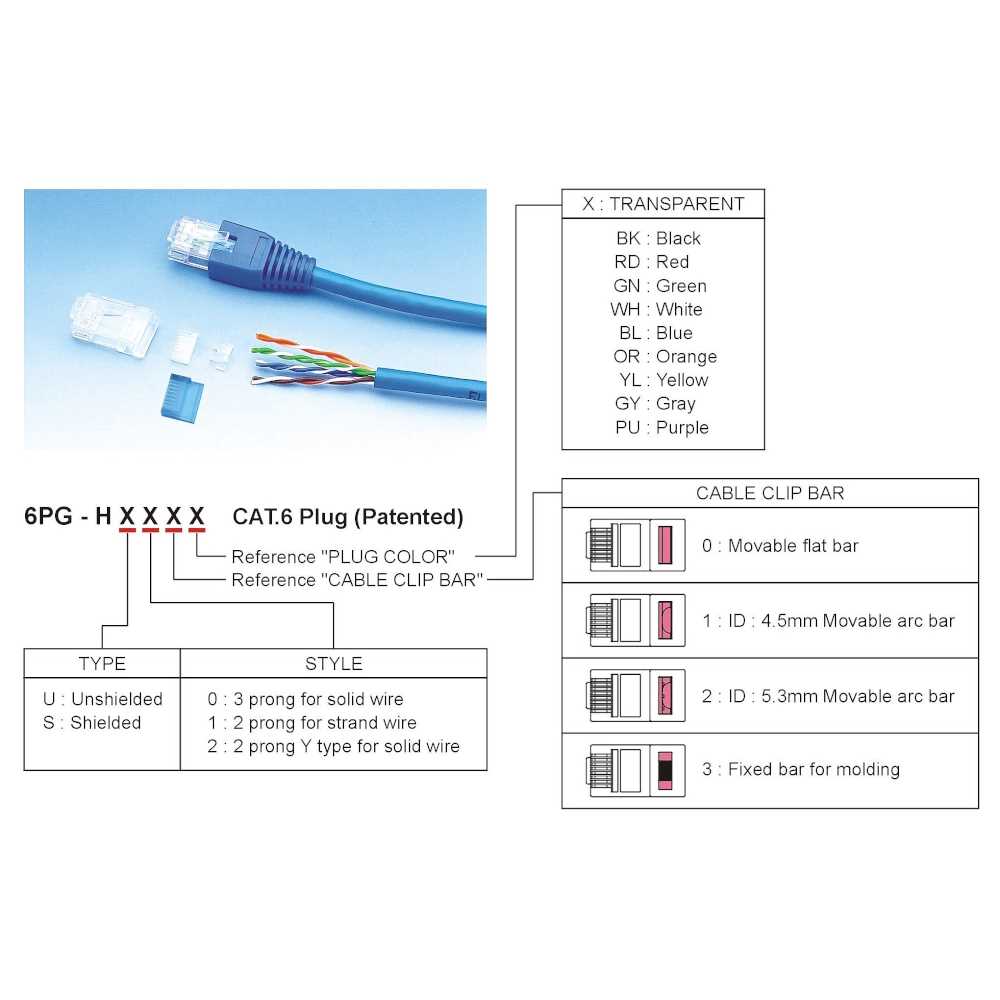
Use a crimping tool rated for the connector type. Apply even pressure to secure all contacts and prevent loose connections that could result in intermittent network failures.
Cat Six Wiring Diagram
Connect each pair of twisted cores following the T568B arrangement: orange-white, orange, green-white, blue, blue-white, green, brown-white, brown. Ensure each conductor reaches the connector fully without stray strands, then compress with a quality crimping tool to prevent intermittent signal loss.
Use a punch-down station for wall jacks to maintain stable performance. Insert wires into the slots according to the sequence above, then trim excess with a flush cutter. Avoid untwisting more than half an inch to reduce crosstalk and maintain transmission integrity across 1 Gbps networks.
Label both ends of every line before termination. This helps isolate faults quickly in complex setups. For runs exceeding 100 meters, consider intermediate patch panels to sustain signal strength and reduce latency issues caused by long distances or suboptimal bends.
Test each completed connection with a cable tester capable of identifying open pairs, miswires, or split pairs. Document all results, noting any deviations, so future maintenance avoids guesswork. Proper alignment of colored cores ensures stable throughput and reduces electromagnetic interference in high-density environments.
Color Coding and Pin Assignments for Network Cables
Follow the T568B sequence for consistent performance across Ethernet connections. Arrange conductors as follows:
- Pin 1 – White with orange stripes
- Pin 2 – Solid orange
- Pin 3 – White with green stripes
- Pin 4 – Solid blue
- Pin 5 – White with blue stripes
- Pin 6 – Solid green
- Pin 7 – White with brown stripes
- Pin 8 – Solid brown
Keep twists close to termination points to minimize interference. Use high-quality connectors and ensure each conductor seats fully in its pin slot before crimping. Misaligned pairs can cause signal reflections and reduce data integrity.
Verify color placement with a tester before final installation. For patch panels or keystone jacks:
- Match core colors to pin numbers consistently at both ends.
- Trim excess insulation only after confirming proper sequencing.
- Check for open pairs, split pairs, or crossovers using a network continuity device.
Document pin assignments for complex setups, labeling each cable clearly. Consistent color mapping and precise terminations prevent intermittent connectivity problems and maintain full throughput in high-speed environments.