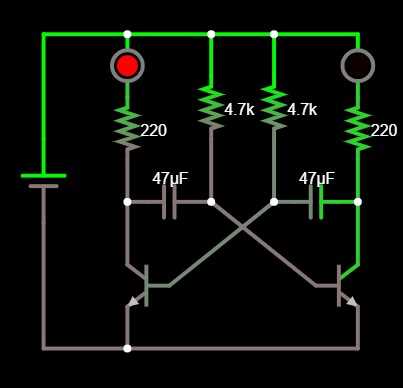
If you want to create a light that flashes on and off automatically, you’ll need a few key components: a resistor, a capacitor, and a transistor. Begin by choosing the correct values for each part to control the frequency of the flashing. A simple setup can be made with a 555 timer IC, which is easy to use and widely available.
The main factor in this setup is the timing circuit, which is typically based on the charging and discharging cycles of a capacitor. By adjusting the values of the resistor and capacitor, you can control how fast the light flashes. In this project, you’ll create a basic oscillator circuit that will alternate between powering the light and turning it off.
Once the timing mechanism is set up, the transistor will act as a switch, turning the light on or off at the correct intervals. Make sure to correctly wire the components in series, paying attention to the polarity of the power supply to avoid damaging your components. You can then test the flashing light to ensure the timing is correct and adjust if needed.
Flashing Light Setup Step-by-Step
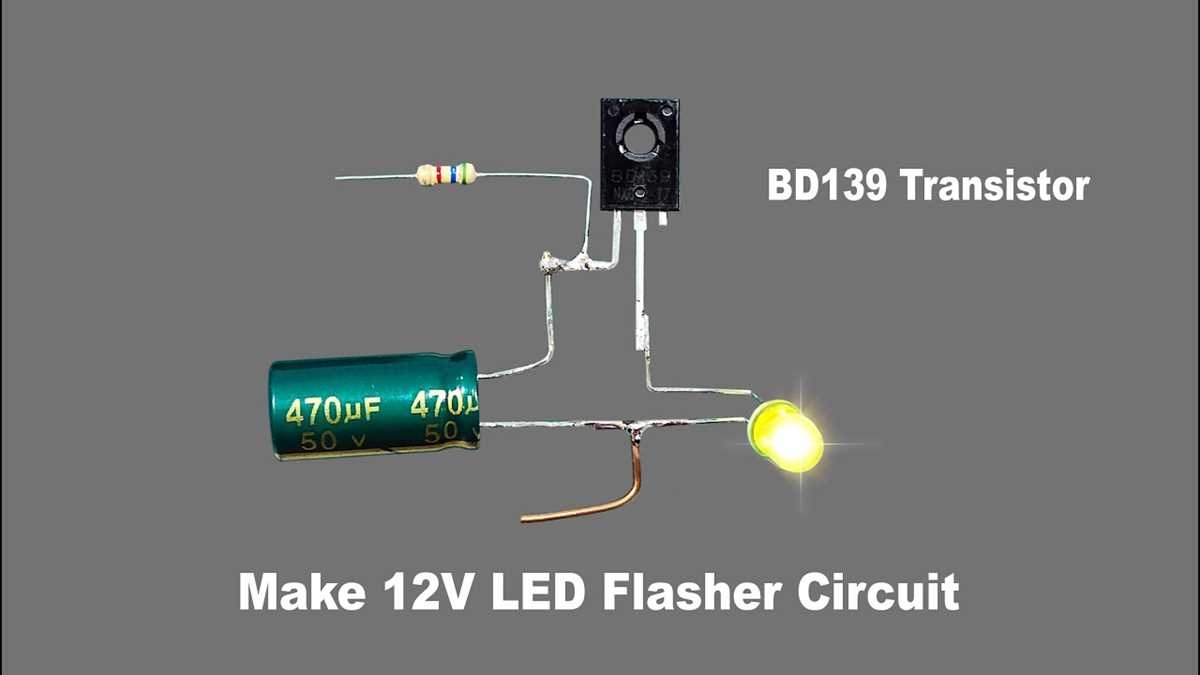
To begin constructing a flashing light, the key components include a resistor, a capacitor, and a transistor. These parts form the heart of your setup. The timing between the flashes is controlled by the charging and discharging of the capacitor. This simple oscillator can be built using a 555 timer IC, a versatile and inexpensive component for creating a pulse generator.
Start by wiring the timer IC in astable mode. This configuration will generate a square wave output, which will act as the signal to turn the light on and off. The 555 timer requires two resistors and a capacitor to determine the frequency of the blinking. The timing components will set how long the light stays on and how long it stays off. A larger capacitor or resistor will slow down the blink rate, while smaller values will speed it up.
Next, you’ll need a transistor to control the power to the light. The output from the 555 timer IC is a low-power signal, so a transistor acts as a switch to handle the higher current needed to illuminate the bulb. A commonly used NPN transistor like the 2N2222 is a good choice. Make sure to connect the base of the transistor to the timer output through a current-limiting resistor.
Once the transistor is in place, the emitter should be connected to the ground, while the collector is connected to the negative terminal of the light. The positive terminal of the light is connected to the positive rail of the power supply. This setup ensures that the light will only be powered on when the transistor is switched on by the signal from the timer IC.
Now, adjust the resistor and capacitor values to fine-tune the blinking frequency. You can experiment with different values to achieve the desired effect. To make the light blink faster, reduce the capacitor size or use a lower resistor value. To slow it down, increase the values. A typical blinking light setup might blink every second or every few milliseconds depending on the timing components used.
After everything is connected, double-check the circuit for errors before powering it up. Ensure that the power supply is correct and that no components are connected backward. When you power on the setup, the light should begin blinking. If the timing is not what you expected, tweak the resistor or capacitor values until you achieve the desired blink speed.
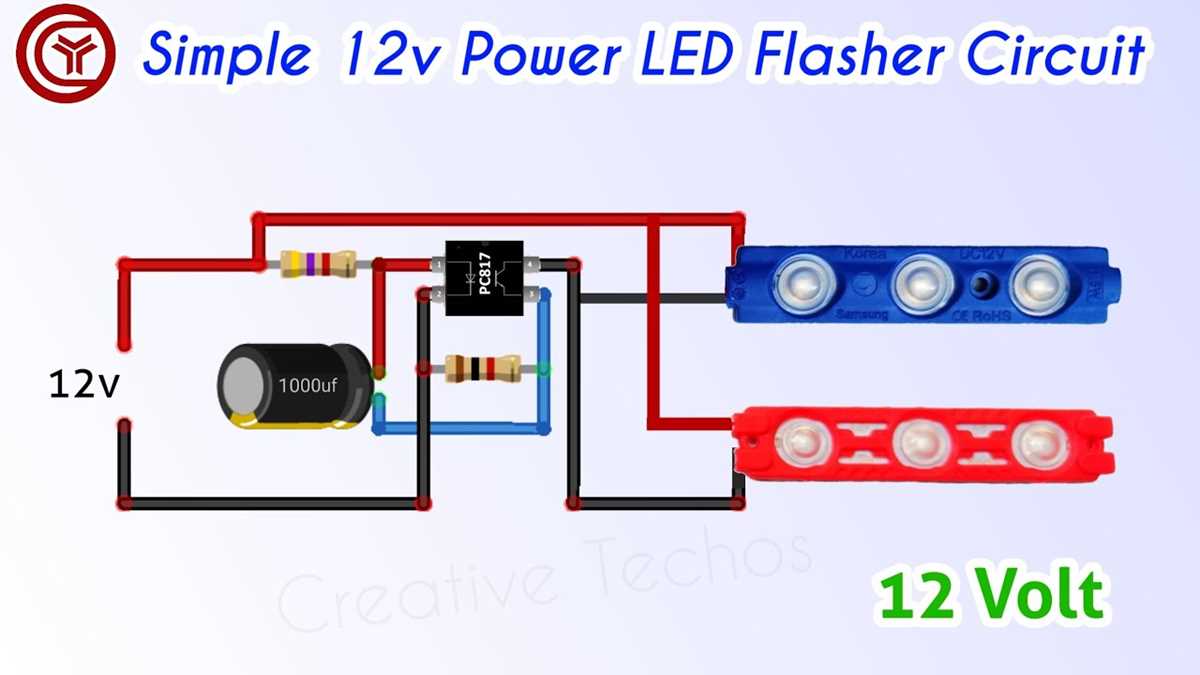
In conclusion, constructing a flashing light setup is a straightforward project involving basic electronic components. By adjusting the timing circuit and using a transistor as a switch, you can control the frequency and behavior of the blinking light. With this guide, you’ll be able to create a reliable and adjustable blinking light system for various applications, from simple signaling to decoration projects.
Understanding the Components Required for a Flashing Light
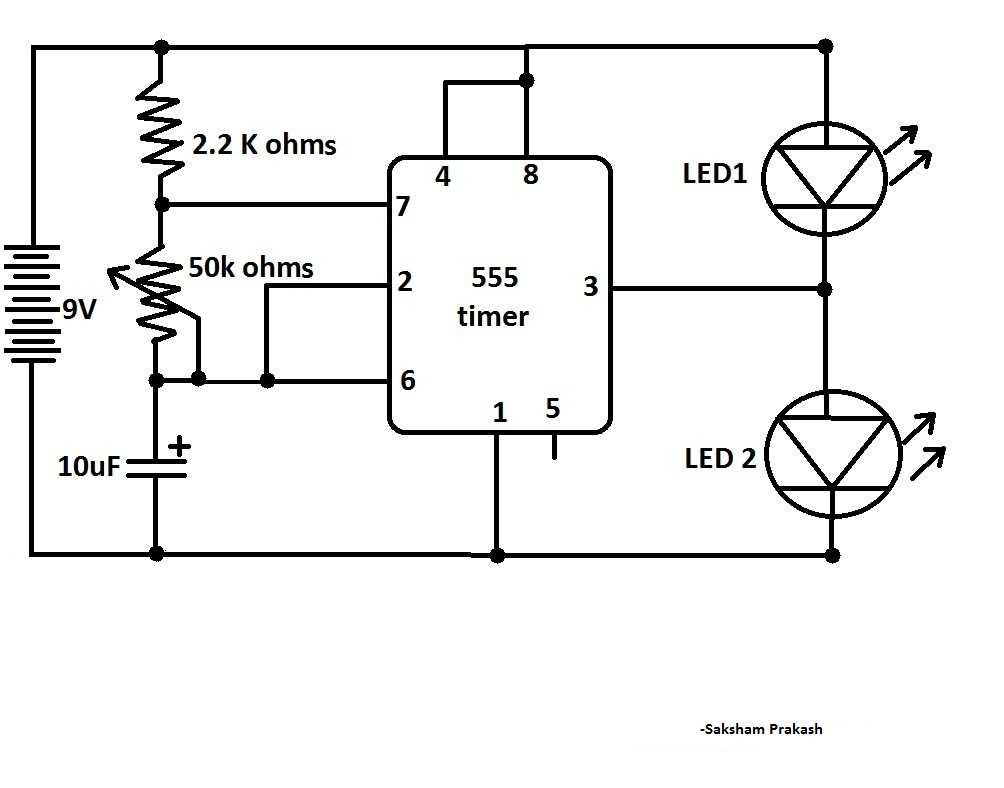
The first key component for a flashing light setup is a timer IC. A 555 timer IC is a popular choice, as it is versatile and can be configured in astable mode to produce a square wave signal. This signal will alternate between high and low states, creating the on-off behavior for the light. You’ll need to adjust the timing resistors and capacitors to control the frequency of the blinking pattern.
Next, a transistor is required to amplify the low-power output from the timer. A commonly used component for this purpose is the NPN transistor, like the 2N2222. This transistor acts as a switch, allowing the timer’s signal to control the flow of current through the light, which requires more power than the timer can supply. The base of the transistor is connected to the timer output, while the emitter goes to the ground.
The third key part is the light itself. The choice of light depends on the application, but typically an LED is used. The LED will be connected in series with a current-limiting resistor to protect it from excess current. The anode of the LED is connected to the positive supply, and the cathode goes to the collector of the transistor. When the transistor is turned on, the LED will light up.
The timing components are the resistors and capacitors connected to the 555 timer IC. These components dictate the blink rate, determining how quickly the LED will turn on and off. A larger capacitor or higher resistor values will slow the blinking rate, while smaller values will make the LED blink faster. Experimenting with these values helps achieve the desired timing.
Finally, you’ll need a suitable power supply to drive the components. The voltage requirements depend on the LED and the specific timer IC being used. Typically, a 5V or 9V battery or DC adapter will work for most setups. Always ensure the components are rated for the correct voltage and current to avoid damage and ensure reliable operation.