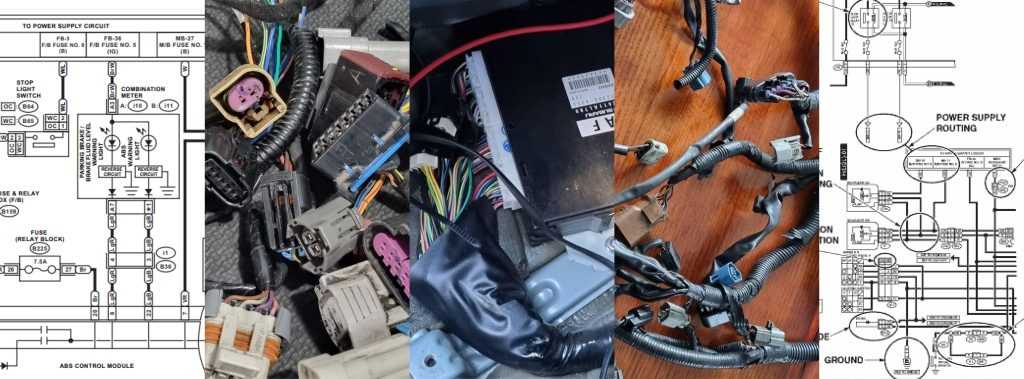
Check the circuit map for the vehicle before testing any fuse, relay, or connector. A clear electrical layout shows how battery power travels through the fuse block, ignition switch, relays, sensors, and lighting units. Following this map reduces random part replacement and speeds up fault detection. Most passenger vehicles operate on a 12-volt system where battery voltage at rest measures about 12.6V and rises to roughly 13.7–14.5V while the engine runs.
Connection charts use standardized symbols for switches, grounds, connectors, and loads such as lamps or motors. Lines represent conductors, while junction dots show where multiple paths meet. Color codes printed next to each line help identify the correct cable inside a harness. For example, a red conductor often carries constant battery feed, while black commonly marks ground. Recognizing these markings helps locate the correct branch inside crowded engine-bay harness bundles.
Fuse panels act as the main protection point for many circuits. A circuit layout normally lists fuse numbers, current ratings such as 10A or 15A, and the components connected to each slot. Matching the fuse rating with the component load prevents overheating or melted insulation. If a device stops working, tracing its power path through the fuse panel and relay block usually reveals the fault location.
Ground connections appear frequently in these circuit maps because every device requires a return path to the battery. These points attach to body metal or engine components using bolts or screws. Corrosion, paint, or loose hardware at these spots can interrupt current flow. Cleaning the contact surface and tightening the fastener often restores proper operation without replacing parts.
Auto Wiring Diagrams
Locate the battery feed and follow the power path through the fuse panel before testing any component. A circuit map for a vehicle shows how current moves from the battery to switches, relays, sensors, lamps, and motors. Each line represents a conductor, while symbols indicate connectors, grounds, and control devices. Typical layouts include color markings such as red for constant battery supply, yellow for accessory feed, and black for ground. Using these markings helps identify the correct harness branch behind the dashboard or inside the engine bay.
Use a multimeter together with the circuit layout to confirm voltage at each step of the path. Check battery output near 12.6 volts with the engine off, then inspect fuse slots, relay terminals, and connector pins along the power route. If voltage disappears between two points shown on the circuit chart, the fault usually lies in a damaged conductor, loose connector, or corroded ground attachment on the body or engine block.
How to Read Car Wiring Diagrams Symbols Color Codes and Connector Labels
Identify the power source and ground points before following any circuit line. Most vehicle circuit charts place the battery at the top or left side of the page, with current flowing toward switches, relays, lamps, sensors, and motors. Thick lines usually represent main power feeds, while thinner lines mark control paths. Ground symbols appear as short lines tapering toward a base or triangle, indicating attachment to the chassis or engine block.
Symbols represent components rather than their physical appearance. A zigzag or small rectangle often marks a resistor, a coil-shaped icon shows a relay or solenoid winding, and a break in a line with a pivot indicates a switch. Lamp icons appear as circles with a small cross inside, while motors show a circle with the letter “M”. Recognizing these icons helps trace a circuit quickly across multiple pages of a service manual.
Understanding conductor color markings
Each line usually carries a short code that matches the insulation color inside the harness. For example, “RD” may indicate red, “BK” black, “YL” yellow, and “BLU” blue. Stripe markings appear as combinations such as “RD/WH,” meaning a red conductor with a white stripe. These codes help locate the correct cable among dozens bundled together behind the dashboard or along the engine compartment.
Connector labels show where harness sections join together. A typical label such as “C102” or “J14” refers to a plug identified in the manual index. Pin numbers printed near the connector outline show the exact terminal location for each conductor. When checking voltage or continuity, placing a multimeter probe on the correct numbered terminal prevents confusion between adjacent pins.
Following a circuit across multiple pages
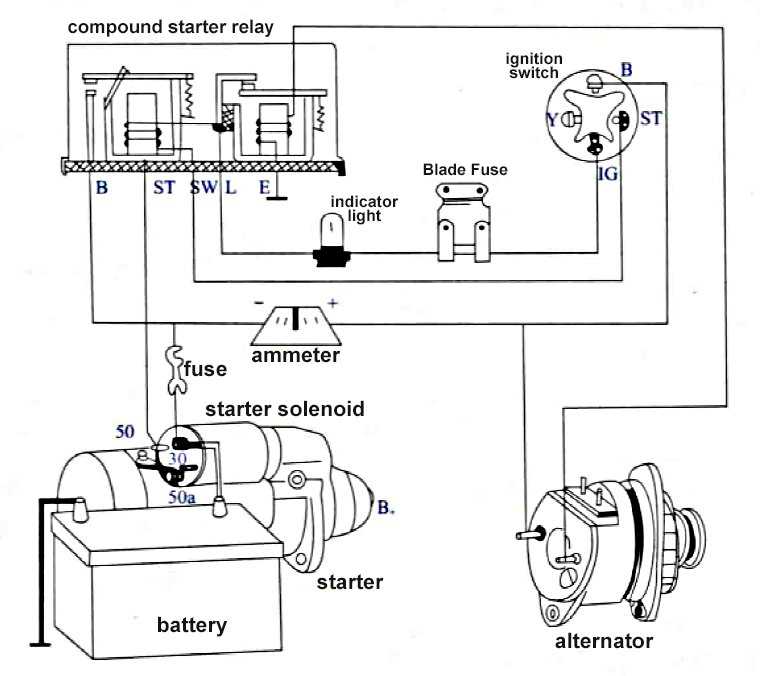
Large circuit charts often split across several sheets. Arrows or page references placed near the end of a line indicate continuation elsewhere. For instance, a marking such as “to page 3 connector C210 pin 5” directs attention to another section where the same conductor continues toward its load device.
Use these references together with connector numbers and color codes while tracing a fault. Moving step by step from the battery feed through fuse panels, switches, and connectors allows accurate location of broken conductors, loose terminals, or damaged insulation inside the harness.