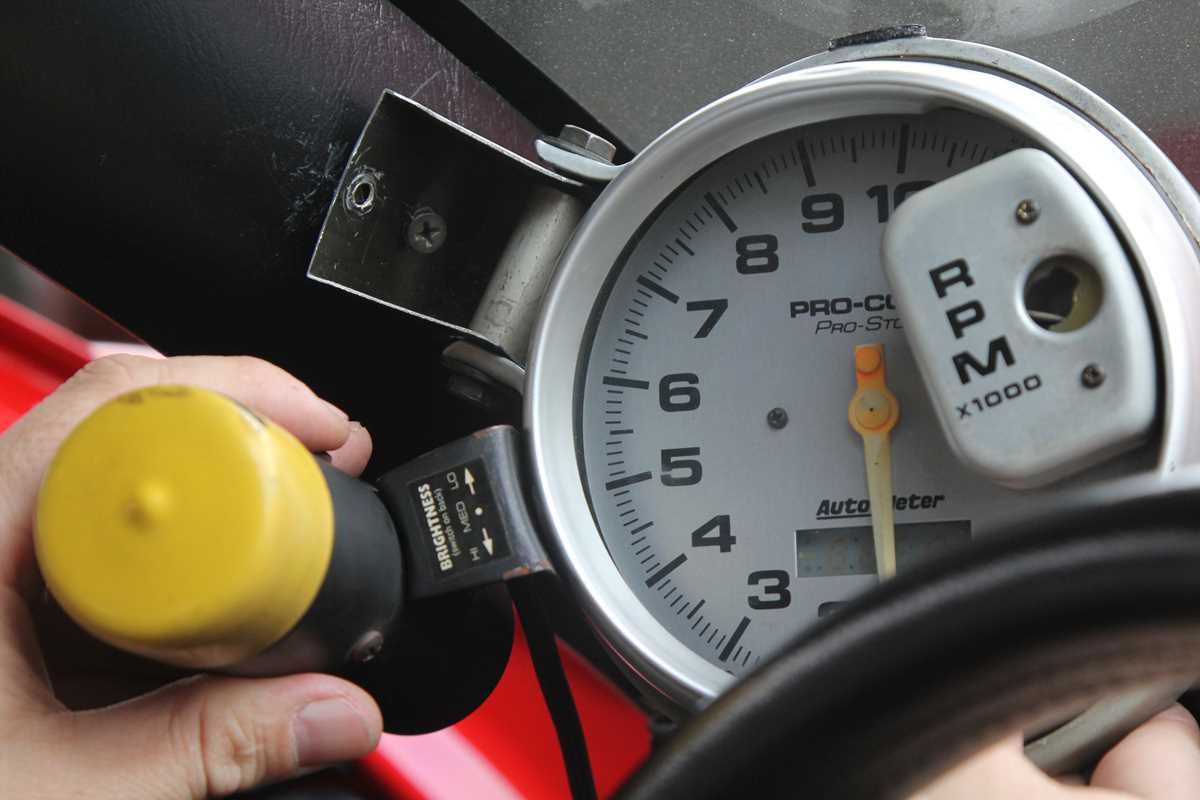
Ensure the ignition lead is isolated before making any connections to prevent short circuits and inaccurate readings. Use 18-gauge stranded copper for signal lines to maintain a clear, stable input.
Identify the ground terminal on the gauge first and secure it to a clean, unpainted metal surface. A poor ground can introduce fluctuating readings or complete failure of the gauge.
Route the signal wire directly from the distributor or coil negative terminal without splicing into accessory circuits. Avoid routing near high-current devices like alternators to reduce electrical interference.
Attach the illumination lead to the vehicle’s dash lighting circuit with a 1A inline fuse. This ensures the gauge lights correctly with the instrument cluster while protecting against overloads.
Verify all connections using a multimeter before finalizing installation. Check for proper voltage and continuity to prevent misreads once the engine is running.
Step by Step Guide for Connecting an Automotive RPM Gauge
Disconnect the battery negative terminal before starting the installation to prevent shorts or damage to the electrical system.
Locate the signal source on the ignition coil or distributor output and run a dedicated 18-gauge wire directly to the gauge input, avoiding splices with other circuits.
Secure the ground lead to a clean, unpainted chassis point close to the gauge. A poor ground can cause erratic readings or a non-functioning display.
Connect the illumination wire to the vehicle’s dash lighting circuit using a 1A inline fuse to protect against overload and maintain consistent backlighting.
Route all wires away from high-current components such as the alternator or starter to minimize electromagnetic interference and signal fluctuations.
Double-check each connection with a multimeter for proper continuity and voltage before powering the system. Confirm signal integrity at the gauge terminals.
Reconnect the battery and test the gauge at idle and higher engine speeds. Observe the needle for smooth response and verify that illumination activates with dash lighting.
Identifying and Preparing Wires for Accurate Signal Transmission
Begin by labeling each lead according to its function using durable heat-shrink markers or colored tape. Clear identification prevents cross-connection errors.
Choose wires with proper gauge for signal and ground paths. Typically, 18-20 AWG stranded copper provides a balance between flexibility and low resistance for automotive instrumentation.
Inspect insulation carefully for cracks, nicks, or abrasions. Damaged sheathing can introduce shorts or interference that affects signal accuracy.
Strip the ends precisely using a wire stripper sized for the conductor. Avoid nicking the strands, as this can increase resistance and reduce signal fidelity.
Twist and tin exposed strands with a small amount of solder to prevent fraying. This ensures consistent contact at terminals and reduces oxidation over time.
Route wires away from high-current or heat sources like alternators, starter solenoids, and exhaust components to prevent electromagnetic interference and thermal degradation.
Secure wires using non-metallic clips or loom tubing to maintain separation and minimize vibration. Organized routing reduces signal noise and prolongs wire life.
Test continuity and resistance with a multimeter before final connections. Verify that each lead carries a clean, uninterrupted signal from the source to the instrument to ensure reliable readings.