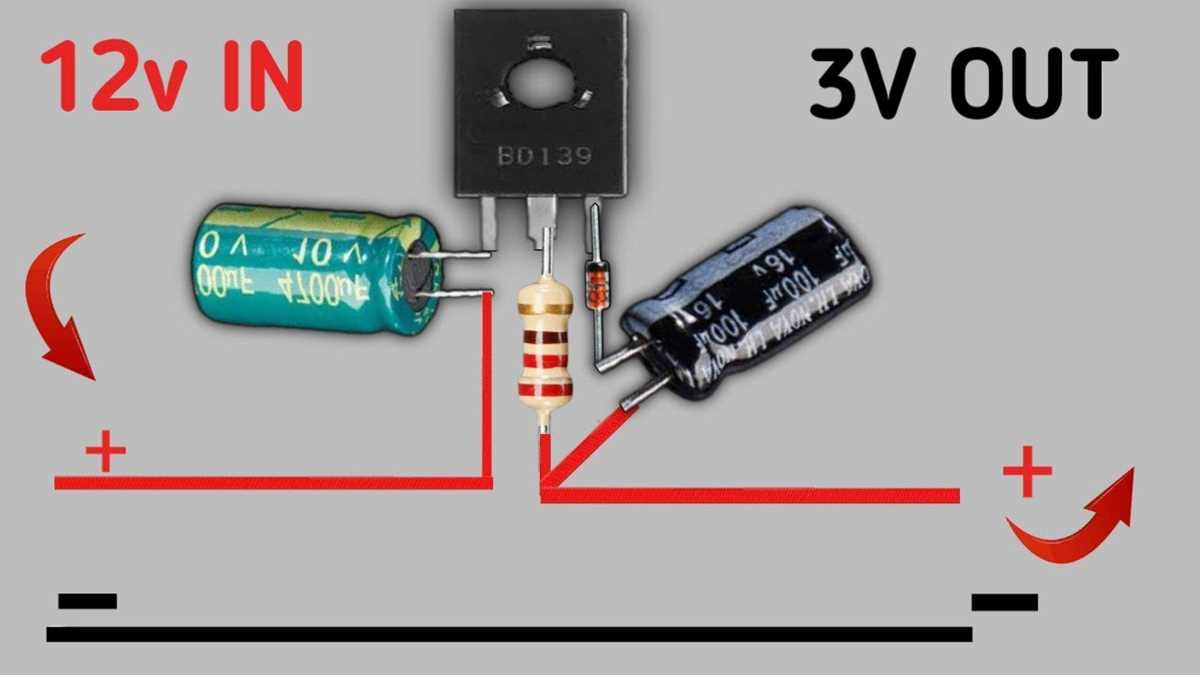
Begin by selecting a step-down voltage regulator that can safely reduce the input power from a higher value to your desired level. A good option is a buck converter, known for its efficiency and simplicity. Make sure to choose one that supports a wide range of input voltages and offers a stable output for your specific needs.
The next critical step is designing the power pathway. Incorporate a filtering capacitor to smooth out any voltage ripples and ensure the output remains stable. Resistors and diodes will play an important role in protecting components from potential overloads, while also ensuring the system operates without interruption. Pay careful attention to current ratings to avoid overheating or circuit failure.
Once the components are in place, wire them together on a breadboard for initial testing. Measure the output voltage to verify that it falls within your required range. If necessary, tweak the resistor values or capacitor sizes until you achieve the correct output. This iterative process helps refine the setup and ensures long-term reliability.
Designing a Step-Down Power Supply for Reduced Voltage
To efficiently reduce a higher input voltage to a stable 3V output, start with a buck regulator, which is a reliable choice for this purpose. Choose a component capable of handling the desired input voltage and delivering the required output. A popular IC for this task is the LM2596, known for its efficiency and simple design. Ensure that the selected component supports the required current for your application to avoid any power issues.
Next, you need to include a filtering capacitor at the output to minimize voltage fluctuations and noise. Use capacitors with suitable voltage ratings to prevent damage during operation. Additionally, a diode can be added to prevent reverse voltage from affecting the system, ensuring the power flow remains stable. Select components with current ratings that match the expected load to avoid overheating or circuit damage.
Once the basic components are in place, carefully test the system by measuring the output voltage. If the voltage is not within the desired range, adjust the feedback resistor to fine-tune the output. After confirming the setup works as expected, solder the components to a PCB for a more permanent solution. This approach will ensure your system operates reliably over long periods without issues.
Selecting the Right Components for a Voltage Converter
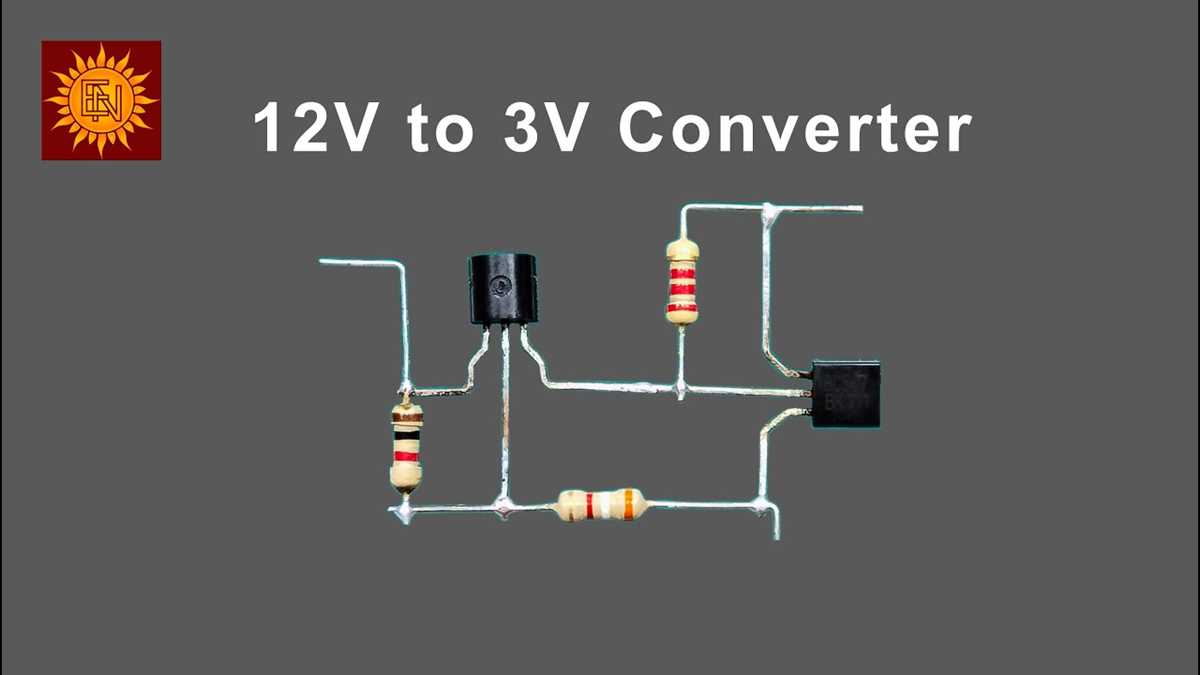
Start by choosing a suitable voltage regulator IC that can handle your input and output requirements. For instance, if your system needs to drop a higher voltage down to a lower value, select a step-down regulator. The LM2596 or similar ICs are a good fit for most applications requiring moderate output currents. Pay attention to the operating voltage range of the IC and ensure that it covers the range of your input supply.
Next, consider the current requirements of your load. The components, especially the regulator and capacitors, need to be rated for the maximum current your system will draw. For example, if your system draws up to 2A, ensure that the selected regulator can supply at least that much current. Underestimating the current requirement can lead to overheating and inefficient operation.
Capacitors play a critical role in stabilizing the output voltage and filtering out any noise. Choose low ESR (Equivalent Series Resistance) capacitors for better performance. For the output, a larger electrolytic capacitor (e.g., 100µF or more) will help smooth the voltage, while a smaller ceramic capacitor (e.g., 0.1µF) should be placed close to the regulator to filter high-frequency noise.
Selecting the Right Diode
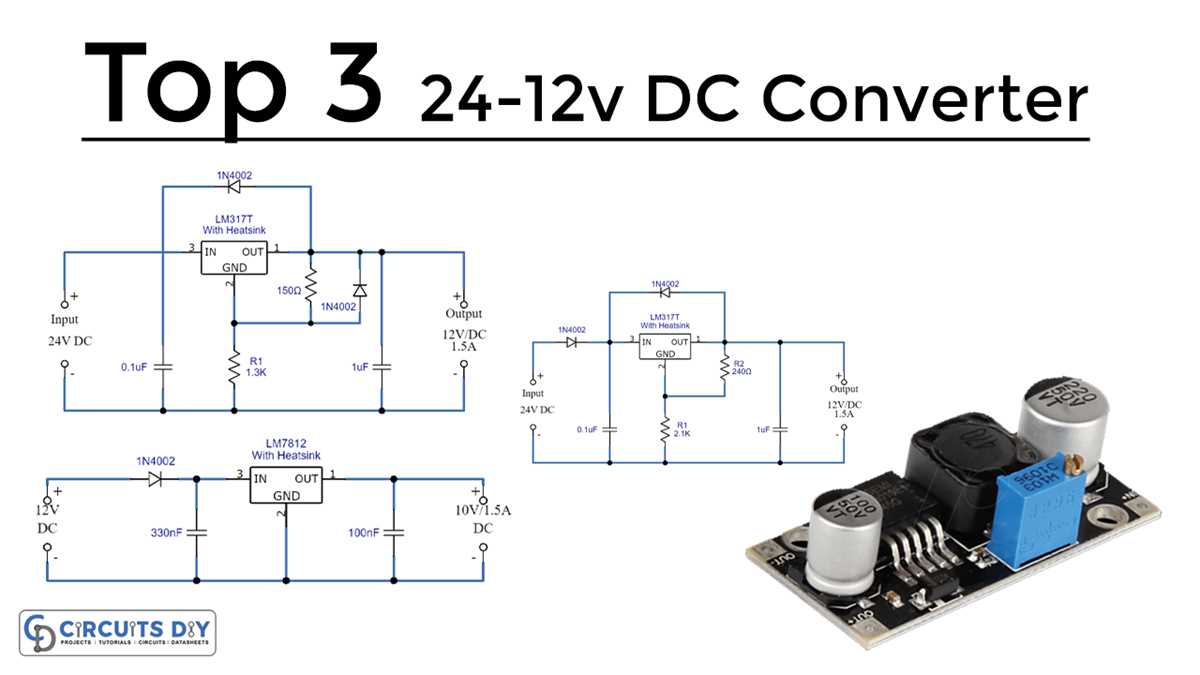
A Schottky diode is commonly used in step-down voltage systems to protect the components from reverse voltage. This diode has a low forward voltage drop, which improves efficiency. Ensure the diode you choose is rated for the maximum output current and can withstand the voltage difference. A typical selection is the 1N5819 Schottky diode for systems operating under 3A.
Choosing Proper Heat Management Solutions
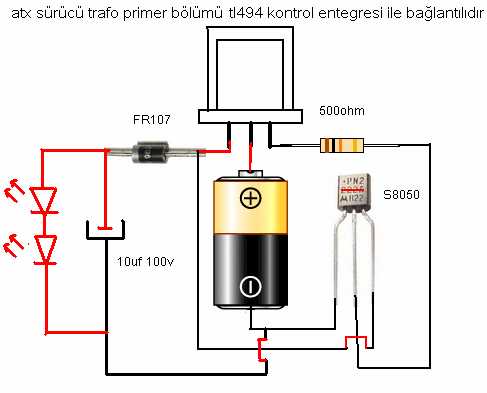
Overheating can severely affect the performance of your power system. Depending on the power dissipation, adding a heat sink to the voltage regulator may be necessary. Ensure good airflow around the regulator and consider using a thermal paste if you’re using a large heat sink. Regular temperature checks during testing will help determine if the system requires additional cooling measures.
Lastly, select a PCB design that minimizes the path resistance and optimizes the power flow. Keep the traces as short and wide as possible, especially between the regulator and capacitors. This will reduce power loss and prevent heat buildup. Testing the components before finalizing the assembly is key to ensure reliable performance under different load conditions.