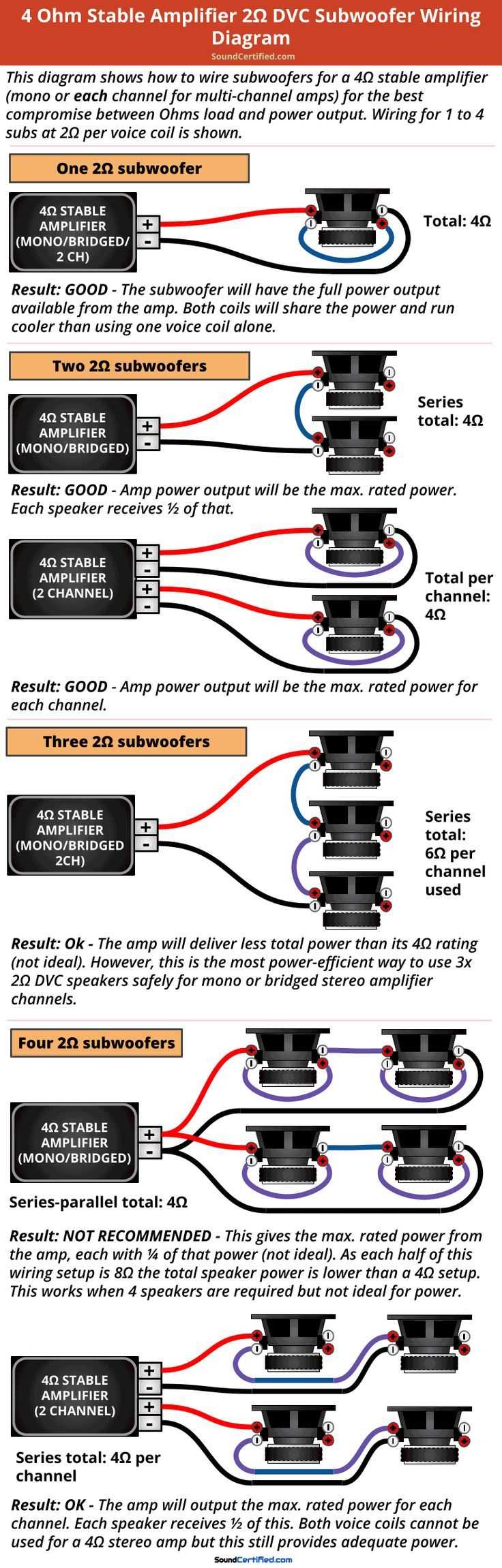
Use the correct amplifier terminals to prevent signal loss and distortion. Ensure positive and negative leads are clearly identified and firmly attached to the speaker inputs to maintain consistent output levels.
Check impedance ratings before linking multiple units. Connecting two units in parallel can halve the total resistance, while series connections add it. Matching these values with your amplifier prevents overheating and preserves sound clarity.
Route cables carefully to avoid interference from power lines or other electronics. Keep signal lines separate from high-current wires and use short, direct paths whenever possible to maintain low noise and strong bass response.
Secure all connections with high-quality terminals or soldering. Loose contacts can cause intermittent output or even damage the amplifier over time, so make sure every junction is tight and insulated to prevent shorts.
Test each configuration gradually at low volume before full operation. Adjust crossover settings and speaker placement to achieve balanced low-frequency performance throughout your listening area, ensuring a clean and powerful sound.
Guide for Accurate Bass Speaker Connections
Start by identifying the amplifier outputs and match each terminal with the corresponding speaker input. Positive terminals should connect to positive leads and negative to negative to prevent phase cancellation and weak low-frequency response.
Use proper cable gauge based on total load and distance. For runs under 10 feet, 16-gauge wire is sufficient, but longer runs require 14 or 12-gauge to maintain signal integrity.
Check the impedance of each unit before linking multiple units. Series connections add resistance while parallel connections reduce it. Ensure the combined resistance matches the amplifier’s rating to prevent overheating.
- Single speaker connection: connect one positive and one negative lead directly to the amplifier.
- Dual speakers in series: connect positive of amplifier to first speaker, negative to positive of second, and remaining negative back to amplifier.
- Dual speakers in parallel: join positives together and negatives together before connecting to amplifier terminals.
Route cables away from power wires and electronic devices to minimize interference. Use zip ties or clamps to secure lines and avoid sharp bends that could damage insulation.
Securing Terminals and Joints
Use crimped connectors or solder all junctions to ensure solid contact. Loose connections can cause intermittent sound or amplifier strain, so verify each terminal is tight and insulated.
Testing and Adjustment
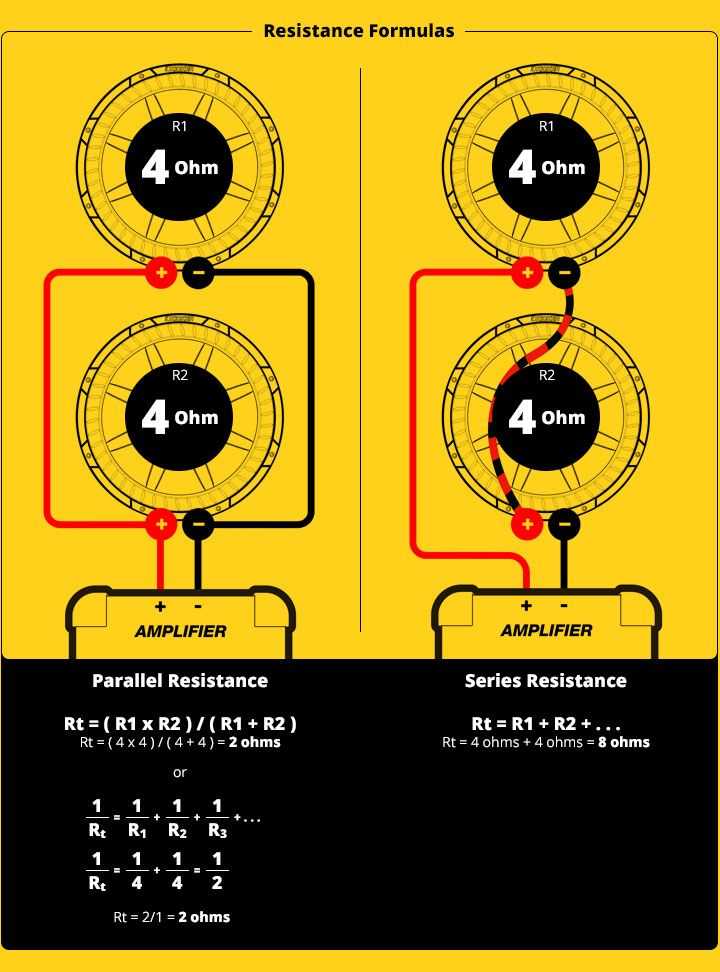
Power the system at low volume and check each configuration individually. Adjust crossover settings and placement to achieve balanced low-frequency output, ensuring clear and punchy bass without distortion.
Connecting a Single Bass Speaker to a Car Amplifier
Connect the positive output of the amplifier directly to the positive terminal of the speaker and the negative output to the corresponding negative terminal. Ensure the connections are tight and use a high-quality 16-gauge or thicker cable for runs over 10 feet to prevent signal loss and maintain clear low-frequency response.
Test the system at low volume before full operation. Adjust the amplifier’s gain and crossover settings to match the speaker’s impedance and enclosure type. Proper placement in the vehicle cabin can reduce rattling and uneven sound pressure, providing a balanced and powerful bass performance.