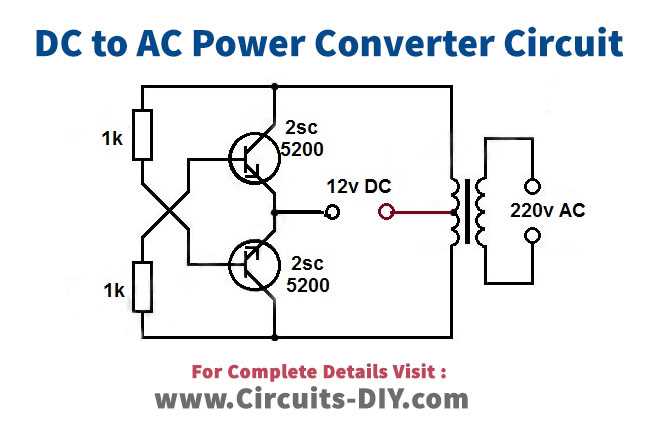
To convert direct current (DC) into alternating current (AC), you’ll need a reliable system that includes a few key components. Begin by using an inverter, which is responsible for flipping the current direction, creating the alternating waveform. It’s important to select an inverter with appropriate specifications based on the voltage and power needs of your application. This method is commonly applied in renewable energy setups, such as solar power systems, to make the electricity usable for household appliances.
When building or working with these setups, ensure that you have a solid understanding of the components involved, such as transformers, capacitors, and oscillators. Each part plays a significant role in making the conversion efficient and stable. If you’re new to this, focusing on understanding the purpose of each component will simplify the process and reduce the likelihood of errors during the installation or troubleshooting stages.
For those aiming to modify or repair an existing conversion system, familiarizing yourself with the schematics will be valuable. The process is not overly complex, but it requires precision in connecting the components properly to avoid safety hazards. Pay close attention to the ratings and tolerances of each part to ensure compatibility and to maximize the reliability of the system.
DC to AC Conversion: Detailed Guide
To convert DC to AC, the primary component you’ll need is an inverter. The inverter transforms the unidirectional current into a sinusoidal waveform, making it usable by standard AC devices. When choosing an inverter, consider factors like voltage, current capacity, and waveform type. For most applications, a pure sine wave inverter is recommended for higher efficiency and compatibility with sensitive electronics.
Start by selecting the right inverter based on your system’s power requirements. Inverters come in different power ratings, so it’s crucial to calculate the total load your system will handle. Ensure that the inverter can handle at least 20% more than the total expected load to accommodate power surges and fluctuations. Proper sizing is key to avoid overheating and potential system failure.
Once you have the inverter, the next step is to properly connect it to the DC source. This is typically a battery in solar power systems or a DC power supply for smaller applications. Ensure that the connections are secure and that the cables are appropriately rated to handle the current. Incorrect wiring can lead to electrical faults, so always follow the manufacturer’s guidelines and safety protocols.
The inverter’s input connections should be made carefully, as they will directly affect the system’s performance. Use quality connectors and ensure the polarity is correct. Reversing the connection can damage both the inverter and the power source. Double-check all connections before powering on the system to avoid unnecessary risks.
Understanding the Waveform
The type of waveform generated by the inverter is important for the compatibility of the system with different devices. A square wave inverter is cheaper but produces a less stable current, which may not be suitable for sensitive equipment. A modified sine wave inverter is a step up, providing better performance but not ideal for all applications. The pure sine wave inverter is the best choice for ensuring smooth operation of all devices, especially those with motors or delicate electronics.
Inverter Maintenance and Troubleshooting
After setting up the system, regular maintenance is necessary for optimal performance. Check the inverter for overheating, corrosion, and wear on cables. Keep the inverter clean and ensure that it’s placed in a well-ventilated area to prevent heat buildup. If the system isn’t working as expected, troubleshoot by checking the input voltage, connection integrity, and settings on the inverter.
By following these steps and understanding the components involved, you can ensure a reliable and efficient conversion of DC to AC for your power needs. Proper planning and correct installation of the system will lead to a safe, functional setup that serves your energy demands efficiently.
Understanding the Key Components for DC to AC Conversion
The primary component in converting direct current (DC) to alternating current (AC) is the inverter. An inverter is responsible for changing the direction of the current flow, turning DC into an AC waveform suitable for household appliances and industrial use. When selecting an inverter, ensure it has the appropriate voltage and wattage ratings to meet the needs of the load. A high-quality inverter is necessary to prevent inefficient energy conversion and to ensure that sensitive equipment operates without issues.
Transformers and Filters
For smoother conversion, transformers and filters are often used alongside inverters. Transformers help step up or step down the voltage as required for specific applications. After conversion, filters are used to smooth out any irregularities in the waveform, ensuring the output is a stable and pure AC signal. This is crucial when powering devices that rely on a clean sinusoidal waveform for optimal operation, such as computers and audio equipment.
Capacitors and Protection Circuits
Capacitors are important for stabilizing the voltage and maintaining a consistent flow of power. They prevent voltage spikes and help maintain a steady output from the inverter. Additionally, protection circuits such as fuses and breakers are necessary to safeguard the system from overcurrent and short circuits. Always choose capacitors and protection circuits that match the specifications of your inverter and power requirements.