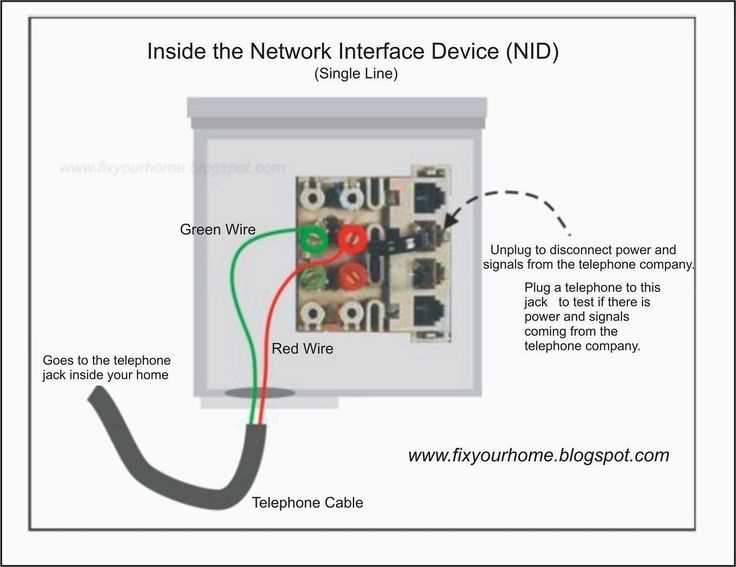
Connect the center two contacts of the six-position telephone connector to the main voice pair from the line. In most installations these two pins carry the first telephone line and handle both analog voice signals and DSL data.
This small modular connector used in landline systems contains six positions but usually only two or four conductors. The middle contacts are numbered 3 and 4 when counting from left to right with the clip facing down. These pins form the primary pair used by standard telephone service.
Typical telephone cable uses color pairs that help identify each line. The first pair often appears as red and green in older flat cables or blue with white stripe and white with blue stripe in modern twisted pair cable. These conductors connect to the center contacts of the modular plug and the matching terminals inside the wall jack.
Before crimping the connector, cut the cable end cleanly and strip about 10–12 mm of outer insulation. Align the conductors in the correct order and push them fully into the connector body so each conductor reaches the front contacts. A proper crimp locks the conductors under the metal blades and secures the cable jacket inside the strain relief tab.
RJ11 Wiring Diagram With Pin Layout and Telephone Cable Connection Guide
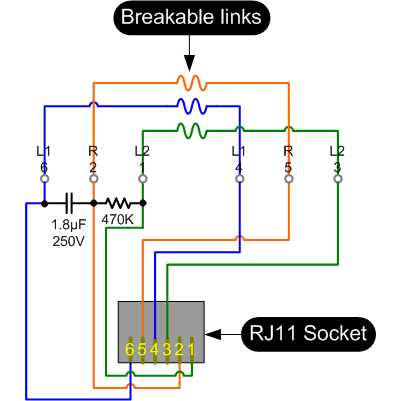
Place the main telephone pair on the center contacts of the six-position modular connector. These pins carry the first voice line and support analog phone service as well as DSL signals in many home installations.
Hold the connector with the locking clip facing downward and the contacts toward you. In this orientation the positions are counted from left to right. The primary telephone pair connects to pins 3 and 4, which sit in the middle of the connector body.
Telephone cords often use two or four conductors. A two-conductor cord carries one line only, while a four-conductor cable supports two lines. The second line normally connects to pins 2 and 5, placed directly beside the center pair.
Typical conductor color pairs
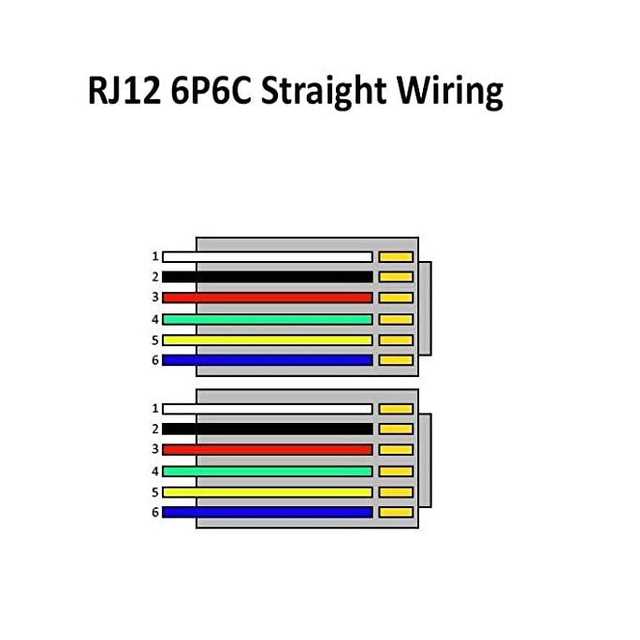
Flat telephone cords often follow a simple color order. The first pair uses red and green. The second pair uses yellow and black. Modern twisted pair cable replaces these with white-blue and blue-white for the first pair.
Align the conductors in the correct order before inserting them into the modular connector. Push the cable fully forward so each conductor reaches the metal contacts at the front of the plug body.
Connection steps for modular telephone connector
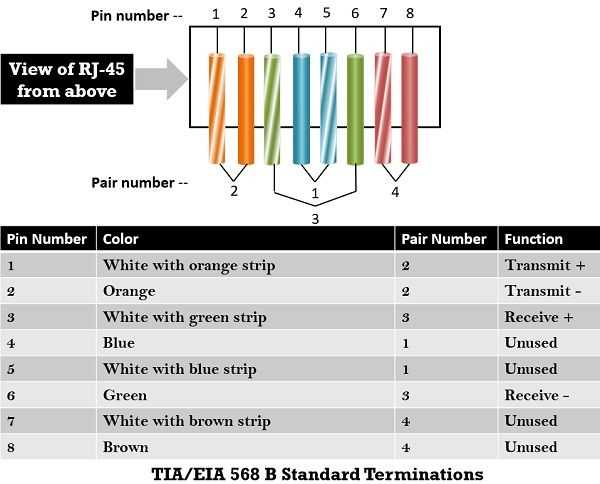
Strip about 10 millimeters of the outer jacket without damaging the internal conductors. Arrange the conductors flat, trim them evenly, and slide them into the connector until the jacket enters the strain relief section.
Use a crimping tool designed for modular telephone connectors. The tool presses metal blades through the insulation and locks the conductors in place while securing the cable jacket.
After crimping, inspect the connector from the front. Each conductor should reach the end of the channel under its contact blade. A quick continuity check with a tester confirms that each conductor reaches the correct terminal inside the wall outlet.
RJ11 Pin Identification and Telephone Line Pair Positions
Place the primary telephone pair on the two center contacts of the six-position modular connector. These contacts handle the first line used by standard landline service and many DSL connections.
Hold the connector with the clip facing downward and the metal contacts toward you. In this position the contact numbers run from left to right.
- Pin 1 far left position
- Pin 2 next contact
- Pin 3 first center contact
- Pin 4 second center contact
- Pin 5 next contact
- Pin 6 far right position
The main telephone line uses the center pair. These positions connect to the incoming pair from the wall jack and carry the voice signal between the telephone network and the device.
- Line 1 uses pins 3 and 4
- Line 2 uses pins 2 and 5
- Pins 1 and 6 remain unused in most installations
Two-conductor telephone cords connect only to the center pair. Four-conductor cords support two independent telephone lines and connect to both center and adjacent pairs.
Before inserting conductors into the modular connector, arrange them in the correct order so the intended pair reaches the center contacts. This alignment keeps the voice pair matched with the wall outlet terminals.
After crimping, check continuity between the center contacts and the corresponding terminals in the wall socket. A simple cable tester or multimeter verifies that each conductor reaches the correct contact and that no pair has been swapped.