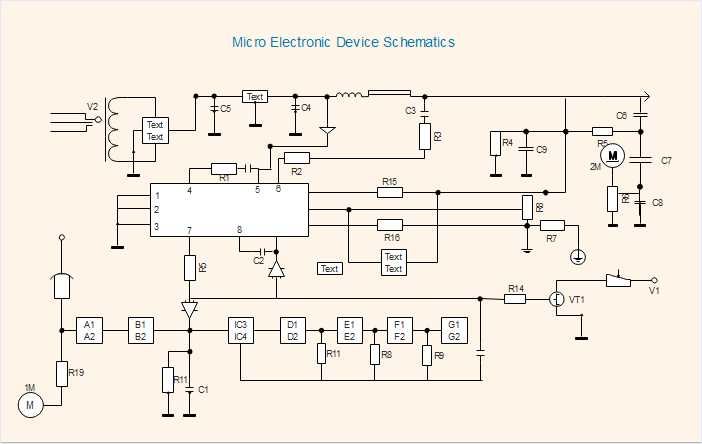
Identify signal direction first by locating the input lines that enter logic gate symbols. Most logic drawings display signals moving from left to right, where inputs feed gates such as AND, OR, and NOT, and results leave through output lines. This orientation helps trace binary states without confusion while analyzing control logic in microcontrollers, memory devices, or programmable hardware.
Each connection represents a binary signal that switches between two voltage levels. In many TTL systems, logical zero appears near 0–0.8 V, while logical one ranges from 2 V to 5 V. CMOS families often use supply rails such as 3.3 V or 5 V, where low level stays near ground and high level approaches the supply voltage. Understanding these levels helps interpret how logic gates interact in switching networks.
Gate symbols show how input signals combine to produce output states. For example, an AND gate produces a high output only when every input line carries a high signal. An OR gate outputs a high state when at least one input becomes high. A NOT gate reverses the input state. Combining these blocks allows engineers to build counters, data selectors, arithmetic units, and memory control logic.
Sequential logic introduces timing signals. Flip-flops, registers, and counters respond to clock transitions that occur at frequencies from a few kilohertz to hundreds of megahertz depending on the device family. Clock lines usually connect to triangular symbols or labeled inputs such as CLK. Following these timing paths clarifies how binary data moves through logic networks during each clock cycle.
Digital Circuit Diagram With Logic Gates Signal Flow and Binary Control Paths
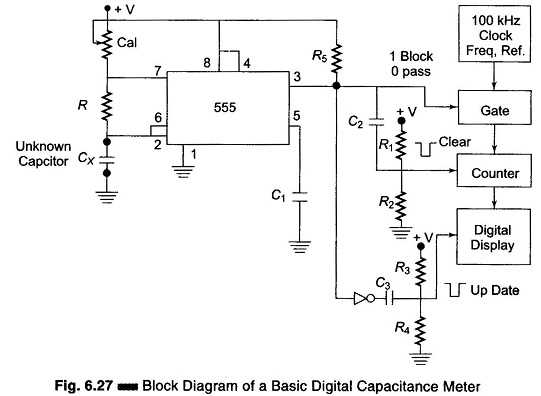
Trace signal paths from input lines toward gate outputs to understand how binary states propagate through the logic network. Most schematic layouts place inputs on the left and outputs on the right, allowing each connection line to represent a clear flow of data between logic elements. Following this direction helps identify how combinations of AND, OR, and NOT gates generate control signals used in counters, memory addressing, and arithmetic logic units.
Binary control paths operate through defined voltage levels that represent logical states. In many TTL families, a low state appears below 0.8 V, while a high state typically exceeds 2 V. CMOS logic commonly operates from supply rails such as 3.3 V or 5 V, where the high level approaches the supply voltage and the low level remains close to ground. Designers use these levels to determine switching thresholds inside logic gates, ensuring that signals propagate reliably between connected devices. Timing paths also appear in many designs; clock lines feed flip-flops and registers that capture data at specific intervals.
Typical logic elements used in binary control paths
Most logic networks combine a small set of standard building blocks that perform predictable operations on input signals.
AND gate – output becomes high only when every input is high
OR gate – output becomes high when at least one input is high
NOT gate – output produces the inverse state of the input
XOR gate – output becomes high when inputs differ
Combining these blocks forms more complex structures such as multiplexers, counters, and data selectors. Engineers analyze the signal flow through these gates to determine how binary control signals activate memory access lines, enable registers, or trigger arithmetic operations within computing hardware.
Reading Logic Gate Symbols and Signal Direction in a Digital Circuit Diagram
Follow signal lines from left toward right to determine how binary values propagate through logic gates. Most schematic layouts place inputs on the left side of each symbol and outputs on the right. This orientation allows quick tracing of how a signal travels through multiple logic stages.
Recognize each gate symbol by its shape. An AND gate usually appears with a flat input side and a curved output edge, while an OR gate shows curved input and output edges. A small circle at the output indicates inversion, which converts the gate into NAND or NOR behavior.
Common logic gate symbols
- AND – output becomes high only when every input carries a high level
- OR – output becomes high if at least one input reaches a high state
- NOT – single-input inverter that flips the signal state
- NAND – inverted result of an AND operation
- NOR – inverted result of an OR operation
- XOR – output becomes high when input states differ
Signal direction appears through connecting lines that link gate outputs to other inputs. Each line represents a binary path that carries either low or high voltage. When multiple lines join at a point marked with a filled dot, the signals share a node and interact electrically.
Voltage levels determine the logical state traveling along these paths. In TTL logic families, a low level usually remains below 0.8 V, while a high level rises above 2 V. CMOS families often operate between 3.3 V or 5 V, where high states approach the supply rail.
Steps to trace signal flow
- Locate input sources such as switches, sensors, or data buses
- Follow connection lines toward the first logic gate
- Identify the operation performed by the gate symbol
- Continue along the output path toward the next gate or device
- Observe final outputs such as LEDs, registers, or control lines
Sequential elements add timing behavior. Flip-flops and registers include clock inputs that trigger state changes on rising or falling edges. These components store binary values and release them to later stages in synchronization with the clock signal.