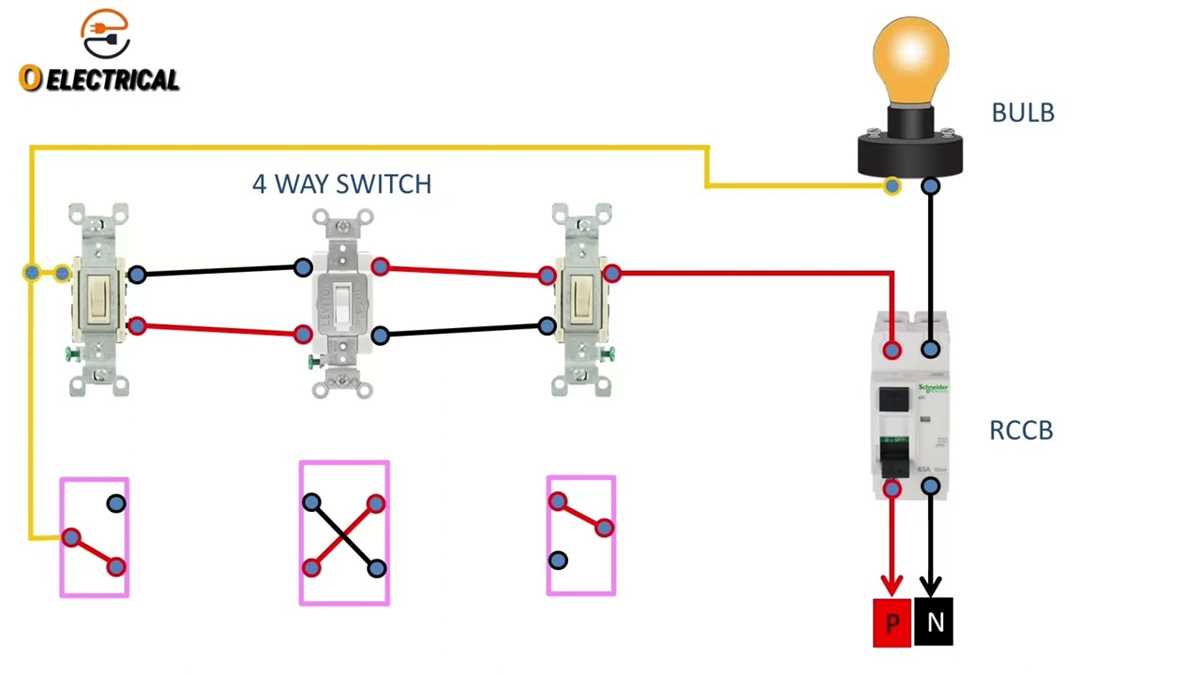
Connect the traveler wires first to ensure seamless operation across three or more toggles. Use stranded copper conductors rated for 15A circuits to prevent overheating and maintain consistent current flow. Ensure each conductor is securely fastened with wire nuts and insulated sleeves for safety.
Position the intermediate toggles strategically to minimize wire length and reduce voltage drop. Label each terminal clearly before connecting to avoid cross-connections. A consistent color-coding system–black for line, red for traveler, white for neutral–simplifies troubleshooting and future modifications.
Verify continuity after completing connections with a multimeter. Check that each actuator can independently control the fixture without causing shorts. Tighten all terminal screws to manufacturer torque specifications to prevent arcing and intermittent operation.
Install protective housings and ensure junction boxes are not overcrowded. Maintain at least 1/2 inch clearance around all conductors. Properly securing the boxes reduces mechanical strain on wires and prevents accidental contact during operation.
Test each control point sequentially before restoring power to the circuit. Observe the fixture’s response to each toggle position to confirm correct alignment. Adjust any misconnected travelers or reversed line feeds before closing the wall plates to guarantee reliable, multi-location control.
Advanced Multi-Point Illumination Control Setup
Begin by positioning two dual-control toggles at opposite ends of a corridor or staircase. These modules must be rated for 15A circuits to ensure safe operation of standard household fixtures.
Between these primary units, insert one or more intermediary crossover devices. Use copper conductors with at least 14-gauge insulation to minimize voltage drop over long runs.
Connect the feed line from the power source to the input terminal of the first dual-control toggle. This connection should be tight, with no exposed strands protruding from the screw terminals.
Run traveler lines from the output terminals of the first toggle to the corresponding inputs of the intermediary crossovers. Maintain consistent color coding to prevent confusion during maintenance.
Attach the output terminals of the final crossover to the entry points of the opposing dual-control toggle. Ensure that grounding is continuous along the entire circuit using bare or green insulated conductors.
- Verify all connections with a continuity tester before energizing the circuit.
- Label each line at junction boxes to simplify future troubleshooting.
- Keep junction boxes accessible; avoid burying connections behind permanent structures.
For installations spanning more than 30 feet, consider using thicker 12-gauge conductors to reduce resistance and maintain proper functionality across all toggles.
After completing connections, cycle each toggle to confirm that the fixture responds correctly from every control point. Tighten screws as needed to eliminate intermittent contact.
Identifying and Connecting Travelers Between Controls
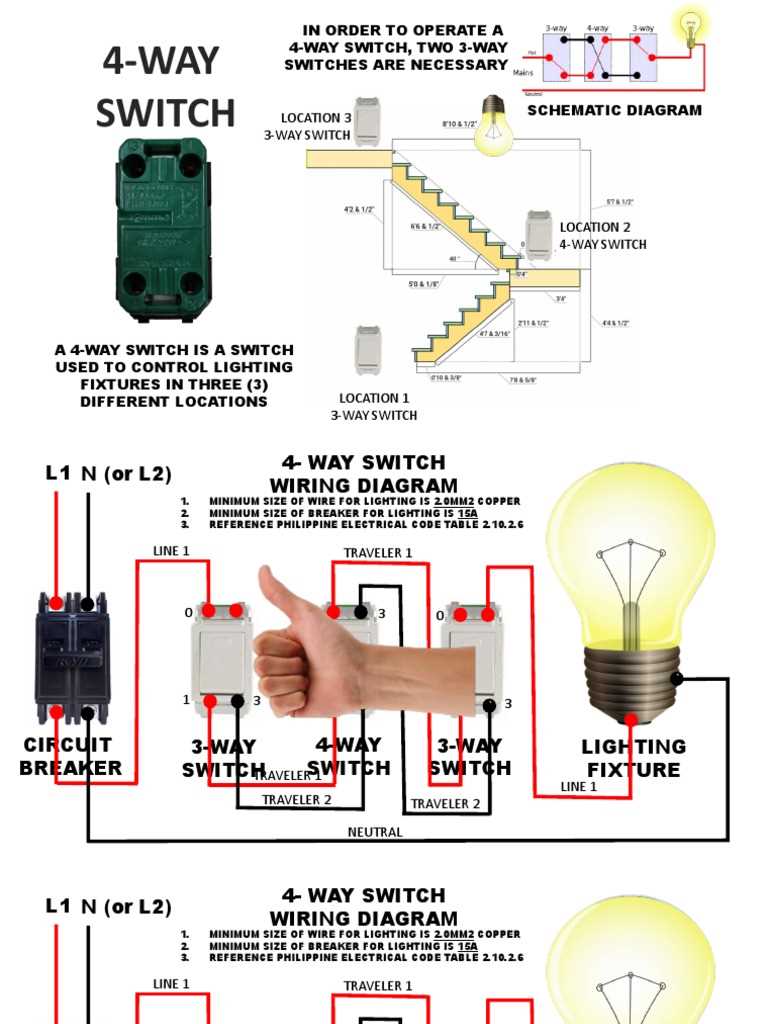
Locate the terminals marked for continuous circuits on each control device. Use a non-contact voltage tester to ensure no live current is present before handling any wires.
Identify the traveler wires by color coding: typically red and black conductors are designated for inter-device connections. Label each wire with tape to avoid confusion during installation.
At the intermediate control point, attach the incoming traveler from the first device to one of the central terminals. Connect the outgoing traveler to the terminal leading to the subsequent device, maintaining consistent color matching.
Ensure all screws are tightened securely without over-torquing, which can strip the terminal and cause poor conductivity. Verify that no bare copper is exposed beyond the terminal clamp.
Testing Continuity
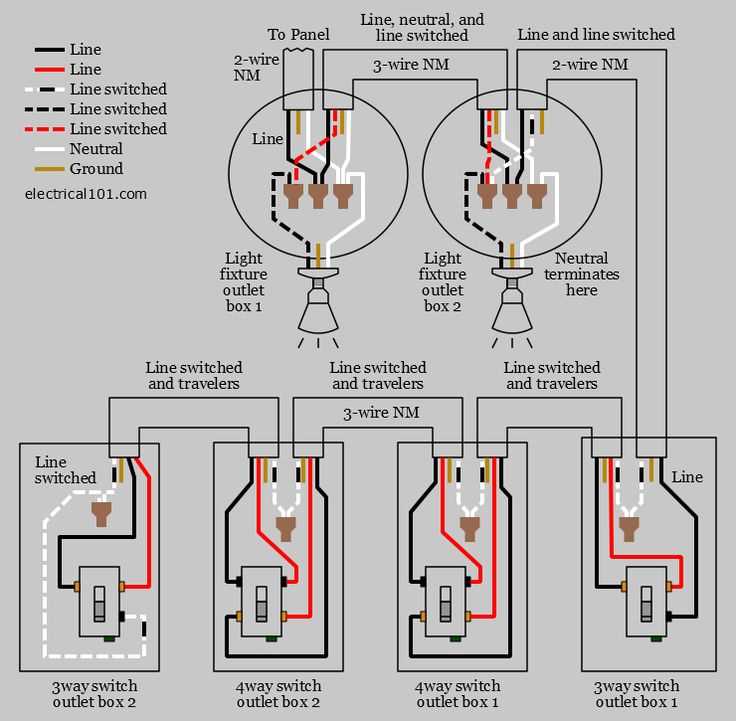
After connecting travelers, use a multimeter set to continuity mode. Activate each device in sequence to confirm uninterrupted paths between conductors. Any interruption indicates misconnection or damaged wiring.
If the system includes grounding wires, attach them to the metal frame or dedicated grounding screw at each control point. This prevents potential shock hazards during operation or maintenance.
Final verification involves switching each device while monitoring the terminal connections. Properly linked travelers will allow current to flow through any combination of positions without flickering or interruption.