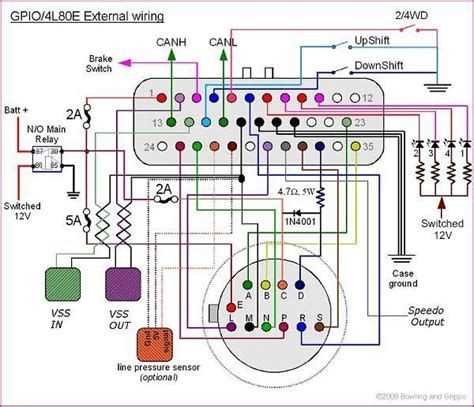
Check the transmission harness pinout before connecting the control module to the gearbox. This heavy-duty GM automatic unit uses a main case connector with multiple signal paths that route power, ground, and sensor signals between the powertrain control module and internal solenoids. Incorrect pin placement may trigger shift faults or prevent gear engagement.
The gearbox uses electronically controlled shift solenoids, a pressure control solenoid, and speed sensors that report rotational data to the control module. Each component receives voltage through dedicated conductors inside the harness. Shift solenoids usually operate on a 12-volt supply controlled by the PCM ground circuit, while the pressure control solenoid adjusts hydraulic line pressure through pulse-width modulation.
Connector pin assignments determine how signals travel between sensors and the control module. Typical circuits include:
Shift solenoid A and B control gear changes, pressure control solenoid regulates hydraulic pressure, and input and output speed sensors provide rotational data that the module uses to calculate shift timing.
Inspect harness insulation and connector terminals before testing electrical signals. Transmission heat and fluid exposure can damage insulation or corrode contacts. A digital multimeter should show stable 12 V supply at the solenoid feed circuit and proper resistance across each solenoid coil, commonly ranging from 19 to 31 ohms depending on the component.
4L80E Wiring Diagram with Transmission Connector Pinout Solenoid and PCM Connections
Verify the case connector pin layout before attaching the harness to the gearbox and powertrain control module. This GM heavy-duty automatic unit uses a multi-pin round connector on the transmission housing that routes power supply, control signals, and sensor outputs between the gearbox and the PCM. Incorrect pin placement may block gear shifts or trigger fault codes.
Two shift solenoids inside the valve body receive a constant 12-volt feed from the vehicle electrical system while the control module switches their ground paths. Each solenoid controls hydraulic valves that determine gear selection. When the PCM grounds solenoid A or B in different combinations, the transmission changes between first, second, third, and fourth gear.
The pressure control solenoid regulates hydraulic line pressure. The PCM modulates this component using pulse-width modulation signals that rapidly switch the ground circuit. Higher duty cycles increase hydraulic pressure, allowing the gearbox to handle heavy load conditions without clutch slip.
Connector pins also link the gearbox to two speed sensors mounted on the transmission case. The input speed sensor monitors turbine shaft rotation, while the output sensor measures driveshaft speed. The control module compares both signals to calculate shift timing and torque converter clutch engagement.
Measure electrical signals during diagnostics with a digital multimeter. The solenoid supply circuit should show approximately 12 volts with ignition on, while coil resistance normally ranges from about 19 to 31 ohms depending on the internal component. Corrosion at the case connector or damaged insulation inside the harness often interrupts these signals and leads to erratic shifting.
4L80E Transmission Connector Pinout and Solenoid Wiring Layout
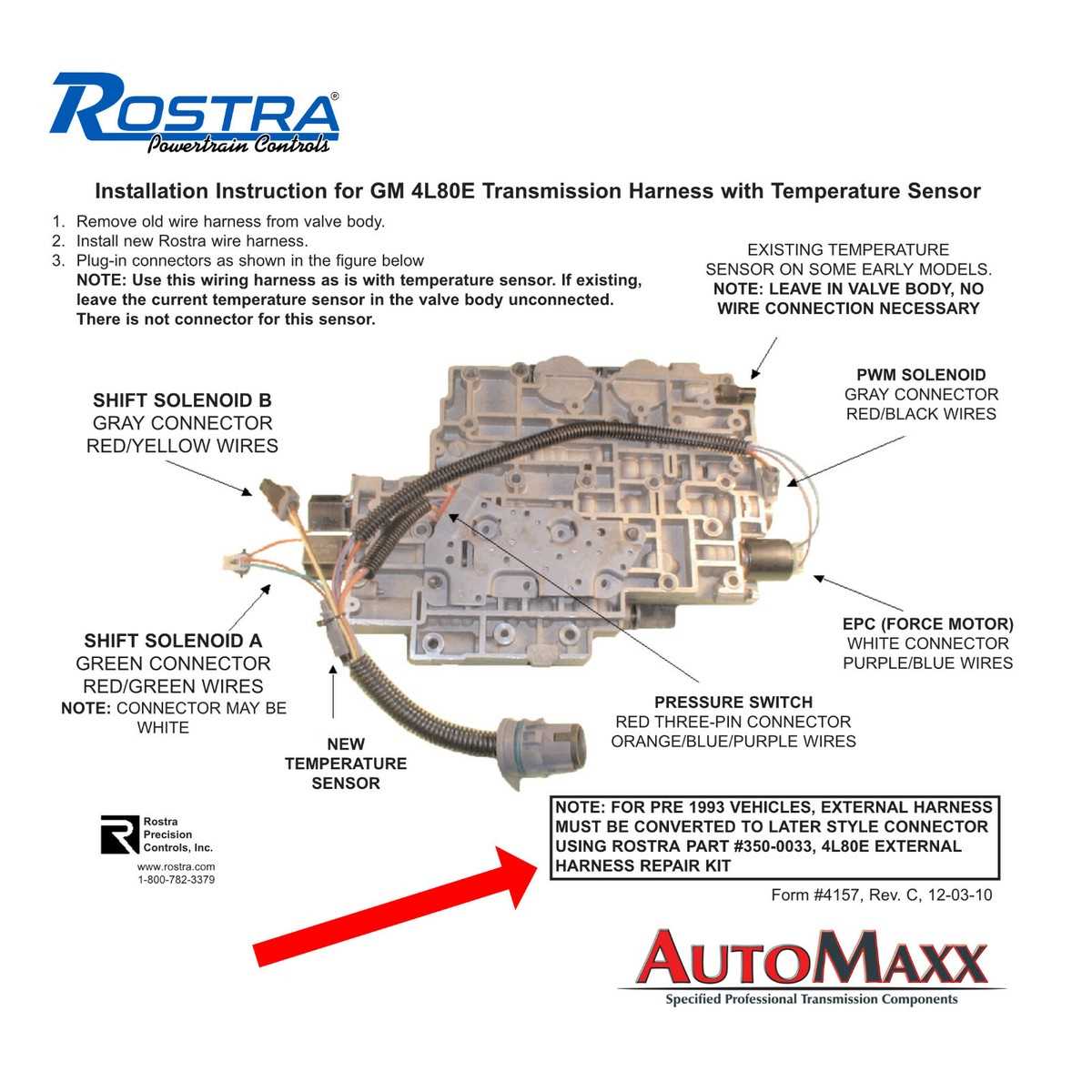
Inspect the transmission case connector pin assignment before attaching the vehicle harness. The round multi-pin connector mounted on the gearbox housing routes electrical signals between the powertrain control module and internal hydraulic control components. Misplaced terminals or bent pins interrupt communication with the control module and lead to missing gears or harsh shifts.
Most GM heavy-duty automatic units of this type use a connector containing more than ten signal paths. These terminals carry voltage supply, ground circuits, speed sensor signals, and control lines that operate internal solenoids inside the valve body.
Transmission Case Connector Pin Functions
Each terminal in the connector corresponds to a specific circuit. Typical assignments include:
Shift solenoid A circuit responsible for part of the gear selection logic, shift solenoid B circuit completing the gear combination pattern, pressure control solenoid line adjusting hydraulic pressure, and signal lines from input and output speed sensors used by the control module to monitor shaft rotation.
Constant ignition voltage normally enters the transmission through a dedicated supply pin. Internal solenoids receive this voltage while the control module switches their ground circuits. This configuration reduces load on the control unit and allows fast actuation of hydraulic valves.
Internal Solenoid Electrical Layout
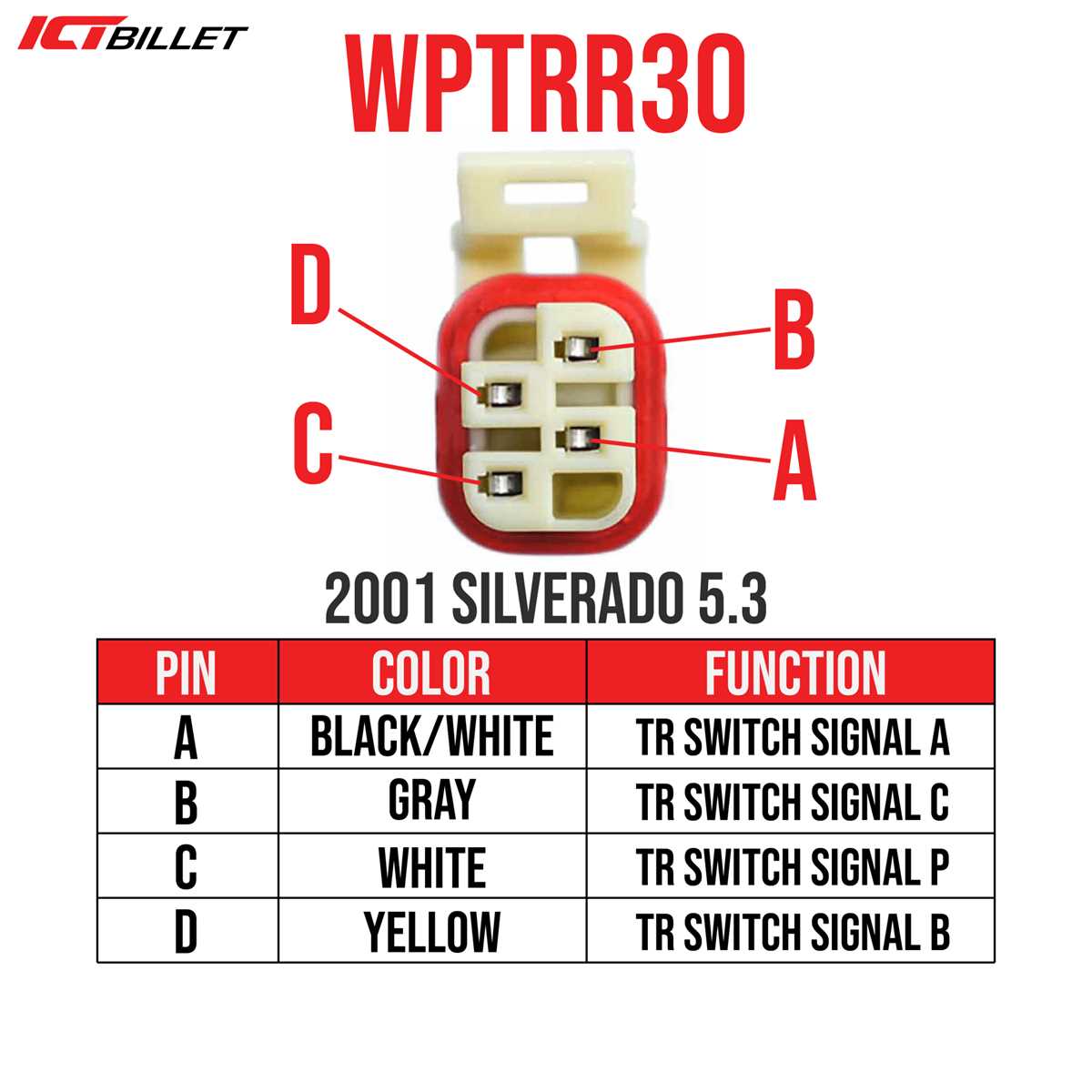
Inside the valve body several electromagnetic solenoids control fluid passages. The main components include two shift solenoids, a pressure control solenoid, and a torque converter clutch solenoid. Each component connects to the external harness through the case connector and internal conductor paths.
Measure coil resistance during inspection. Typical shift solenoid resistance ranges from about 19–31 ohms, while the pressure control solenoid often reads lower due to its variable duty cycle operation. Readings outside this range may indicate a burned coil or internal short.
Secure the harness near the transmission housing and keep it away from exhaust components. Excessive heat degrades insulation and causes signal loss between the gearbox and the powertrain control module.