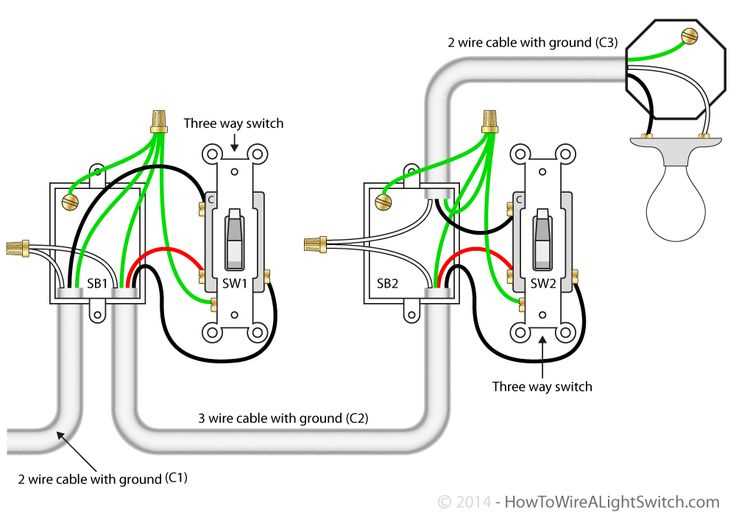
To wire a system with two switches controlling a single light fixture, begin by selecting the correct components, including two 3-way switches and the necessary connecting wires. Ensure you understand the difference between the traveler terminals and the common terminals on the switches to correctly connect your setup.
Start by positioning the first switch where you want to control the fixture and ensure the power supply is off. Run a wire from the power source to the common terminal of the first switch, then connect the travelers between the two switches. This setup allows either switch to control the light independently from one another.
Finally, connect the second switch to the fixture and the ground wire to ensure safety. After completing the connections, test the circuit by toggling both switches to confirm proper operation. Troubleshoot any wiring issues such as incorrect traveler connections or common terminal miswiring to ensure full functionality.
3 Way Lighting Circuit Wiring Guide
To set up a dual-switch system that controls one light from two locations, begin by understanding the components involved. You will need two 3-way switches, a light fixture, and the appropriate gauge wire. The two switches will be interconnected through traveler wires that allow control of the light from either switch independently.
First, connect the power source to the common terminal of the first switch. This switch will receive the live feed from the electrical panel. Ensure you mark the common terminal properly since this is the key point for the incoming power.
Next, run two traveler wires between the two switches. These wires will carry current between the two switches, allowing either switch to control the flow of electricity to the light fixture. The traveler terminals on both switches should be connected to each other using these wires.
At the second switch, connect the traveler wires to their corresponding terminals. The second switch will also have a common terminal, which should be connected to the light fixture. This setup allows either switch to complete or break the circuit, controlling the light at any given point.
Now, connect the ground wire from the power source to the ground terminal on both switches. It’s important to ensure the ground wire is securely attached to prevent electrical shock or fire hazards. The ground wire will also be connected to the light fixture for safety.
Finally, connect the neutral wire directly to the light fixture. The neutral wire completes the electrical circuit by providing a return path for the current to flow back to the panel. Ensure this connection is tight and free from corrosion to maintain proper function.
Once all connections are made, carefully check each terminal for a solid connection. Loose or improperly connected wires can lead to malfunction or cause an electrical short. It’s a good practice to use a multimeter to test the connections before switching the power back on.
When the power is restored, test the switches by toggling both to ensure the light can be turned on and off from either location. If the light doesn’t respond as expected, recheck the traveler wire connections and the common terminals for accuracy.
Understanding the Components of a 3 Way Switch Setup
The first key element in a dual-switch system is the switches themselves. Two 3-way switches are required for controlling the same light from two different locations. Each switch has three terminals: one common terminal and two traveler terminals. The common terminal receives or sends the live wire depending on the position of the switch, while the traveler terminals connect the two switches with a pair of traveler wires.
Next, the wiring between the switches plays a pivotal role in enabling the control of the light. The traveler wires carry the current between the two switches, allowing either switch to turn the light on or off. These wires are connected to the traveler terminals of both switches, ensuring that they can communicate with each other. Proper connection of these wires is crucial for the system to function as intended.
Lastly, the light fixture is the endpoint of the circuit. The fixture receives the current when either switch completes the circuit by connecting the common terminal to the live wire. The neutral wire connects directly to the fixture, providing a return path for the current. Ground wires should also be connected for safety, ensuring that any faults in the system are properly diverted. All these components work together to enable reliable control of the light from two different locations.