Connect the battery positive lead to the power input terminal of the key starter control, attach the starter solenoid lead to the start terminal, and route the accessory supply lead to the accessory terminal. This three-conductor setup is common in small engines, lawn tractors, motorcycles, and basic vehicle electrical systems where the key control distributes battery voltage to two separate outputs.
The power input terminal receives 12-volt supply directly from the battery through a fused line or main harness lead. When the key rotates to the START position, internal contacts send voltage to the starter solenoid lead, which engages the starter motor. In the RUN position, the accessory terminal provides current to engine electronics, fuel solenoids, lights, or instrument clusters.
Typical conductor sizes range from 14 AWG to 16 AWG for accessory circuits and 12 AWG for the starter trigger lead depending on vehicle design. Battery supply leads often include a fuse rated between 10 and 20 amps placed close to the battery connection point. Color coding varies, though red commonly indicates battery supply, yellow or white indicates starter trigger, and black or brown serves accessory circuits.
Route conductors through insulated loom and secure them away from engine heat and moving components. Maintain tight terminal connections using crimped ring connectors or spade terminals designed for the key control posts. Proper routing and terminal placement allow the starter system and accessory circuits to receive power only when the key position commands it.
3 Wire Ignition Switch Wiring Diagram With Battery Start and Accessory Terminals
Connect the battery positive lead to the input terminal of the key starter control, attach the starter solenoid lead to the start terminal, and route the accessory power lead to the accessory terminal. This three-conductor arrangement directs battery voltage to different engine systems depending on the key position.
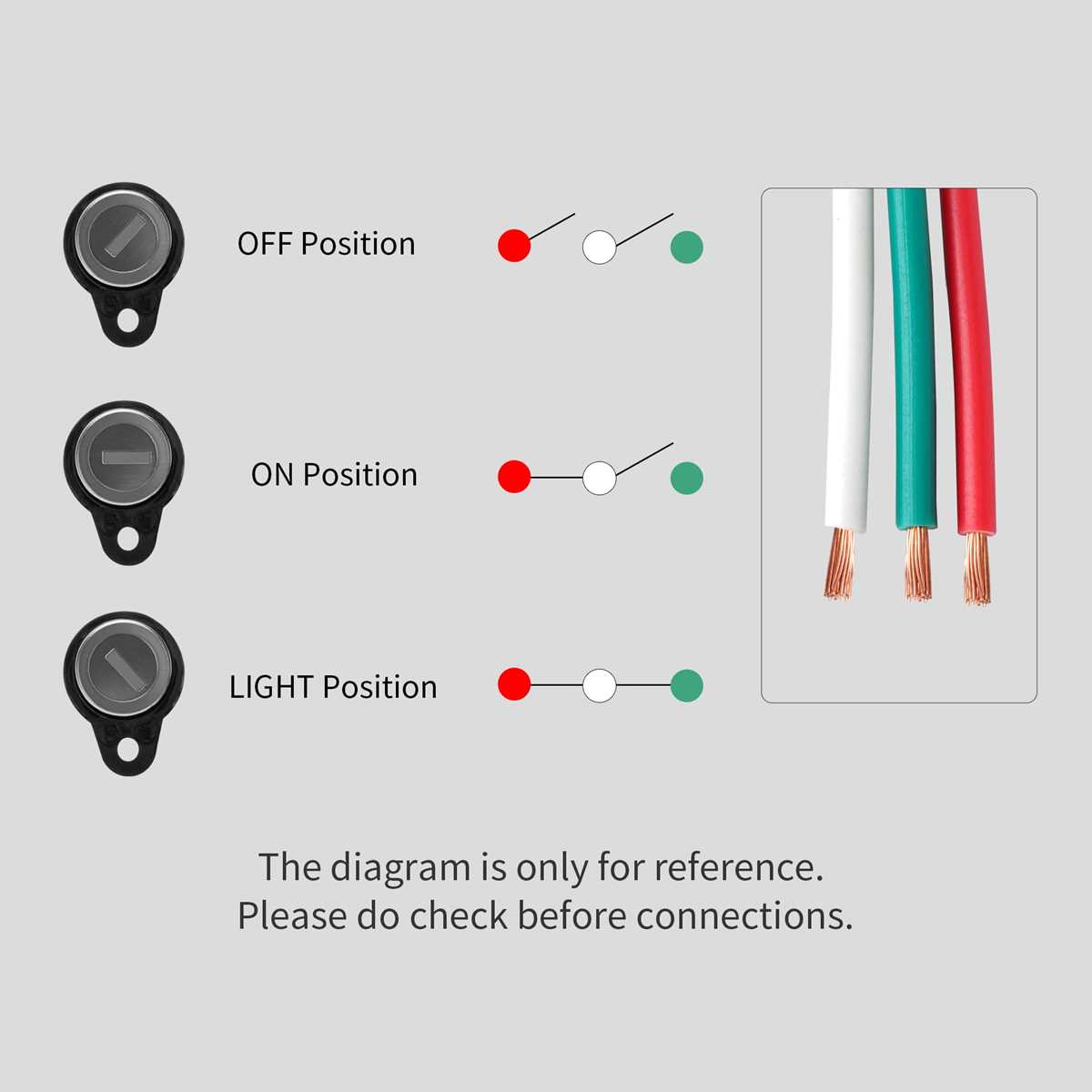
Inside the key control assembly, rotating the key changes the internal contact path. In the OFF position, no terminals receive battery voltage. In the RUN position, power flows from the battery input terminal to the accessory terminal. In the START position, voltage also reaches the starter solenoid lead, engaging the starter motor.
Typical Terminal Functions

- B or BAT terminal connects to battery positive supply
- S terminal connects to the starter solenoid trigger lead
- A or ACC terminal feeds engine electronics or accessories
Use conductor sizes matched to the current demand of each connection. Starter solenoid trigger leads often use 12 AWG copper due to higher momentary current draw. Accessory supply leads normally use 14–16 AWG copper for components such as fuel shutoff solenoids, gauges, lights, or control modules.
Common installation steps:
- Route battery supply through a 10–20 amp fuse near the battery
- Attach ring terminals securely to the control posts
- Route conductors through protective loom near the engine compartment
- Secure the harness using clips or clamps to prevent vibration damage
Keep the starter trigger lead separated from accessory lines to prevent voltage drop during engine cranking. Secure each connection tightly and verify that the battery input terminal remains energized only through the fused supply lead. Proper terminal placement ensures that accessories receive power during RUN while the starter motor receives voltage only during the START key position.
Battery Power Input Connection on a Three Wire Ignition Switch
Connect the battery positive lead directly to the terminal labeled B or BAT on the key start control. This terminal supplies 12-volt power to the internal contacts that distribute voltage to the starter solenoid and accessory circuits depending on key position.
Use a conductor sized for the total current passing through the control. In many small engine systems, 12 AWG copper provides adequate capacity for starter trigger and accessory demand combined. Strip approximately 10–12 mm of insulation, insert the conductor fully under the terminal clamp or ring connector, and tighten the nut firmly to prevent voltage drop.
Route the battery supply through a fuse or fusible link located close to the battery positive post. A 10–20 amp fuse protects the harness and key control contacts from overheating if a short occurs along the power lead.
Typical Battery Input Path
Power normally travels through the following sequence: battery positive terminal → fuse or fusible link → harness lead → BAT terminal on the key control. From this terminal the internal contact plate distributes voltage to accessory and starter trigger terminals when the key rotates.
Use crimped ring terminals with insulated sleeves when attaching the battery supply conductor to the control post. This connector type resists vibration and prevents the conductor from slipping off threaded studs used on many small engine starting controls.
Keep the battery supply lead routed away from exhaust manifolds, rotating belts, and sharp metal edges. Secure the harness using plastic clips or clamps spaced about 200–300 mm apart so movement and vibration do not fatigue the copper strands.
Confirm battery voltage at the BAT terminal with a multimeter before connecting the remaining leads. A reading near 12.6 volts on a fully charged battery verifies that the supply path from the battery to the key start control remains intact.