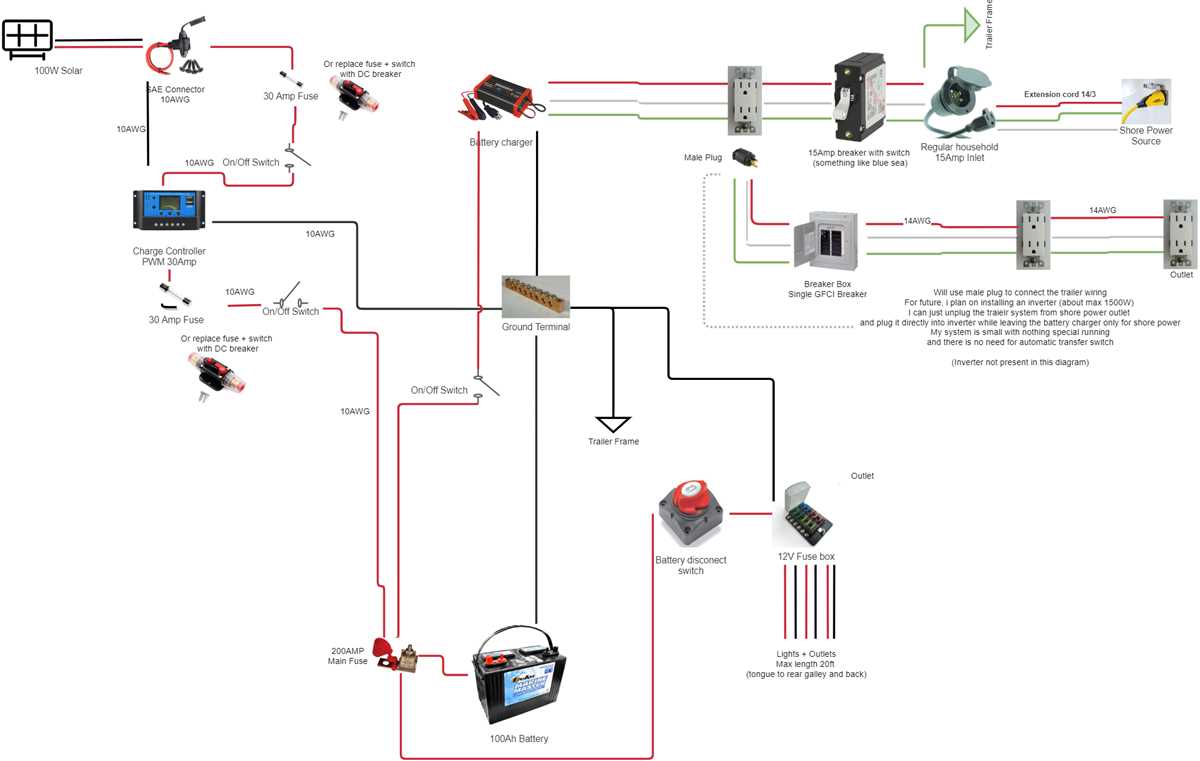
Verify the main power source first before connecting any distribution lines. Confirm the battery voltage and shore power input to avoid overloads and prevent blown fuses. Mark all positive and negative leads clearly to maintain consistent polarity throughout the system.
Use labeled tracks to identify AC and DC feeds separately. Trace each line from the breaker panel to the appliance to confirm connectivity and detect potential shorts. Employ a multimeter at junction points to verify voltage and continuity.
Document connector types and pin configurations at every junction. Use standardized color codes–red for positive DC, black for negative DC, blue for AC hot, white for AC neutral–to reduce errors during modifications or repairs. Include ground leads in all checks to prevent electrical hazards.
When integrating lighting or climate control systems, route high-current lines along protected channels to avoid friction or heat damage. Keep separation between AC and DC paths to minimize interference and improve system reliability.
For modular appliances, ensure plug-and-play connectors match voltage ratings and polarity orientation. Test each section individually to detect faults before powering multiple devices simultaneously. Check fuses and circuit breakers after each installation to confirm operational safety.
Maintain a schematic reference sheet with measured voltages and connector types for future troubleshooting. Label each junction and terminal clearly to simplify repairs, upgrades, or seasonal inspections without guessing connections.
Travel Trailer Electrical Layouts and Connector Routing
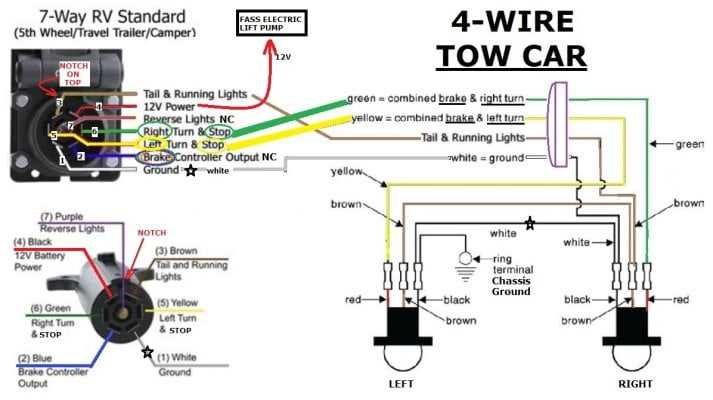
Position all power lines along the frame rails and use protective conduit at bends to prevent abrasion. Maintain separation between DC and AC paths to minimize interference. Clearly mark each junction with voltage ratings and polarity indicators. Secure connectors with locking clips to prevent accidental disconnection during movement.
Implement color-coded leads to match standardized terminal assignments:
- Red and black for 12V DC supply
- White and blue for AC feeds
- Green or bare copper for grounding
Test each segment with a multimeter to confirm continuity before powering appliances, and keep all connection points accessible for troubleshooting or future upgrades.
Locating Main Power Sources and Breaker Connections
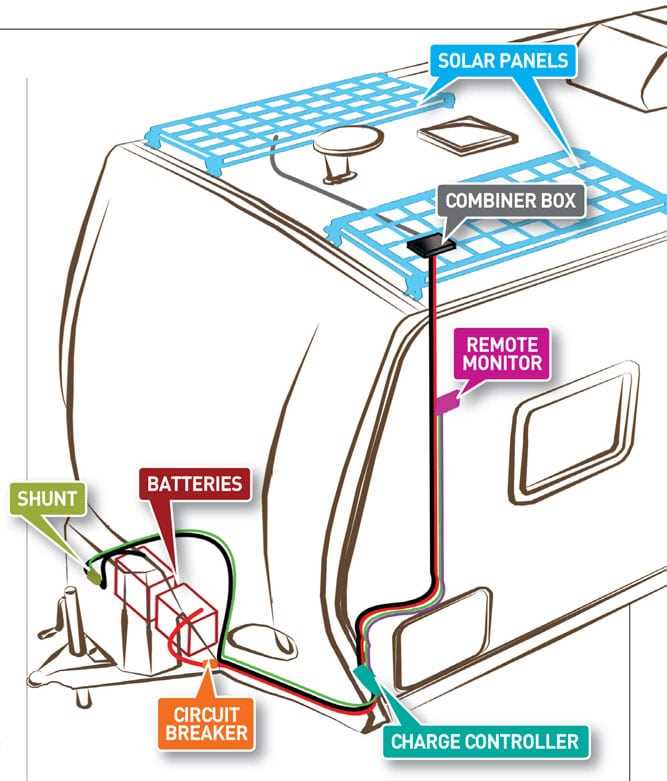
Identify the primary energy input near the front compartment and label each terminal with voltage and amperage ratings. Confirm that the main supply is switched off before inspecting connectors, and use a multimeter to verify the absence of live current at all connection points.
Position circuit interrupters in a central panel with easy access for service and monitoring. Group breakers by function, separating lighting, outlets, and appliances. Ensure each line entering the panel has secure fasteners and clearly visible labels to simplify troubleshooting and future expansions.
Trace the feed lines from the main source to all subpanels, keeping them away from moving components and heat sources. Use protective sleeves at junctions and maintain consistent color coding across all connections. Test each breaker by briefly energizing the line under controlled conditions to confirm correct operation before completing assembly.