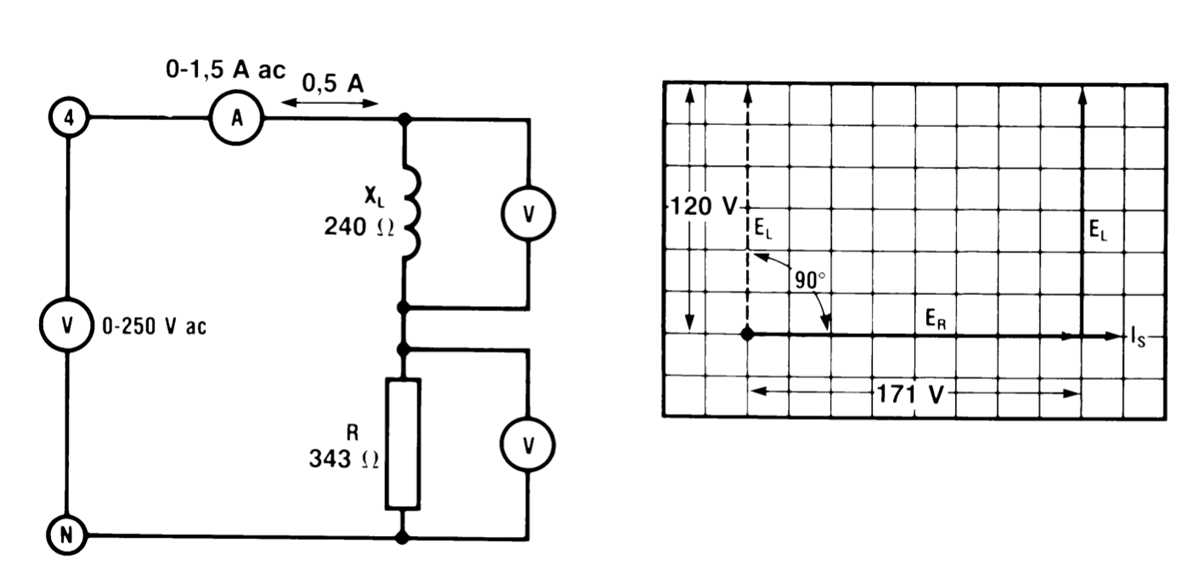
Draw voltage and current vectors with the resistor aligned on the horizontal axis and the inductor vector leading by 90 degrees. This orientation simplifies phase angle calculation and visual comparison of magnitudes.
Measure total current using RMS values to accurately reflect the combination of resistive and inductive components. Use a protractor or calculation tools to determine the resulting vector direction relative to the voltage reference.
Mark individual drops across the resistor and inductor to see how each contributes to the total voltage. The resistor drop is in phase with the current, while the inductor drop leads by 90 degrees, allowing precise addition using vector rules.
Label angles and magnitudes clearly for each vector. Proper annotation ensures easy calculation of phase difference, impedance magnitude, and current amplitude, making it straightforward to analyze performance under AC conditions.
RL Circuit Phasor Representation
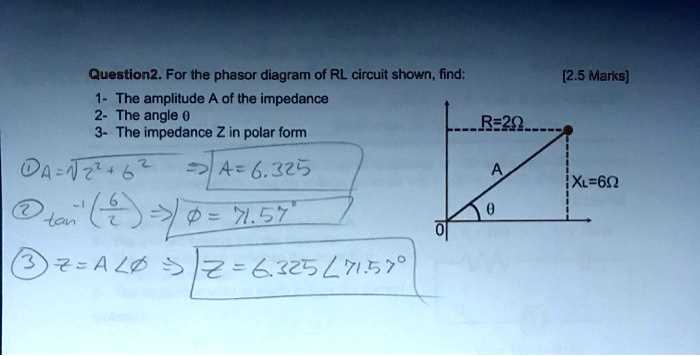
Align the resistor vector along the horizontal axis to represent in-phase voltage relative to current. This establishes a clear baseline for comparing inductive effects and calculating total voltage.
Draw the inductor vector perpendicular to the resistor vector, pointing upward to indicate the 90-degree lead of inductive voltage over current. This separation makes it easier to sum the vectors using the tip-to-tail method.
Calculate the total voltage vector using vector addition. Combine the resistor and inductor contributions geometrically, either with trigonometric formulas or a scaled drawing for visual verification.
Measure the phase angle between total voltage and current using the triangle formed by the resistor, inductor, and total voltage vectors. This angle determines the lag introduced by the inductor.
Label the magnitudes of each vector clearly with units in volts RMS. Indicate the current amplitude along the reference axis to simplify subsequent impedance and power calculations.
Check alignment of all vectors to ensure accuracy in representation. Misalignment can result in incorrect phase angle readings and misleading interpretation of AC behavior.
Use the representation to determine impedance magnitude by dividing the total voltage by the current amplitude. This helps confirm theoretical calculations for series resistive-inductive setups.
Verify readings with an AC meter to confirm that the plotted vectors correspond to real measured values. Adjust the drawing if necessary to match observed voltage and current characteristics for precise analysis.
Plotting Voltage and Current Vectors in a Series RL Setup
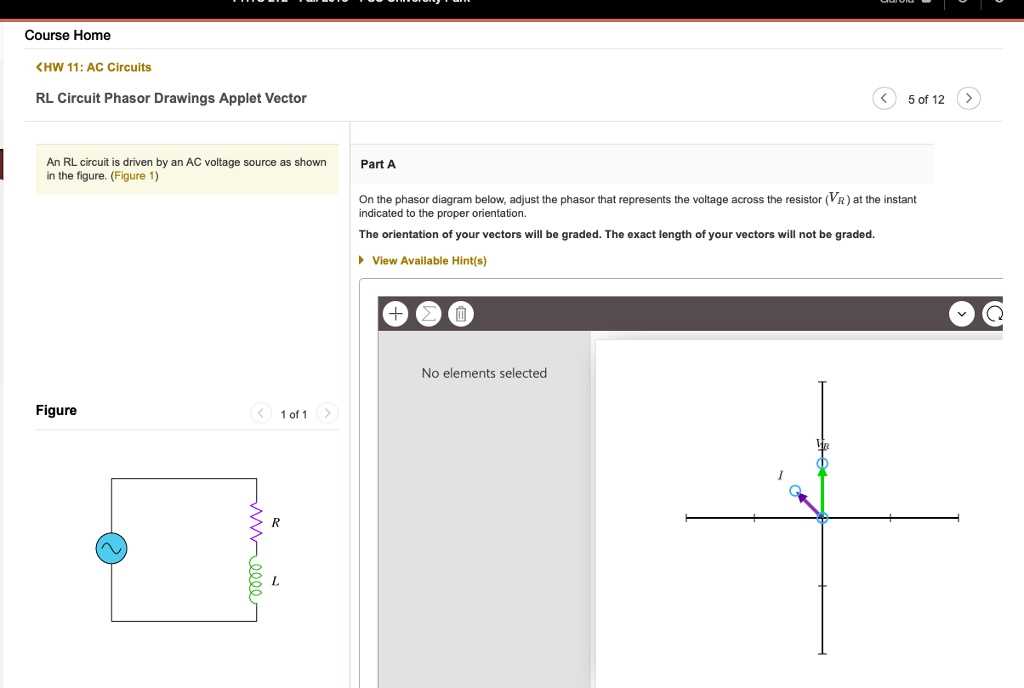
Start by drawing the current vector along the horizontal axis to use as a reference for all voltage drops. This orientation ensures consistent comparison between resistive and inductive components.
Represent the resistor voltage drop in phase with current. Use the same horizontal direction and scale the length according to RMS voltage, making it easier to combine with the inductor contribution visually.
Draw the inductor voltage perpendicular to the resistor vector pointing upward to indicate a 90-degree lead. Keep proportional scaling consistent to avoid misrepresentation of relative magnitudes.
- Use a ruler or graph paper for accurate vector lengths
- Label each vector with RMS values and units
- Mark angles between vectors clearly
Combine the resistor and inductor vectors tip-to-tail to form the total voltage vector. This visual addition helps determine the resultant amplitude without performing complex trigonometric calculations immediately.
Measure the angle between total voltage and current along the constructed vector triangle. This angle indicates the phase lag caused by the inductor and can be used to calculate power factor.
- Double-check vector directions and lengths
- Adjust for measurement accuracy if RMS values change
- Confirm that all components are represented to the same scale
Validate the plotted vectors with actual meter readings to ensure the graphical representation aligns with observed voltages and current. Correct discrepancies to maintain precision for analysis and reporting.