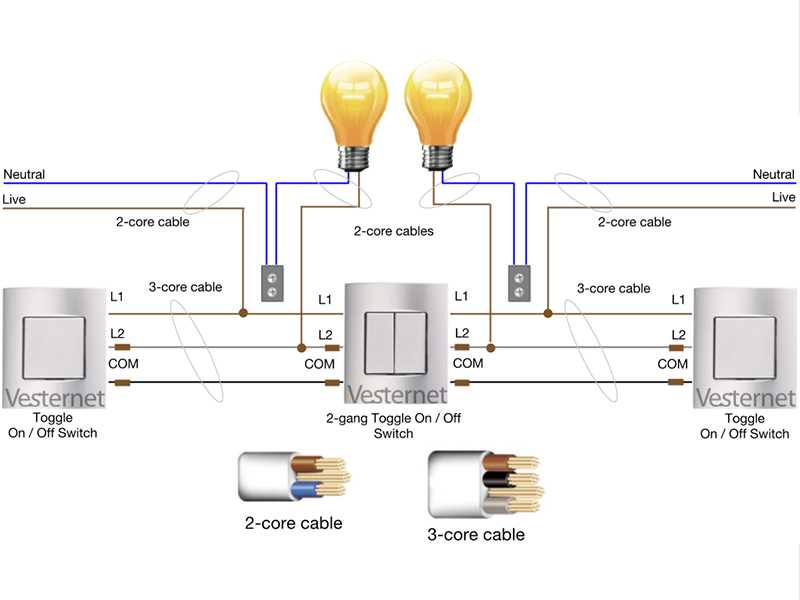
Connect the live conductor from the distribution panel to the wall switch input terminal, then route the switched live lead from the switch output to the lamp holder center contact. The neutral conductor must run directly from the supply line to the lamp socket return terminal. This layout ensures that the switch interrupts the live feed rather than the neutral path.
In a standard residential illumination installation, three conductors usually appear inside the wall box or ceiling junction: live (often brown or black), neutral (blue or white), plus protective ground (green-yellow or bare copper). The wall switch must control the live path only, leaving the neutral connected directly to the lamp socket. This arrangement reduces shock risk during bulb replacement.
The lamp holder normally contains two terminals. The center contact connects to the switched live conductor, while the threaded shell connects to the neutral return. This polarity keeps exposed metal parts at neutral potential, lowering electrical hazard if someone touches the socket while the fixture remains connected to the supply.
Correct conductor routing inside junction boxes also matters. All neutral leads should join using a terminal block or approved connector, while the live supply passes through the switch path before reaching the fixture. Loose connections, reversed polarity, or missing ground conductors often cause flickering, tripped breakers, or unsafe metal fixture voltage.
Light Circuit Wiring Diagram With Switch Connections and Lamp Holder Terminals
Route the live supply from the distribution board to the wall switch input terminal, then connect the switch output conductor to the center contact of the lamp socket. Neutral from the supply must connect directly to the threaded shell terminal of the socket. This layout allows the switch to interrupt the energized conductor rather than the return path.
A common residential layout uses three conductors inside the ceiling junction box: phase, neutral return, plus protective ground. The phase lead travels through the switch before reaching the fixture. Neutral remains uninterrupted between supply and socket. The protective conductor bonds metal fixture parts to the building grounding system.
Wall switch terminal connections
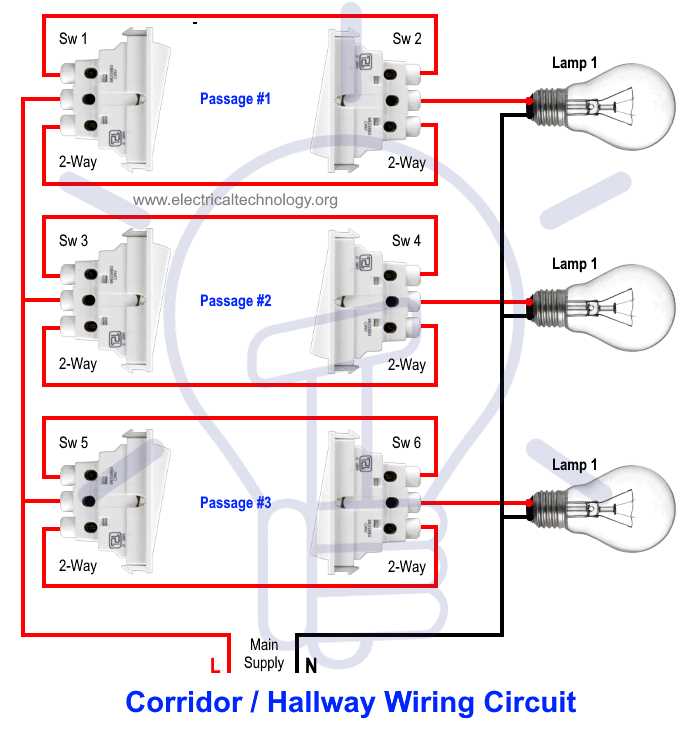
Most single pole wall switches contain two screw terminals. The incoming phase conductor connects to the common input terminal. The outgoing conductor leading toward the fixture attaches to the second terminal. Ground connects to the green grounding screw attached to the switch frame.
Inside the switch box, conductors should be arranged so insulation reaches the terminal clamp without bare copper exposed outside the screw. Tighten the terminal firmly while avoiding excessive force that could damage the conductor.
Lamp socket terminal arrangement
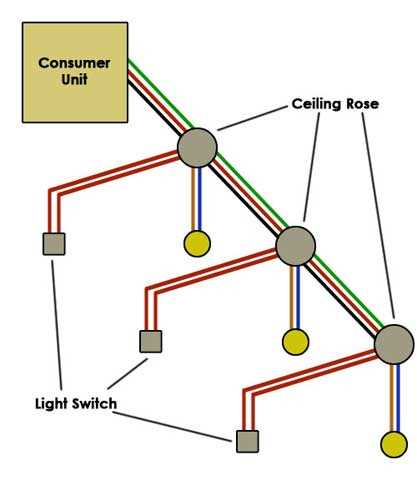
The center contact inside the lamp holder receives the switched phase lead. The threaded metal shell connects to neutral. This polarity reduces risk of accidental contact with an energized surface during bulb replacement.
Junction boxes often contain multiple neutral conductors joined through a connector block. Only one neutral lead travels to the lamp holder. Phase conductors follow a different path that includes the switch before reaching the fixture.
Common installation faults include reversed polarity at the socket, loose terminal screws, or missing ground connection. Reversed polarity places voltage on the threaded shell of the socket, creating shock hazard during bulb replacement.
Verify the installation using a voltage tester. With the switch in the ON position, voltage should appear between the center contact of the socket and neutral. When the switch moves to OFF, voltage must disappear from that contact.
Single pole wall switch connection for a basic lighting circuit
Connect the incoming phase conductor from the distribution panel to one terminal of the wall switch, then attach the outgoing conductor that leads to the ceiling fixture to the second terminal. This arrangement allows the switch to interrupt the energized path before power reaches the lamp socket.
A typical installation inside a residential wall box contains three conductors:
- Phase from the distribution board
- Switched phase leading to the ceiling fixture
- Protective ground bonded to the switch frame
Neutral does not pass through the switch box in many installations. Instead, the return conductor runs directly from the supply junction to the lamp holder terminal. Only the phase conductor travels through the switch mechanism.
Terminal arrangement on a single pole switch
Most units contain two brass screw terminals plus one green grounding screw. The supply phase connects to one brass terminal. The conductor heading toward the fixture connects to the other.
- Terminal 1 – incoming phase
- Terminal 2 – switched conductor leading to the lamp socket
- Green screw – grounding conductor
Strip about 10–12 mm of insulation from each conductor before attaching it under the screw clamp. The bare copper should form a clockwise loop beneath the screw head so tightening the screw pulls the conductor inward rather than pushing it out.
Installation checks before restoring power
After securing all conductors, verify the following conditions:
- No exposed copper outside the screw terminals
- Ground conductor bonded to the switch frame
- Incoming phase attached to only one switch terminal
- Outgoing conductor connected to the remaining terminal
- Wall box contains no loose conductors touching each other
Once the cover plate is installed, restore power at the breaker panel. Toggling the switch should apply voltage to the center contact of the lamp holder while neutral remains continuously connected to the threaded shell.