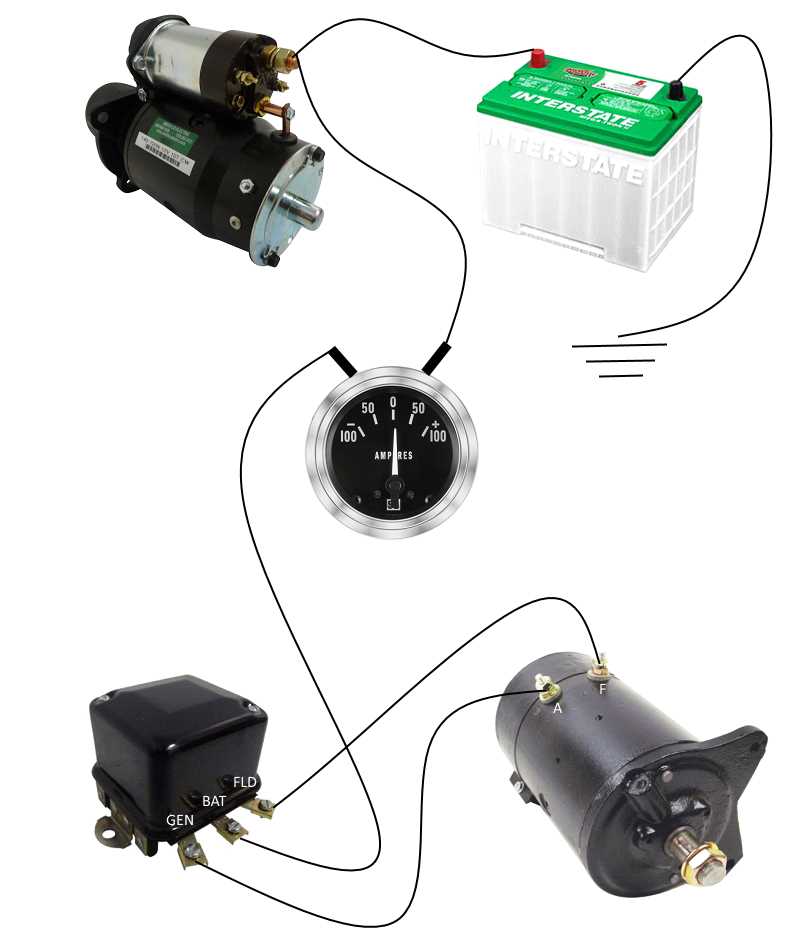
Connect the vehicle’s charging generator using a clear electrical layout that shows battery terminals, voltage regulator links, and ignition circuit paths. A typical passenger car unit uses three primary conductors: a B+ cable leading to the battery positive terminal, a field excitation line connected through the ignition switch, and a ground return attached directly to the engine block. Correct routing of these conductors prevents voltage drop, unstable charging, and overheating of insulation.
Most modern automotive generators operate within a 13.8–14.5 V charging range. The heavy output lead must handle currents between 60 A and 180 A depending on the unit rating. Copper cable with a cross-section of 6–16 mm² is typically selected, while grounding points require bare metal contact without paint or corrosion. Poor grounding frequently causes fluctuating dashboard battery indicators and irregular regulator behavior.
An excitation circuit usually runs through the dashboard charge indicator lamp. When ignition power reaches the regulator through this lamp, a small current energizes the rotor winding, creating the magnetic field required for power generation once the engine begins rotating. Without this path, the generator may spin yet produce little or no electrical output.
Vehicles equipped with electronic control modules may include an additional sense terminal that monitors system voltage directly at the battery. This signal allows the regulator to adjust field current and maintain stable electrical supply across headlights, fuel pump, cooling fans, and onboard electronics. Clear identification of each terminal and conductor color prevents incorrect connections that could damage the regulator or battery pack.
Connection Layout of Vehicle Charging Generator
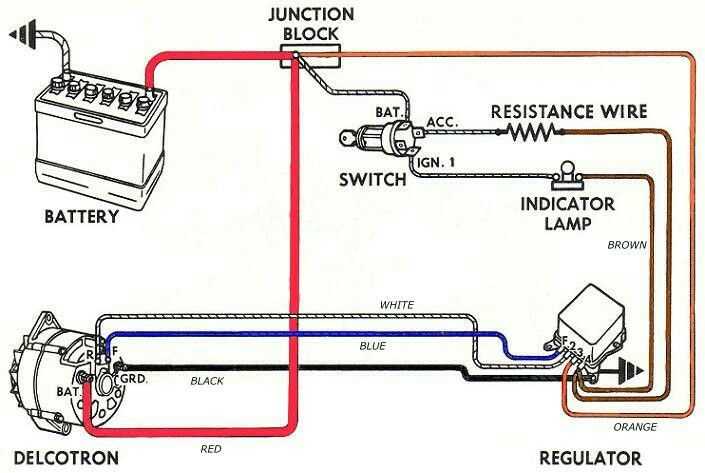
Connect the main output stud of the charging generator directly to the battery positive terminal through a 6–8 AWG copper cable and place a 80–120 A fuse within 20 cm of the battery. Attach the housing ground point to the engine block using a short 8 AWG strap; poor grounding often causes low charge voltage and overheating.
A typical vehicle charging unit uses three primary conductors: output (B+), excitation input, and ground reference. The B+ terminal carries current from the rotor-driven generator to the battery and distribution bus; cable thickness depends on maximum current rating. Units rated near 90 A operate safely with 8 AWG copper, while 120–150 A models require 6 AWG. The excitation lead runs from ignition-switched 12 V through a small indicator lamp or 35–100 Ω resistor; this line energizes the rotor field during engine startup. Without that path the generator may remain inactive at idle speed. Voltage sensing often uses a thin 16–18 AWG lead connected near the battery or fuse block; regulators rely on that reference to maintain 13.8–14.5 V across the electrical system. Keep all connectors crimped with insulated ring terminals and secure them using lock washers; vibration from the engine easily loosens plain nuts. Route conductors away from exhaust manifolds and rotating pulleys, maintaining at least 30 mm clearance or using heat-resistant sleeve rated above 150 °C.
After installation, check output using a multimeter across battery posts: engine idle should show roughly 13.6–14.2 V, rising slightly at 2000 RPM. Lower values usually indicate weak excitation supply, damaged regulator, or excessive resistance within the main charge cable. Continuous readings above 14.8 V suggest regulator malfunction and risk battery overcharge.
How to Identify Terminals and Wire Colors on Common Alternator Types
Check the stamped markings directly on the housing and next to each terminal post before connecting any lead. Many charging generators include small cast letters such as B, BAT, IG, S, L, or D+. The B/BAT post normally links to the battery positive line and often carries a thick red cable. The IG contact typically receives ignition-switched voltage and frequently uses a black or black-with-yellow stripe conductor in Japanese vehicles. The S sensing point usually connects through a thinner red or white lead that measures system voltage directly at the battery rail.
Examine connector shape and pin count on compact units installed in modern passenger cars. A two-pin plug often includes L (charge indicator lamp) and S (voltage sense). The L position commonly uses yellow, blue, or brown insulation depending on manufacturer; this line runs toward the instrument cluster warning lamp. A three-pin arrangement may add IG or FR. The FR terminal sends load data toward the engine control module and frequently appears with a green or green-with-white stripe conductor.
Review color patterns typical of major vehicle groups. Many North American models place a large red cable on the output stud and a brown or brown-white conductor on the warning lamp terminal. European charging units often label the indicator contact D+; this pin frequently carries a blue wire. Older external-regulator systems may show markings such as F (field), N (neutral stator), and B+. Field control leads tend to appear in green or green-red, while stator taps often use white insulation.
Trace wire thickness along the harness when markings appear unclear. The heaviest conductor almost always attaches to the battery output stud. Medium-gauge lines normally handle ignition supply or voltage sensing. Thin leads route toward dashboard lamps or control modules. This physical difference helps confirm terminal identity when labels have faded or connectors lack clear lettering.