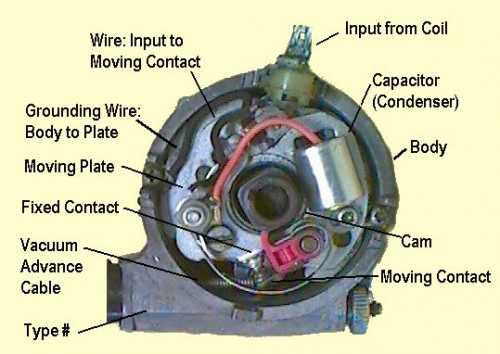
Connect the ignition coil negative terminal directly to the breaker contact set inside the distributor housing, while the small capacitor mounted near the contact plate links between the same terminal lead and ground. This layout allows the ignition primary circuit to open and close at precise intervals, producing a strong spark at each cylinder. A correct circuit layout prevents weak ignition pulses, erratic timing, or overheating of the coil.
In a traditional mechanical ignition system, a cam inside the distributor rotates with the engine. Each lobe pushes the contact arm open, interrupting current flow through the primary coil circuit. At that moment the capacitor absorbs the voltage spike that appears across the opening contacts. This short energy storage process reduces arcing across the metal surfaces while allowing the coil to collapse its magnetic field rapidly, generating the high voltage needed for the spark plug.
Correct cable routing inside the distributor body matters as much as component placement. The lead from the coil negative post usually passes through an insulated terminal stud mounted in the distributor housing. From that stud, a short flexible conductor connects to the moving contact arm, while the capacitor lead attaches to the same stud. A solid ground path through the distributor plate ensures the capacitor discharges correctly during each ignition cycle.
Small installation errors often cause ignition trouble. Loose terminal nuts, damaged insulation on the internal lead, or reversed connections at the coil can produce misfire at higher engine speed. Careful inspection of each terminal, secure mounting of the capacitor case to the distributor plate, and correct routing of the internal lead prevent unwanted electrical leakage and unstable ignition timing.
Points and Condenser Wiring Diagram With Ignition Coil and Distributor Connections
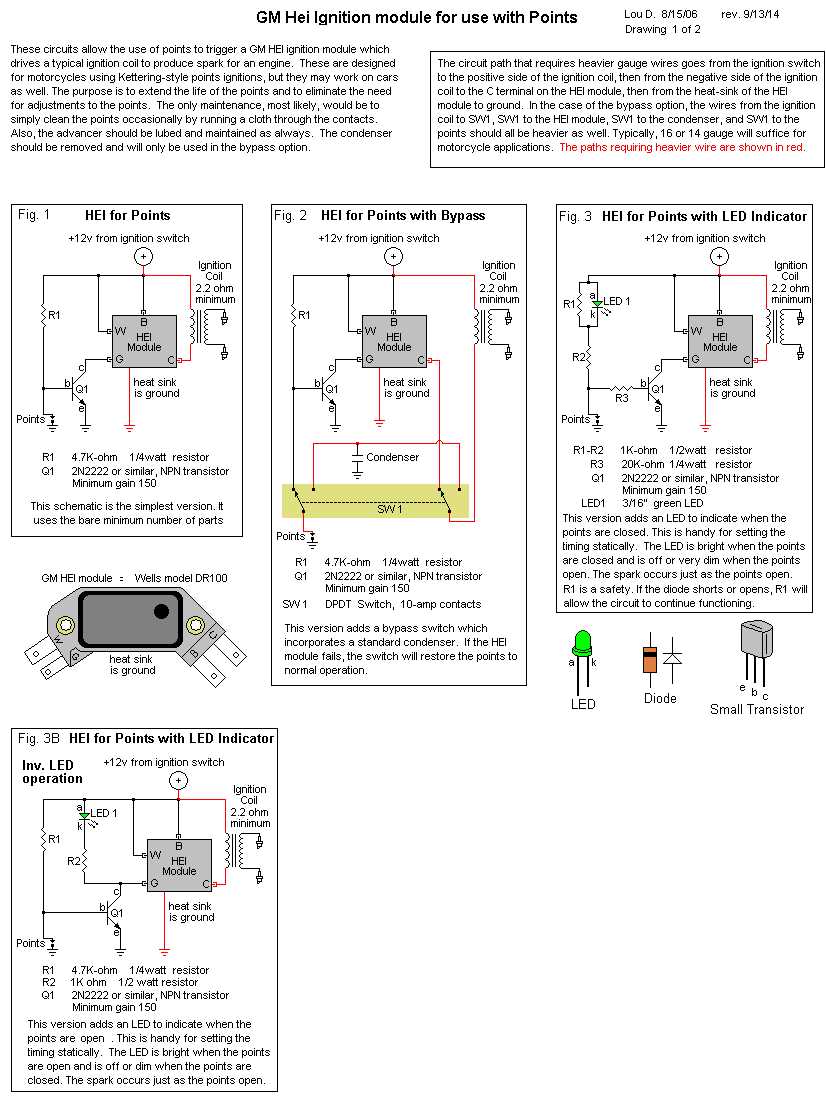
Attach the ignition coil negative terminal to the breaker contact assembly inside the distributor through the insulated side stud. The small capacitor mounted on the breaker plate must share this same terminal while its metal body remains grounded to the distributor base. This arrangement allows the ignition primary circuit to interrupt current cleanly during each cam rotation.
Correct routing between coil, distributor terminal stud, contact set, capacitor lead, plus ground path determines spark strength. Use short conductors inside the distributor to reduce resistance. A flexible lead must connect the moving contact arm to the terminal stud without touching the distributor housing during advance movement.
- Ignition coil positive terminal → ignition switch output
- Ignition coil negative terminal → distributor side terminal
- Distributor side terminal → moving breaker contact
- Capacitor lead → same distributor terminal
- Capacitor case → grounded distributor plate
During engine rotation, the distributor cam lifts the contact arm once per cylinder event. Current flowing through the coil primary circuit stops instantly once the contacts separate. The capacitor absorbs the surge created across the opening metal surfaces, reducing arc formation while allowing rapid magnetic collapse in the coil.
- Disconnect battery before connecting ignition circuit components
- Verify insulated terminal stud does not touch the distributor body
- Tighten terminal nut while protecting the fiber washer
- Confirm the capacitor bracket provides clean metal contact with the plate
- Rotate engine manually to check that the internal lead moves freely
Incorrect routing inside the distributor often produces weak spark or random misfire. Typical faults include pinched internal leads, missing fiber insulation washers, loose terminal nuts, or poor ground contact between capacitor bracket plus breaker plate. Careful inspection of each connection prevents voltage loss during ignition operation.
How to connect ignition coil points and condenser in a breaker point distributor
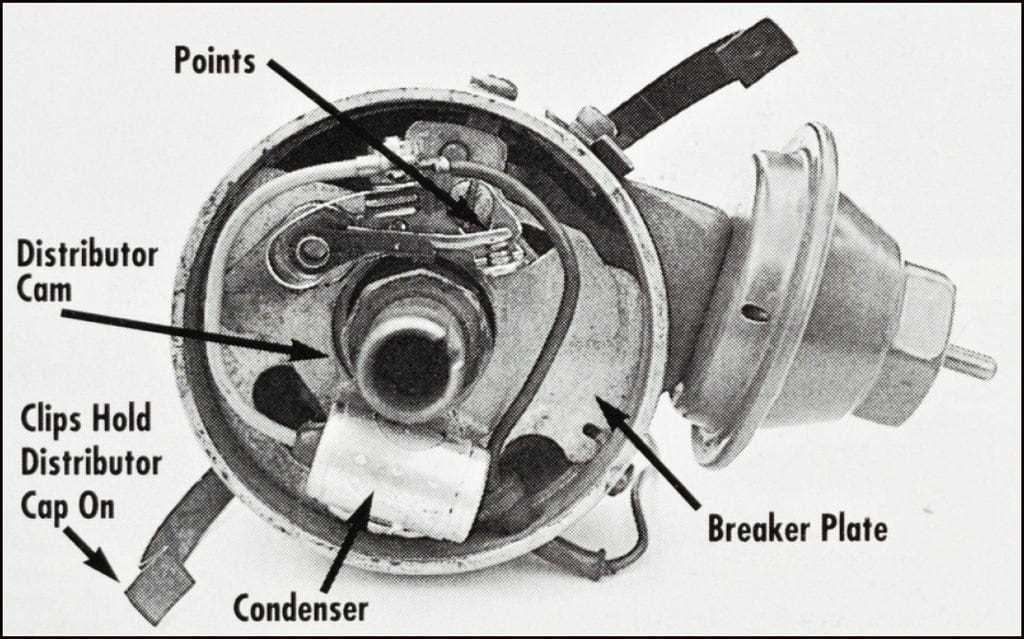
Connect the ignition coil negative post to the insulated terminal on the distributor housing, then attach the breaker contact lead plus the small capacitor lead to that same terminal stud. The capacitor body must sit firmly against the metal breaker plate so it forms a direct ground path through the distributor structure. This layout allows current from the coil primary circuit to pass through the contact assembly until the cam inside the distributor separates the metal surfaces during rotation.
Inside the distributor, route the flexible lead from the terminal stud to the movable contact arm so that centrifugal advance movement does not stretch or pinch the conductor. Use the fiber washer on the terminal stud to isolate the electrical connection from the distributor body; missing insulation creates a constant ground path that stops spark generation. The capacitor lead attaches under the same retaining nut as the contact lead, forming a shared electrical node. Keep the internal conductor short, secure the terminal nut firmly, verify that the contact plate rotates freely during vacuum or centrifugal advance, then rotate the engine by hand while observing that the contact set opens plus closes without the internal lead touching grounded metal surfaces.