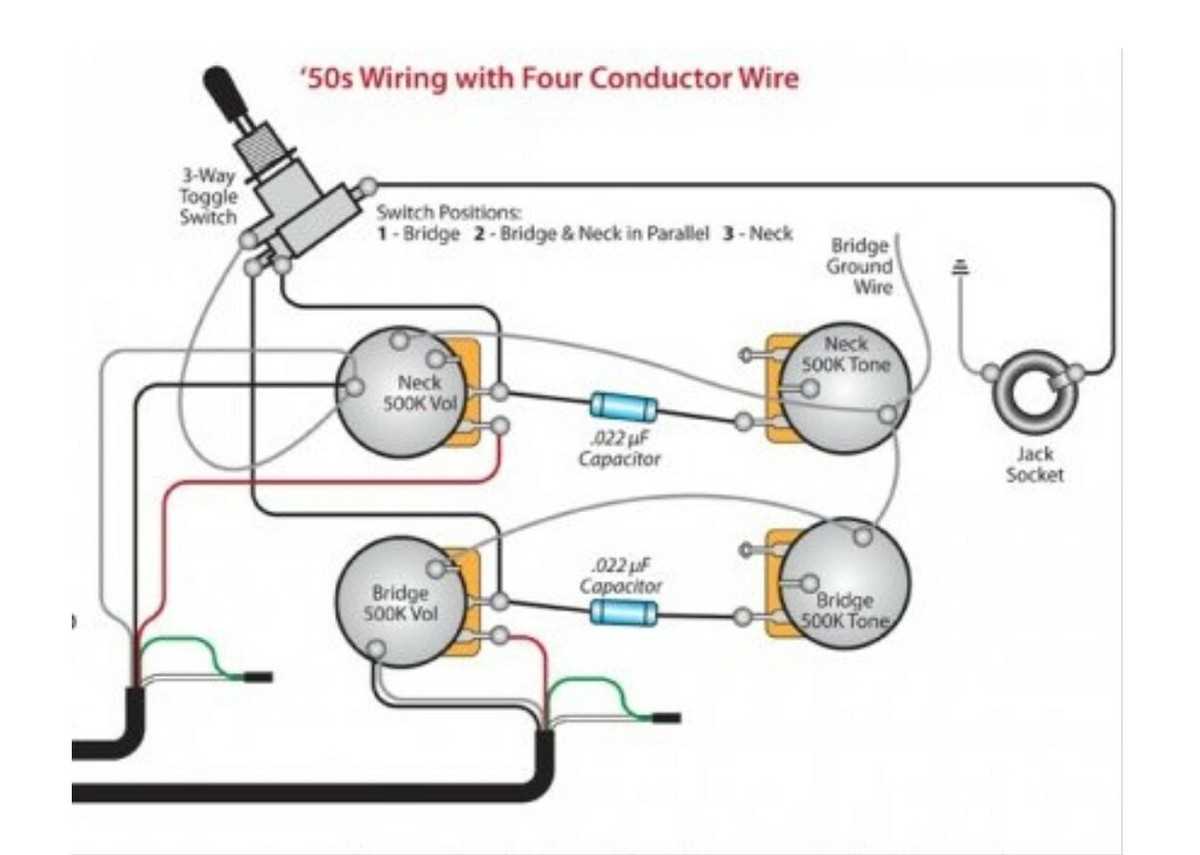
For achieving authentic tonal response, connect the neck and bridge pickups directly to the volume potentiometers. Ensure each lead is securely soldered to the correct lug to maintain proper signal flow and minimize interference.
Identify the hot and ground conductors for each pickup carefully. The hot lead typically connects to the input lug of the volume control, while the ground should be attached to the casing or common ground point to prevent hum and noise.
Use shielded wire for critical connections between controls. This reduces unwanted noise when the guitar is plugged into high-gain amplifiers, especially in setups with multiple tone and volume controls.
Check continuity between switches and potentiometers before final assembly. This ensures each selector position routes the correct pickup signal and maintains consistent volume and tonal response across all settings.
Vintage Pickup Tone and Volume Connection Guide
Connect the neck pickup hot lead directly to the volume pot input lug. This preserves the original tonal response and allows smooth blending with the bridge pickup when the selector is engaged.
Ground each pickup to the common back of its volume control. Proper grounding minimizes hum while maintaining clarity across all tone settings, especially when both pickups are active simultaneously.
Link the tone capacitors from each volume pot to their respective tone controls. Use values matching original specifications, typically 0.022µF for full-bodied highs, to replicate the vintage sonic characteristics.
Route the bridge pickup hot lead through its volume control before joining the output. This ensures independent volume adjustment without affecting the neck pickup, providing dynamic control over blend and intensity.
Check continuity between all lugs and grounds before assembly. A multimeter verification guarantees consistent response across selector positions and prevents unexpected signal drops or tonal inconsistencies during play.
Identifying Pickup Leads and Potentiometer Terminals
Start by locating the hot lead of each coil. The hot wire usually carries the signal directly from the pickup bobbin to the volume pot, and it is critical to trace it correctly to maintain tone fidelity.
Confirm the ground wire connection for each unit. Typically soldered to the back of the potentiometer casing, this ensures noise reduction and stable signal performance during use.
Examine the three lugs on each volume control. The input lug receives the pickup signal, the wiper lug routes the output to the selector or output jack, and the ground lug connects to the casing for shielding.
Differentiate bridge and neck leads using resistance readings. Measure with a multimeter; the bridge unit often shows slightly higher DC resistance compared to the neck, helping to identify each set of conductors.
Trace tone control terminals carefully. The tone pot’s input is tied to the output of its volume control, while the capacitor attaches to the adjacent lug, shaping the high-frequency response accurately.
Check for continuity between lugs and grounds before final assembly. Testing prevents open circuits that could mute one pickup or create excessive hum in certain selector positions.
Label each conductor and terminal as you go. Using small tags or colored heat-shrink sleeves helps maintain proper orientation during soldering, reducing the risk of misconnection that alters output balance.
Verify all connections under light mechanical strain. Gently tug each wire to ensure secure solder joints, which prevents intermittent signal loss or crackling sounds during performance.