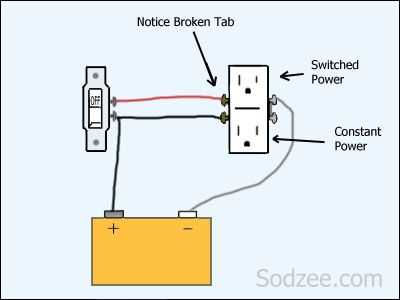
Ensure that all main supply lines are clearly marked and follow the shortest feasible path between the panel and outlets. Use color-coded conductors to distinguish live, neutral, and ground connections, reducing the risk of misplacement during installation.
Position switches and sockets at standard heights–typically 30 cm for outlets and 120 cm for switches from the floor–to maintain uniform accessibility and meet common construction practices. Measure distances carefully to avoid unnecessary cable tension or slack.
Choose conductors with proper current ratings based on the load of each appliance or fixture. For lighting, 1.5 mm² copper wires are generally sufficient, while high-power devices may require 2.5 mm² or larger. Never exceed the recommended amperage to prevent overheating.
Integrate protective devices such as miniature circuit breakers or fuses close to the main panel. Label each line to simplify troubleshooting and future modifications. Double-check polarity and continuity before energizing any section of the network.
Simple room electrical layout guide for home installation
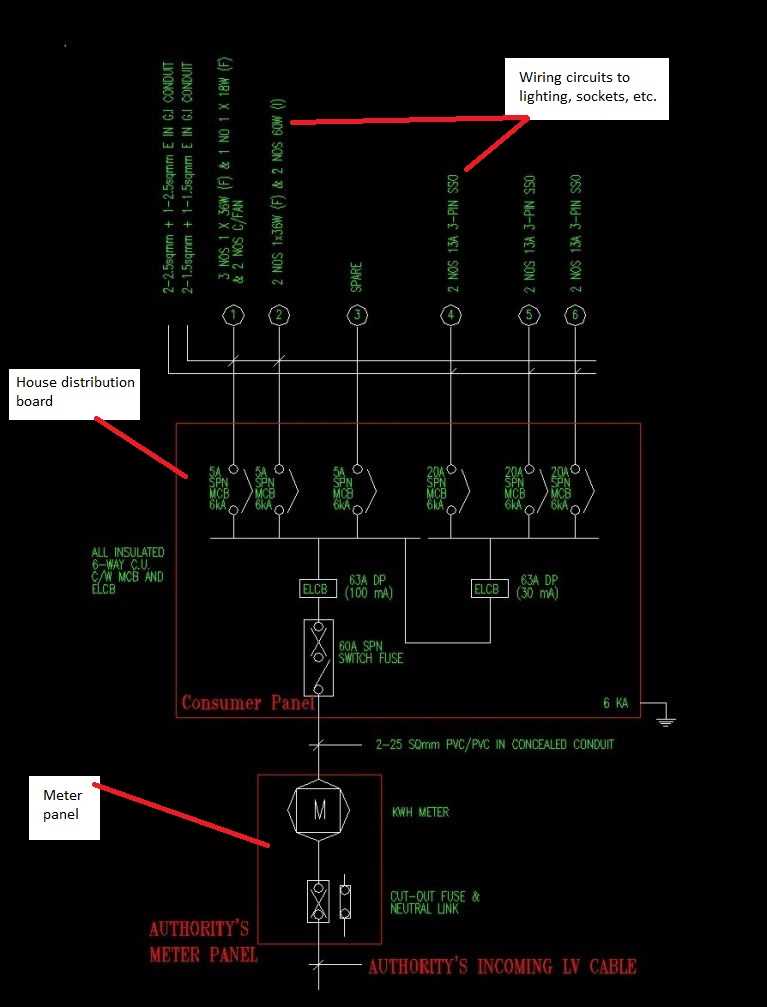
Place distribution points close to high-demand areas such as kitchens and living spaces to reduce voltage drop. Ensure that conductors match the load requirements with at least 1.5 mm² for lighting circuits and 2.5 mm² for outlets serving major appliances.
Arrange outlets and switches along walls at standard heights to maintain consistency. Measure cable lengths precisely to prevent excessive slack or tension, which can lead to connection failures or insulation damage.
Use color-coded insulation for conductors to distinguish between live, neutral, and ground lines. Secure all connections in junction boxes with proper clamps and terminal screws to prevent loosening over time.
Integrate overcurrent protection devices near the main panel. Label each line and breaker to facilitate maintenance and reduce the risk of accidental disconnection of critical appliances.
Test all sections for continuity and polarity before energizing the network. Verify that protective grounding is continuous throughout the space to avoid potential hazards and maintain compliance with safety standards.
Locating switches outlets and main power lines in a room
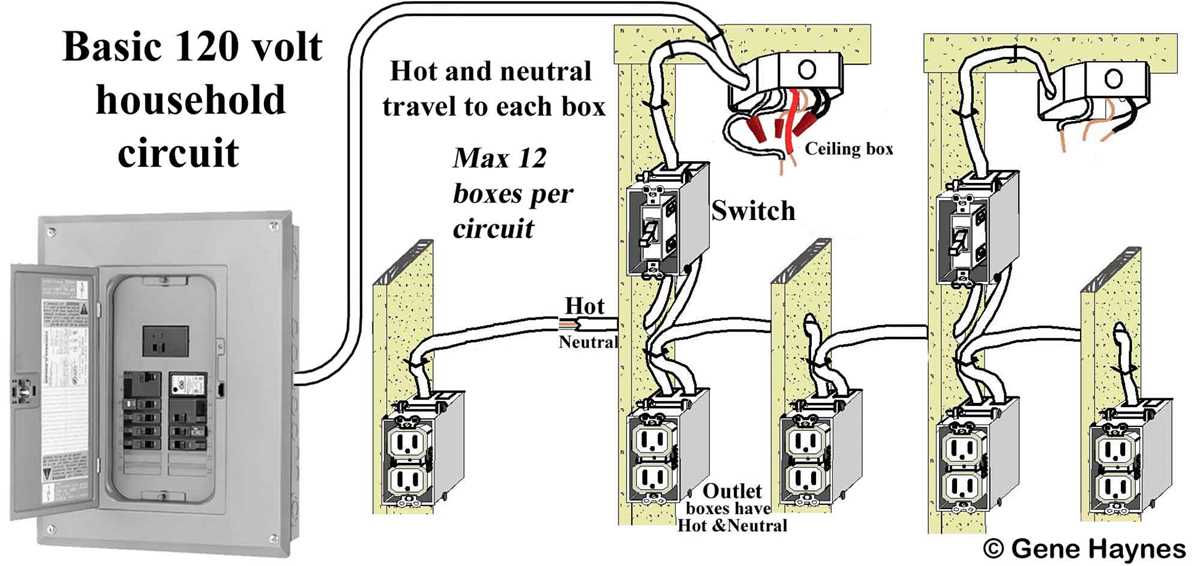
Position switches near doorways at a height of 110-120 cm for convenient access. Ensure the toggle orientation is consistent across the space to maintain user familiarity and reduce confusion.
Install outlets along walls at 30 cm from the floor for standard sockets and 120 cm for countertop-level connections. Distribute points evenly to prevent overloading single sections and allow flexibility for furniture placement.
Main supply lines should follow the shortest, most direct path from the panel while avoiding structural beams. Use protective conduits to shield cables from mechanical damage and maintain compliance with safety standards.
Label all lines clearly at both ends and keep a record of their path through the space. Verify polarity and continuity before energizing circuits to ensure safe and reliable operation of all switches and outlets.