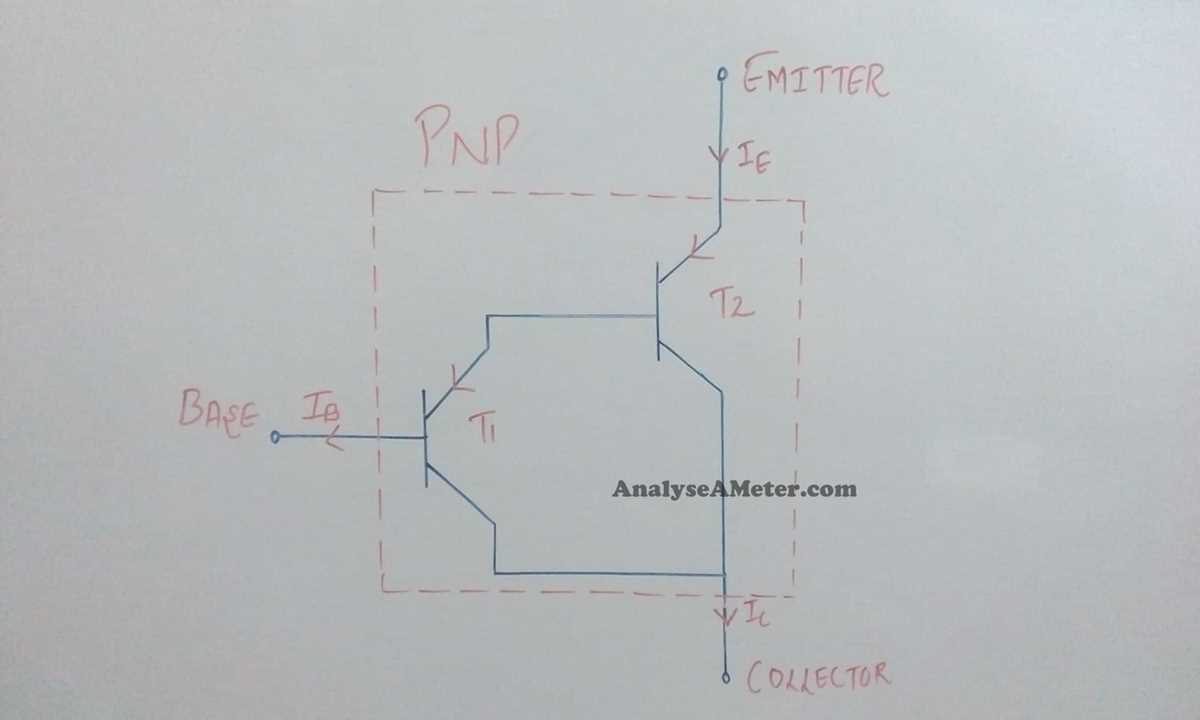
Start by identifying the two transistors used in the configuration. The first one should have its emitter connected to the base of the second transistor, while the collector of the second is connected to the load. This arrangement creates a high-gain amplifier, ideal for situations requiring greater signal amplification.
The connection between the two transistors is crucial for the functionality of the setup. Ensure that the emitter of the first transistor is connected to the base of the second, while both the collectors are linked to the positive side of the power supply. This configuration allows the current gain to increase significantly.
In your design, place resistors at strategic points, typically between the base and power supply, to limit current flow and prevent overloads. Make sure the values are chosen based on the expected current to avoid damage to the components.
Lastly, always test your setup with a low voltage before applying full power. This will help you check if the signal amplification works as expected and if there are any issues with overheating or instability in the signal flow.
How to Draw a Darlington Transistor Circuit
Begin by placing the first transistor, typically an NPN type, in the center of your workspace. Label the emitter, base, and collector pins clearly. The emitter pin will be used to connect the power supply’s ground, while the collector will later connect to the load.
Step 1: Connecting the First Transistor
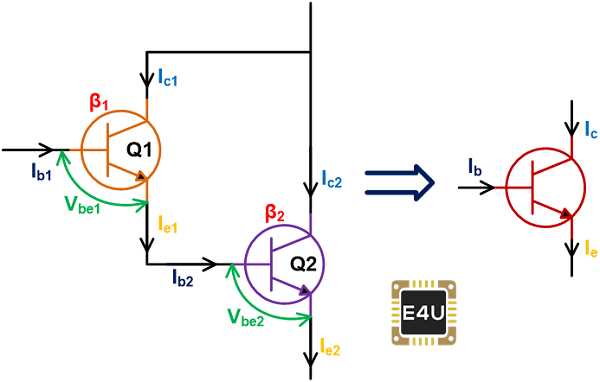
The base of the first transistor is the key point for controlling current. Draw a connection between the base and the input signal. Place a resistor between the input and the base to limit current and protect the transistor. Ensure the resistor value is correct based on the input signal voltage and expected current flow.
Step 2: Adding the Second Transistor
Now, draw the second transistor above or below the first one. This is usually another NPN transistor in the same orientation. Connect the emitter of the second transistor to the collector of the first transistor. This is where the amplification happens, as the first transistor controls the second one.
Next, connect the base of the second transistor to the emitter of the first transistor. This setup ensures that the current from the first transistor is used to activate the second, boosting the current flow. Again, use a resistor to limit the base current for the second transistor.
Draw the collector of the second transistor connected to the positive side of the power supply. The load, which could be any device you wish to control, will be connected between the power supply’s positive terminal and the collector pin. This setup ensures that the amplified current can flow through the load when the transistors are activated.
After completing the connections, make sure that the emitter of the second transistor is connected to ground, completing the current path. Verify all connections are correct before proceeding to test the setup. The signal flow should go from the input to the first transistor’s base, through to the second transistor’s base, and then allow current to flow through the load when activated.
Finally, double-check that all components are correctly positioned and that resistors are properly rated. Once everything is in place, test the circuit with a low-voltage signal to verify proper amplification. This ensures your configuration is correct before applying full power.
Common Applications of Darlington Transistor Circuits
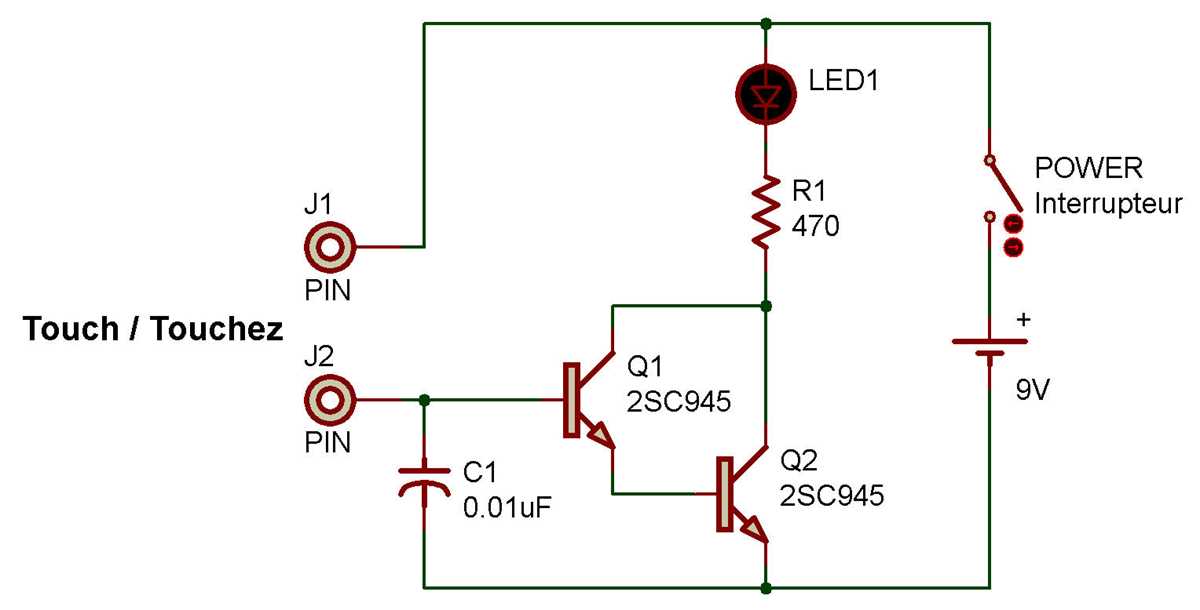
One of the most popular uses for this configuration is in power amplification. By connecting two transistors, it allows for a significant increase in current, making it ideal for driving high-power devices like motors or relays. This setup is often used in audio amplification systems, where small input signals need to be boosted to a level capable of driving speakers or amplifiers.
Motor Control
For applications involving motors, such as in robotics or electric vehicles, this transistor setup is used to control the motor’s speed and direction. The increased current gain allows it to handle higher currents, which is essential for controlling larger motors. The higher gain also helps protect other components by limiting the power required to activate the motor.
Signal Switching
Another use is in signal switching, where the transistors can act as high-gain switches. These transistors can switch on and off large signals, allowing for the control of high-voltage devices with a low-voltage control signal. This is particularly useful in digital systems, where logic gates need to control larger external loads or other devices.
This type of setup is also commonly found in sensor applications, where small changes in input signals need to be amplified before they are read or processed. Whether in temperature sensors or light detectors, this configuration ensures that the signal from the sensor is strong enough for accurate reading and response by the system.
Finally, it’s frequently used in high-efficiency power supplies, particularly in systems where low energy loss is crucial. The setup’s high current gain allows for minimal energy waste when amplifying power, making it a great fit for both industrial and commercial applications requiring reliable, energy-efficient power management.