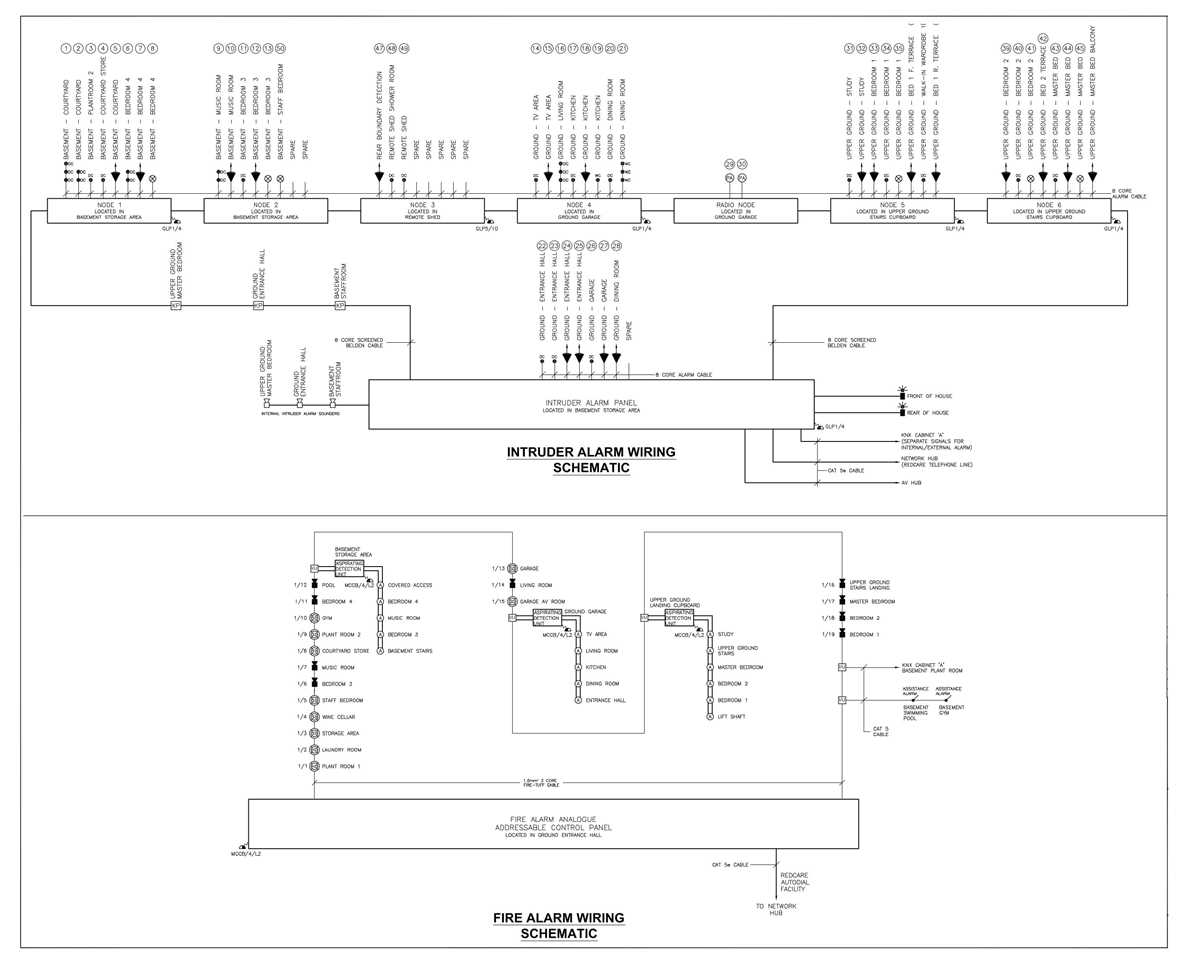
Connect a PIR motion detector to a transistor switching stage powered from a 9V or 12V supply. The motion module output should drive the base of an NPN transistor through a 1 kΩ to 4.7 kΩ resistor. When movement is detected, the transistor saturates and activates a buzzer or siren.
The motion detector senses infrared radiation changes produced by a moving human body. Most modules provide three pins: VCC, GND, and OUT. Supply voltage usually ranges from 5V to 12V. The OUT pin switches from low to high when motion occurs, producing a signal around 3.3–5V depending on the module design.
An NPN transistor such as BC547, 2N2222, or S8050 works well as the switching element. Connect the collector to the negative terminal of the buzzer and the emitter to ground. The positive terminal of the buzzer goes to the supply rail. This configuration allows a low-current signal from the motion detector to control a higher-current sound device.
Add a 10 kΩ pull-down resistor on the transistor base if the motion module output becomes unstable during idle periods. Many PIR boards include adjustable potentiometers that control delay time and detection sensitivity, allowing the siren to remain active from a few seconds to several minutes after movement detection.
Mount the motion detector about 2–2.5 meters above floor level and orient the lens toward entry points such as doors or corridors. The sensing angle typically covers 90° to 120°, with detection distances up to 6–7 meters under indoor conditions.
Intruder Alarm Circuit Diagram with PIR Sensor Transistor Driver and Buzzer
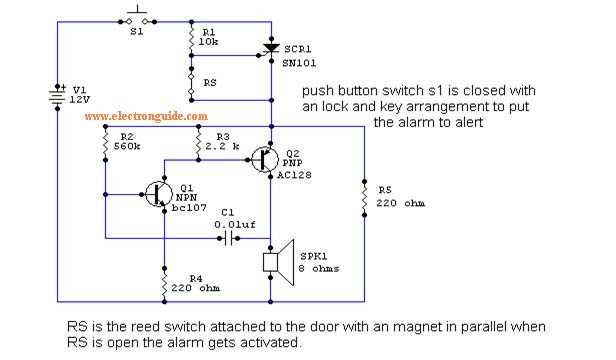
Connect the motion detection module output to the base of an NPN transistor through a 2.2 kΩ resistor. This interface allows the small signal produced by the PIR unit to switch a louder sound device such as a piezo buzzer or siren that requires higher current.
The motion unit normally provides three terminals: VCC, GND, and OUT. Apply a supply between 5V and 12V depending on the module specification. When body movement is detected, the OUT pin changes from low level to about 3.3–5V, which drives the transistor into conduction.
Use devices like BC547, 2N3904, or 2N2222 as the switching element. Connect the emitter to ground and the collector to the negative terminal of the buzzer. The positive lead of the sound device goes to the supply rail. When the transistor saturates, current flows through the buzzer and produces a loud warning tone.
Add a flyback diode across the load if a relay or magnetic siren replaces the buzzer. This diode protects the transistor from voltage spikes generated by inductive loads during switching.
Typical buzzer current ranges from 20 mA to 80 mA. Verify that the selected transistor can handle the required collector current. For loads above 200 mA, a small relay module or MOSFET switch provides safer operation.
Many PIR boards include two adjustable potentiometers. One controls trigger sensitivity, while the second adjusts delay time. The delay may vary from about 3 seconds up to 300 seconds, keeping the sound device active for a defined period after motion detection.
Install the motion detector roughly 2 meters above floor level and direct the lens toward entrances or hallways. Avoid aiming the lens directly at heaters, windows with strong sunlight, or ventilation outlets, because rapid temperature changes can cause false triggers.
PIR Motion Sensor Wiring Layout for a Basic Intruder Alarm Circuit
Connect the passive infrared module to a 5V supply and link its ground pin directly to the negative rail shared with the control electronics. The signal pin should route through a 2.2 kΩ–4.7 kΩ resistor to the base of an NPN transistor that activates a buzzer or relay.
Typical connection points on a PIR module
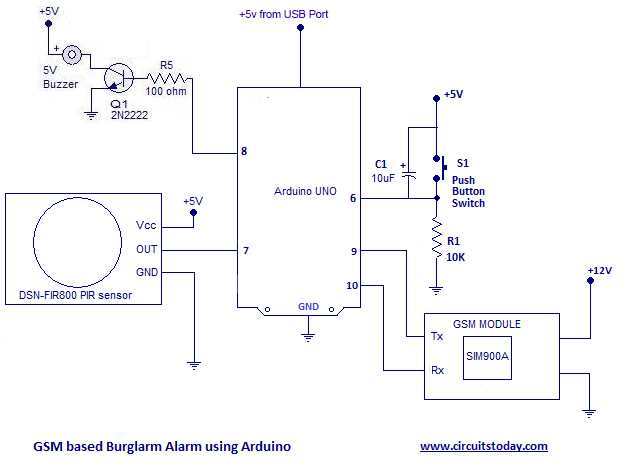
- VCC – connect to 5V power source
- GND – connect to common ground line
- OUT – motion signal output linked to transistor base or microcontroller input
The detection unit produces a digital signal that switches from low to high when body heat moves across the sensing zones. Output voltage usually reaches 3.3–5V. This level is sufficient to drive a transistor stage or feed a microcontroller input pin.
Recommended wiring layout
- Place the PIR module near the edge of the board so the lens faces the monitored area.
- Keep the signal wire shorter than 20–30 cm to limit electrical noise.
- Insert a base resistor between the motion output and the transistor control terminal.
- Attach the buzzer or relay load to the transistor collector.
- Use a stable supply capable of delivering at least 100 mA.
Mount the PIR unit at a height between 2 and 2.5 meters. At this position the Fresnel lens typically covers a viewing angle near 110° and detects human movement up to 6–7 meters indoors.