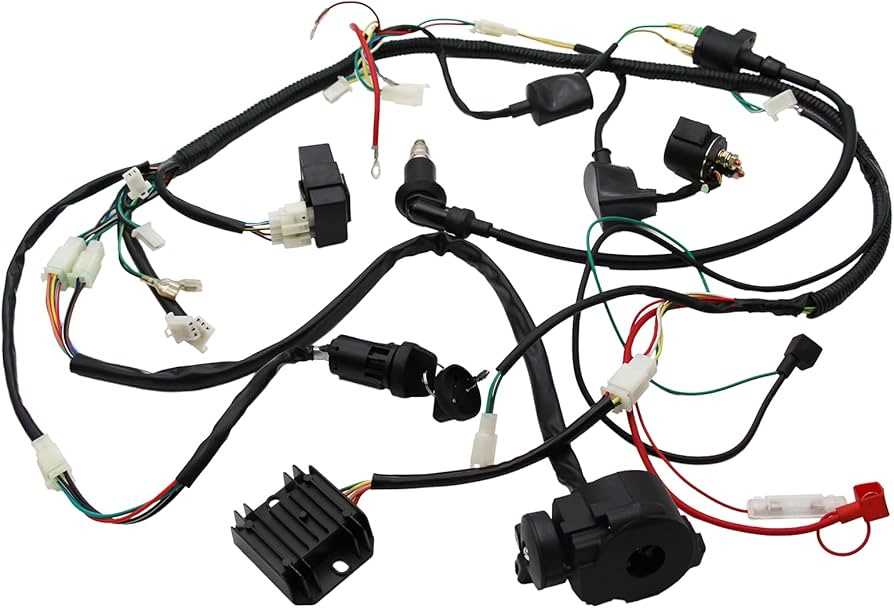
Begin by securing a clear layout of all connections for the engine ignition and battery terminals. Proper placement of the starter, coil, and spark plug leads ensures reliable operation and prevents shorts. Use color-coded cables to simplify identification during assembly.
Verify all fuses and switches before connecting the main power supply. Installing inline fuses for the headlight, tail light, and safety cutoff switch protects circuits from overload and accidental damage. Tighten all terminals with a torque wrench to maintain stable contact under vibration.
Label each harness section for engine sensors, throttle controls, and lighting modules. This reduces errors when adjusting or replacing components. Secure wires along the frame using insulated clips and avoid areas near hot exhaust pipes or moving parts to prevent wear and shorts.
Test each subsystem individually before full operation. Check spark timing, battery voltage, and signal continuity from switches and sensors. Confirm lights illuminate correctly and the cutoff switch functions reliably to ensure safety during use.
Engine and Electrical Setup Guide for 150cc Off-Road Vehicle
Connect the ignition coil directly to the spark plug lead and secure the battery terminals with insulated clamps. Ensure the starter relay is correctly positioned and all grounding points are clean metal surfaces to prevent voltage drops. Route throttle sensors and kill switches along the frame using heat-resistant clips to avoid interference from exhaust heat.
Follow these steps to organize the electrical network for lights and safety systems:
- Install the headlight and tail light circuits with inline fuses rated 5–10A.
- Mount the safety cutoff switch near the driver’s reach for immediate access.
- Use separate color-coded harnesses for engine signals, battery connections, and lighting modules.
- Test continuity of each line with a multimeter before applying full voltage.
- Secure all connections with lock washers or nylon nuts to withstand vibration.
After assembly, check that the ignition fires immediately, the battery maintains stable voltage, and all lights respond to switches correctly. Perform a short test run on a controlled surface to confirm that sensors and emergency stops function reliably without interruption.
Connecting the Engine and Ignition System
Secure the ignition coil firmly to the frame using insulated mounts. This prevents movement that can disrupt spark timing and ensures consistent electrical contact during operation. Check that all bolts are torqued to manufacturer specifications to avoid loosening under vibration.
Attach the spark plug lead directly to the coil output terminal. Ensure the boot is fully seated on the plug to prevent arcing and misfires. Use dielectric grease inside the boot to improve conductivity and protect against moisture.
Route the main power cable from the battery to the starter relay along a path free of sharp edges or heat sources. Protect the line with split loom tubing or heat-resistant sleeves to prevent insulation wear.
Connect the kill switch inline with the ignition lead. Position the switch within easy reach of the driver, and verify that it completely interrupts the ignition current when activated. Use terminals that lock securely to resist vibration.
Check all ground connections from the engine block to the frame. Clean metal surfaces and apply a small amount of anti-corrosion compound to maintain reliable continuity and avoid intermittent firing issues.
Test sensor connections such as throttle position and engine temperature before finalizing the harness. A loose or reversed sensor line can prevent ignition from firing correctly or cause erratic engine behavior. Use numbered or color-coded connectors to simplify troubleshooting.
After assembly, turn the key or push the start button briefly to verify that the spark fires consistently and the starter engages smoothly. Listen for unusual clicks or hesitation that could indicate loose terminals or poor grounding.
Secure all cables with insulated clamps along the frame. Avoid contact with moving parts or the exhaust. Perform a final inspection under bright light to ensure no frayed ends, bare wires, or pinched connections remain before full operation.