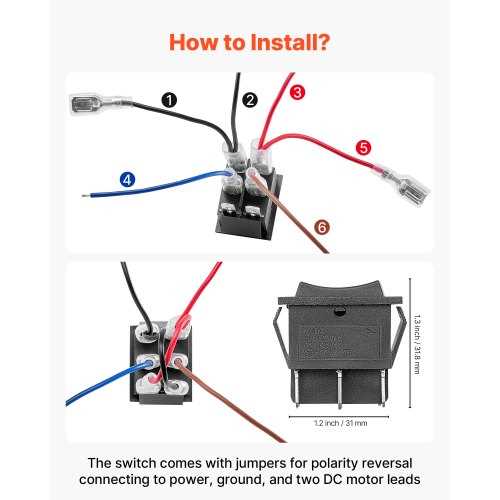
Connect the positive and negative leads according to the designated input terminals to prevent damage to sensitive components and ensure consistent current flow. Using marked terminals reduces the risk of overheating or short circuits during operation.
Select a toggle module rated for at least 10% higher than your maximum voltage to handle potential spikes. Modules with built-in surge protection provide additional safety for connected devices and maintain system stability.
Use thick-gauge conductors for all primary connections to reduce resistance and prevent voltage drops across extended runs. Maintaining secure connections with proper insulation limits accidental cross-contact and enhances longevity.
Install an inline fuse or circuit breaker on the main input line to automatically disconnect in case of current overload. This precaution minimizes the chance of permanent damage to sensitive components during improper polarity engagement.
Position modules away from high-heat sources to maintain performance consistency. Excessive heat can degrade internal contacts and alter operational thresholds, potentially leading to system failure.
Label all connectors and terminals clearly to ensure correct future adjustments. Consistent identification reduces troubleshooting time and prevents accidental reverse engagement during maintenance.
Test each section individually before full activation using a low-voltage supply to verify proper switching paths and contact integrity. This step confirms that all modules operate within their specified parameters without risk to other components.
Document the layout and connection sequence for reference in modifications or replacements. Maintaining accurate records helps replicate successful configurations and prevents mistakes when upgrading or expanding the system.
Voltage Reversal Module Setup and Connection Guide
Connect the input terminals according to the marked positive and negative leads to prevent damage to downstream components. Use insulated terminals and avoid bare wire exposure to maintain safety during operation.
Install a toggle module rated above the maximum expected current to handle potential surges. Modules with integrated protection resistors or fuses reduce the risk of overheating and ensure stable operation across repeated activations.
Route conductors along separate paths for high and low voltage lines to minimize interference. Secure connections with heat-shrink tubing or lock nuts to prevent accidental disconnection and maintain consistent contact resistance.
Test each configuration with a low-voltage supply before full activation. Verify that all contact points engage correctly and that current flows in the intended direction without backflow or voltage drop across any module.
Step by Step Connections for Proper Polarity Control
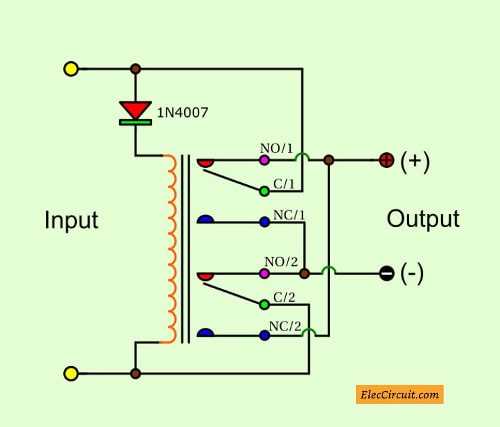
Start by identifying the input and output terminals on the control module. Label the leads clearly with colored markers to prevent accidental cross-connections during assembly.
Use a multimeter to confirm the continuity of each line before inserting connectors. Verify that the input voltage aligns with the module’s rated specifications to avoid component stress.
Connect the primary conductor to the designated positive lead, ensuring the terminal is tightened to the recommended torque. Loose connections can create resistance points and cause voltage drop under load.
Attach the secondary conductor to the negative terminal, routing the wire along a separate path from high-current lines to reduce electromagnetic interference. Use cable clamps to maintain separation and secure the route.
Integrate any inline protective components such as fuses or resistors at the module entry points. Confirm that each element matches the module’s current handling capacity to prevent overheating or premature failure.
Complete the setup by testing the full assembly with a low-voltage supply. Observe that all contacts engage correctly and current flows in the intended orientation. Adjust terminal tension if any fluctuation or backflow is detected.