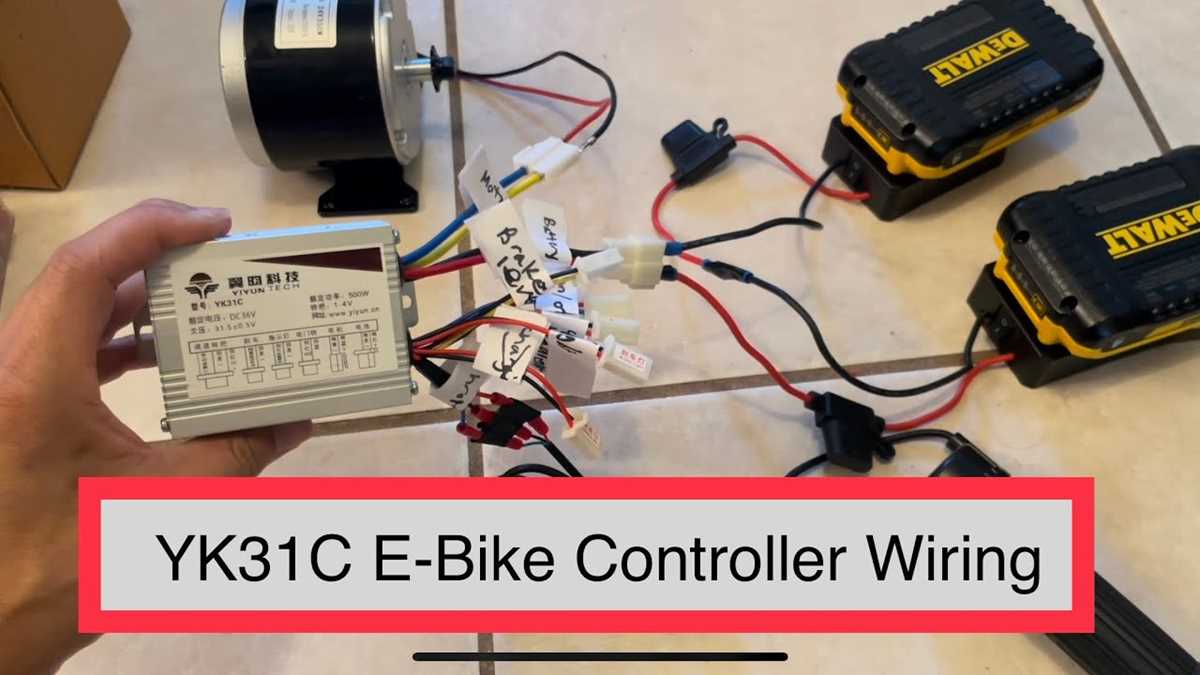
Attach the motor controller to the power source using fused leads rated for 20 amps for 36V systems or 30 amps for 48V setups. Ensure the positive and negative terminals are clearly marked to prevent reverse polarity damage.
Use color-coded connectors to match throttle, pedal sensor, and display inputs. Verify each line with a multimeter for continuity before final installation, checking that no resistance exceeds 0.2 ohms under load.
Secure all conductors along the frame with nylon clamps, avoiding sharp edges or moving parts. Test each component individually, confirming that the motor responds instantly to throttle or pedal input without voltage drops exceeding 0.3 volts.
Motor Control System Connection Guide
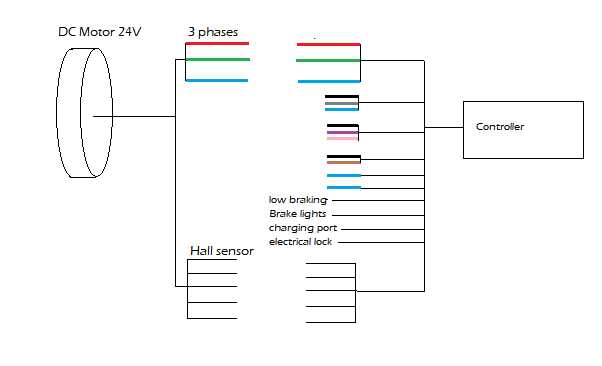
Start by connecting the main power leads to the controller, ensuring that positive and negative terminals are fused within 12 inches of the battery. Use 12 or 14 AWG cables for 36V and 48V setups to prevent overheating under full load.
Follow these steps for secure connections:
- Identify throttle, pedal assist sensor, and display input lines.
- Use insulated terminals and match color-coded wires to corresponding ports.
- Check each line with a multimeter for continuity and correct voltage.
- Route conductors along the frame, keeping them away from sharp edges and moving parts.
Test each component individually. Apply throttle or pedal input and observe immediate motor response. Any delay or voltage drop above 0.3 volts indicates a loose or damaged connection that must be tightened or replaced.
For the battery interface, ensure the main fuse rating aligns with system voltage. Over-fusing can cause excessive heat in cables, while under-fusing risks blowing the circuit under high current peaks.
Secure all connectors with nylon clamps and avoid crossing high-current leads with signal lines to reduce interference. Maintain at least a 1-inch separation between power and sensor cables wherever possible.
Once all connections are verified, run the system under no-load conditions. Observe that the controller and motor respond consistently, and confirm that brake cutoffs and pedal assist sensors deactivate the motor immediately when engaged.
Identifying Motor and Controller Connections
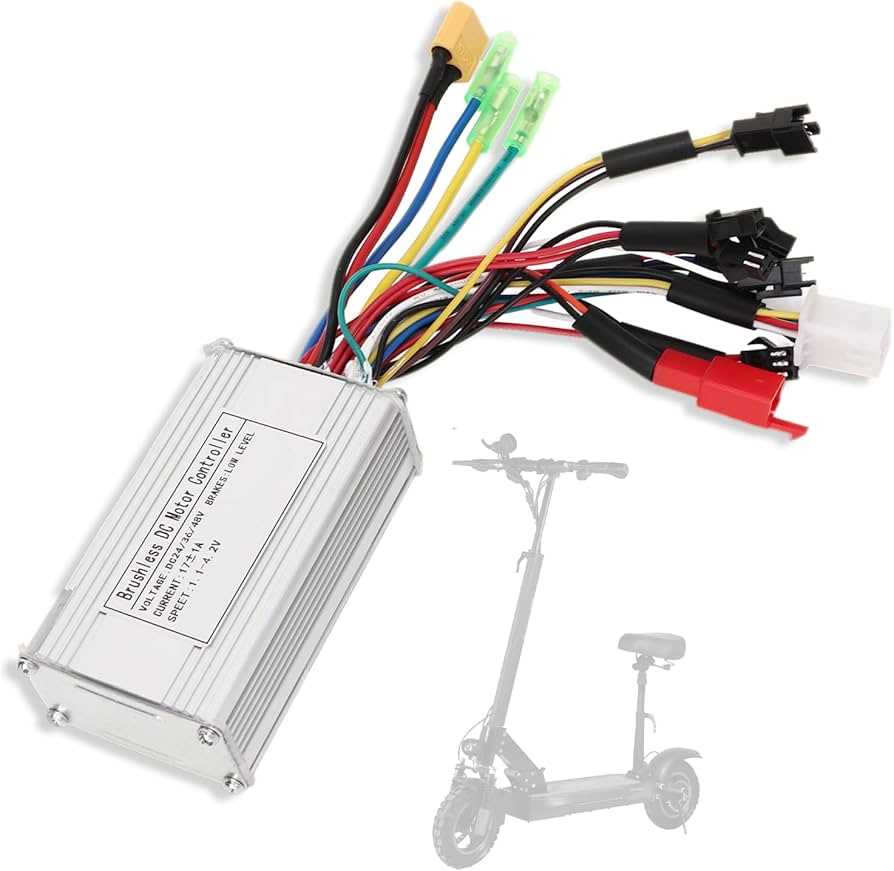
Connect the motor leads to the controller using color-coded terminals and verify each line before final attachment. Red and black lines typically indicate main power, while blue, green, and yellow are for phase connections that control rotation direction.
Test each connection for continuity using a multimeter. Ensure resistance between phase wires is below 0.5 ohms and no phase line shorts to the frame or battery terminal. Any deviation can damage the controller or motor coil.
Signal and sensor lines, including throttle and pedal assist inputs, should be routed separately from high-current cables. Maintain at least a one-inch gap to prevent electromagnetic interference that could cause erratic speed control.
Secure connectors with nylon clamps and heat shrink tubing. Vibration and frame movement can loosen terminals, so double-check that all pins are fully seated and no insulation is exposed.
After completing connections, perform a no-load test. Observe that the controller responds immediately to throttle changes and that brake cutoffs disengage the motor instantly, confirming all leads are correctly identified and operational.