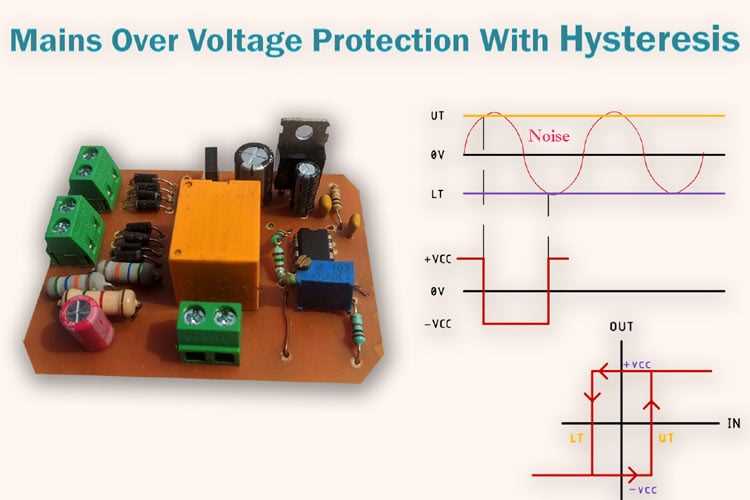
Place a fast-acting clamp stage directly after the supply input; this position limits dangerous potential spikes before they reach sensitive semiconductor parts. A practical approach uses a transient suppressor diode rated near 5–10% above nominal supply potential. For a 12 V system, select a suppressor with a breakdown threshold near 13.2–13.8 V and combine it with a series resistor between 4.7 Ω and 22 Ω. This pairing absorbs sudden peaks produced by switching inductive loads, unstable adapters, or long cable runs.
A reliable guard network normally includes a reference element such as a Zener component, a switching transistor, and a relay or MOSFET disconnect stage. When supply potential rises above the preset limit, the Zener begins conduction and drives the transistor into saturation. That action triggers the cutoff element, isolating the load within microseconds. For small electronic assemblies drawing less than 1 A, a Zener rated 0.5 W with a threshold of 15 V works well with an NPN transistor like BC547 and a relay coil rated 12 V.
Filtering components improve stability of the guard network. Install an electrolytic capacitor between 47 µF and 220 µF across the input rails along with a ceramic capacitor near 100 nF positioned close to the switching transistor. This pair suppresses ripple and high-frequency spikes that may falsely trigger the cutoff stage. Track width on the board should remain above 1.5 mm for currents near 2 A, while the suppressor diode should sit within 10–15 mm of the power entry point to minimize inductive trace effects.
Calibration determines the trip threshold. Adjust the resistor divider connected to the reference component so the disconnect stage activates roughly 8–12% above nominal supply potential. For instance, in a 24 V industrial module, configure the divider so the cutoff begins near 26–27 V. This margin prevents nuisance shutdown while still shielding microcontrollers, sensors, and logic ICs from destructive electrical peaks.
Input Surge Limiting Network Layout
Place a transient clamp element directly across the power entry nodes; a 600 W TVS rated near 18 V suits many 12 V DC systems and reacts within picoseconds to suppress supply spikes above its breakdown threshold. Add a fast fuse (1–2 A for small embedded boards) ahead of the clamp so sustained surge events force current interruption rather than heating semiconductors downstream.
A practical layout combines a shunt suppressor, a series pass transistor, and a reference device such as a 5.6 V Zener controlling the transistor base. When the supply line rises beyond the preset limit, the reference biases the transistor into cutoff, isolating the load. Designers often select a P-channel MOSFET with RDS(on) below 30 mΩ to minimize drop during normal operation while still allowing rapid disconnection under abnormal supply peaks.
Use an RC sensing branch to delay switching noise. Typical values: 10 kΩ with 100 nF, producing a time constant near 1 ms. This filter prevents momentary spikes from toggling the MOSFET gate repeatedly. For higher-energy disturbances, place a metal-oxide varistor rated slightly above the nominal supply level; for a 230 V AC mains input, a 470 V MOV absorbs energy bursts up to several hundred joules depending on model.
PCB routing influences suppression capability. Keep the TVS and MOSFET within 10–15 mm of the power connector, use wide copper traces (≥2 mm for currents near 3 A), and connect the clamp return directly to the ground plane with multiple vias. Long inductive tracks reduce the ability of the suppressor to shunt fast spikes, allowing transient amplitude to rise before dissipation begins.
Zener Diode Surge Limiting Network with Component Values and Wiring Steps
Select a Zener rated slightly above the normal supply potential so the node stays stable during regular operation while excess level is clamped once the threshold is reached. For a 12 V supply rail, choose a 13 V–13.6 V Zener such as BZX55C13, paired with a series resistor that restricts current. Example sizing: input source 12 V nominal, possible spike 18 V, load current 40 mA. A 220 Ω resistor limits current to roughly 27 mA during a spike, keeping the Zener within a 500 mW rating. Place the diode across the load with the cathode connected to the positive rail and the anode tied to ground.
Recommended Parts and Typical Ratings
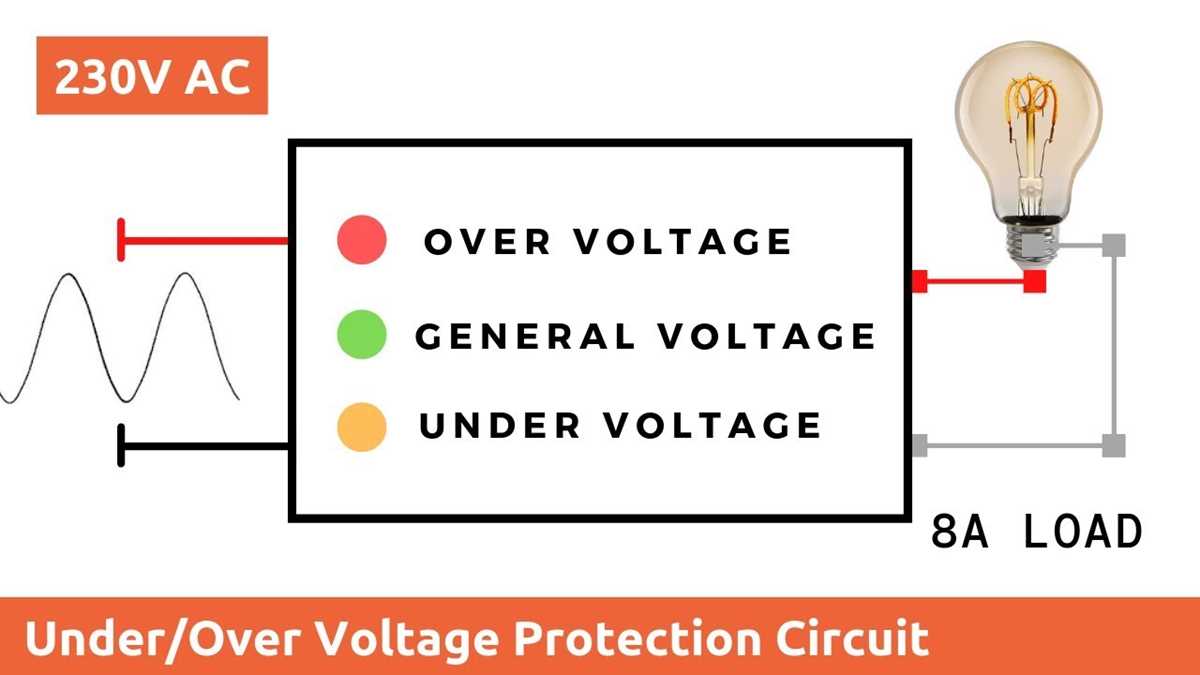
- Zener diode: 13 V, 0.5 W (BZX55C13 or similar)
- Series resistor: 220 Ω, 0.5 W carbon or metal film
- Input source example: 12 V DC supply
- Load current range: 10–50 mA
- Optional smoothing capacitor: 47 µF electrolytic across the load
The network works by diverting surplus potential through the Zener once the breakdown level is reached. During normal operation the diode remains inactive. When the rail rises above about 13 V, conduction begins and the extra current flows through the diode and series resistor. Thermal margin matters: if repeated spikes are expected, use a 1 W device or add a small heatsink pad on the PCB copper area to dissipate heat.
Connection Sequence
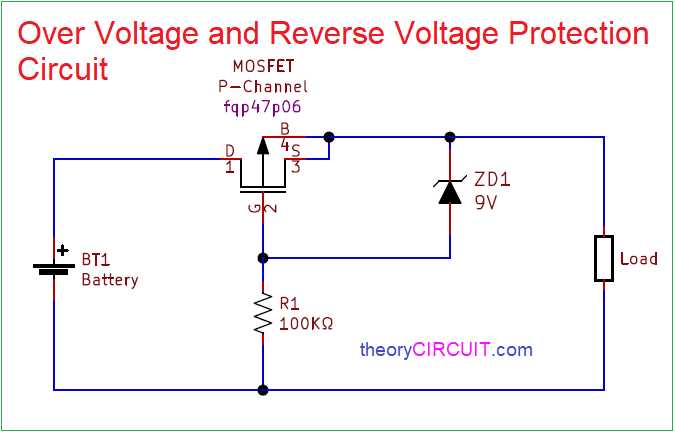
- Attach the series resistor between the positive input rail and the load node.
- Connect the Zener cathode to that same load node.
- Connect the Zener anode directly to ground.
- Attach the load device between the load node and ground.
- If ripple or spikes remain visible, place a 47 µF capacitor between the node and ground.
For a 5 V rail variant, substitute a 5.6 V Zener and reduce the resistor to about 100 Ω when the load current is near 30 mA. Keep traces short and place the diode physically close to the load node so surge energy reaches the clamp element with minimal inductive delay. A PCB copper area of at least 1 cm² near the diode pads improves heat spreading during repeated spikes.