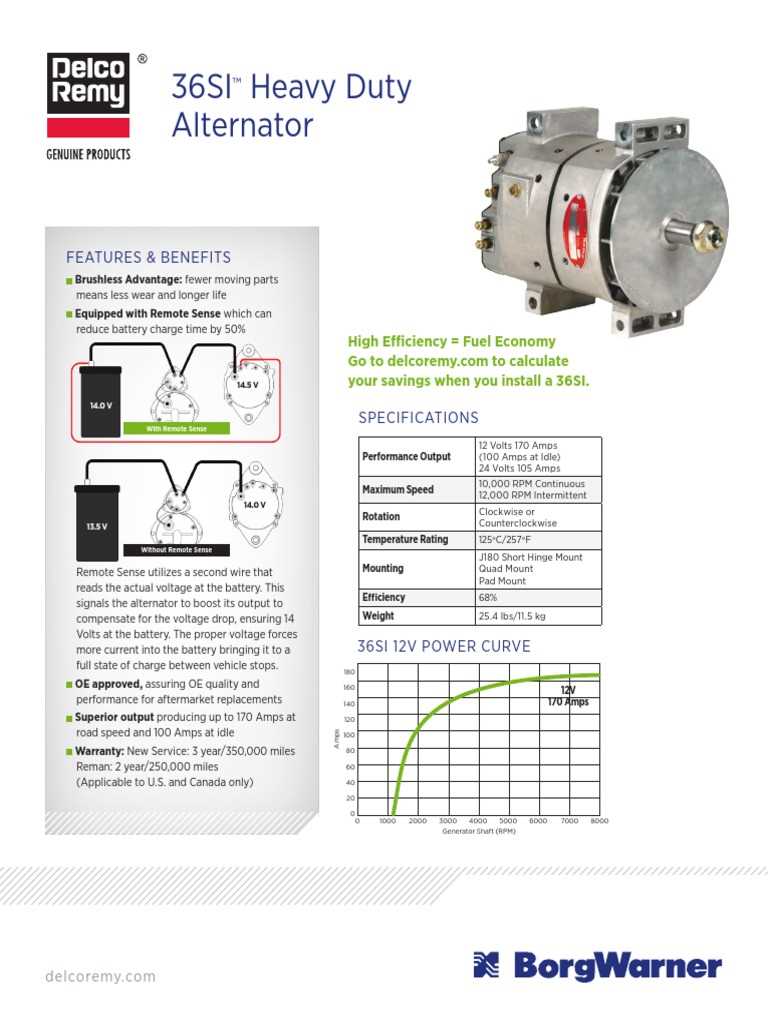
Connect the output post directly to the battery positive terminal using a heavy-gauge cable to handle peak currents without voltage drop. Ensure all connections are tight and corrosion-free to maintain consistent charging performance.
Attach the excitation lead to the voltage regulator input marked with F or field to allow proper control of rotor magnetism. Incorrect placement can prevent the unit from producing sufficient amperage under load.
Use the sense lead to tap into a main battery point near the starter or fuse box. This allows the regulator to adjust voltage precisely, avoiding undercharging or overcharging issues that can damage batteries and electronic components.
Ground the frame terminal securely to the engine block with a short, thick conductor. Poor grounding can cause erratic voltage readings and prevent full output even if the other terminals are correctly connected.
Double-check the polarity of all connections before powering the system. Reversing leads can trigger fuses, damage diodes, or render the charging system inoperative, especially on modern vehicles with sensitive electronics.
Four Terminal Alternator Connection Guide for Reliable Vehicle Charging
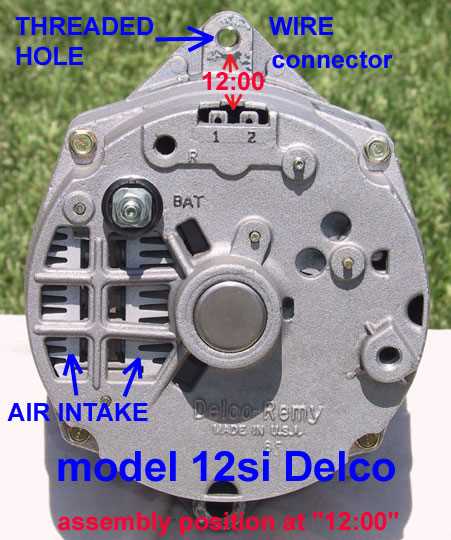
Connect the main output post directly to the battery positive terminal using a thick conductor rated for high current. Secure the terminal with a lock nut to prevent loosening under engine vibrations and ensure consistent charging under load.
Attach the field lead to the regulator input marked F or field to control rotor excitation. Proper placement ensures the unit generates stable voltage and prevents low charging amperage during heavy electrical loads.
Use the sense lead to monitor voltage at the battery or fuse block. This allows the regulator to adjust output dynamically, maintaining battery voltage within 13.8–14.4 volts under normal operating conditions.
Ground the case connection firmly to the engine block with a short, thick conductor. A weak ground can cause unstable voltage readings, reduced output, and potential flickering of electrical accessories.
Verify the polarity of all leads before energizing the system. Incorrect connections can blow fuses, damage diodes, or trigger regulator faults. Always check with a multimeter before final startup.
After installation, measure the output voltage at idle and under load. Adjust the regulator if needed to maintain proper charge rates and prevent battery overcharging, ensuring long-term performance of both the battery and vehicle electronics.
Identifying Each Terminal and Its Role in the Alternator
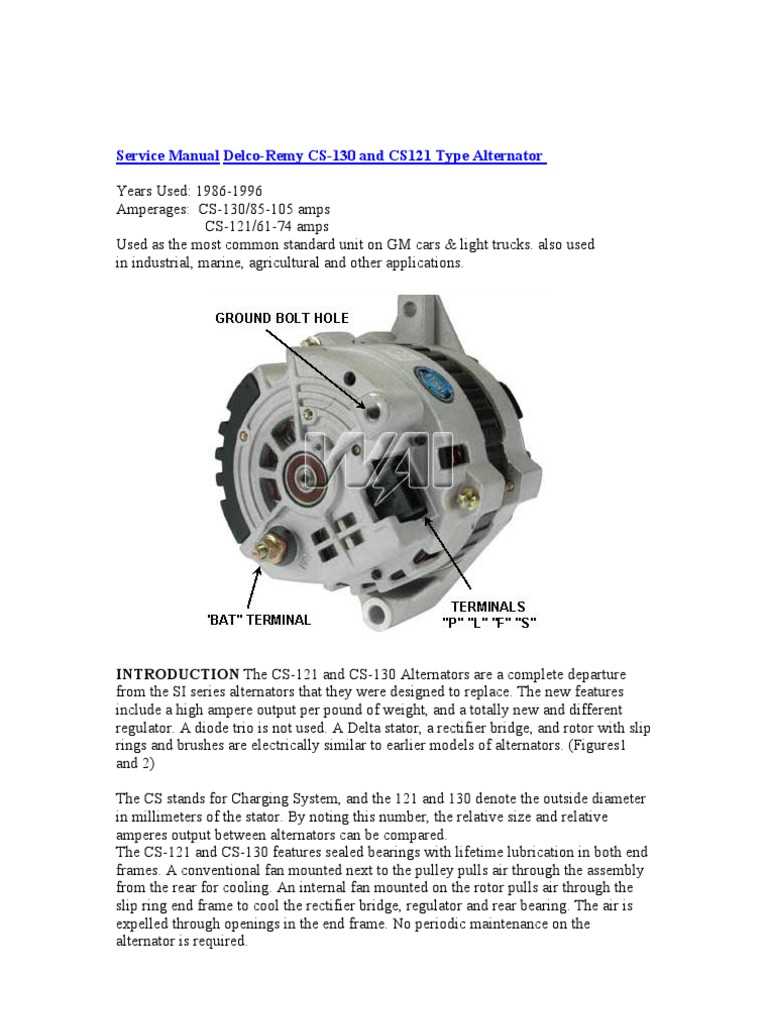
Connect the main output post directly to the battery positive terminal to handle high current flow. This terminal carries the full charging load and must be secured with a lock nut and properly sized conductor to prevent voltage drops during operation.
The field input controls rotor excitation through the voltage regulator. Ensure this lead is attached to the correct terminal labeled F or field to maintain stable output under varying engine speeds and electrical demand.
The sense lead monitors battery voltage for precise regulation, while the ground terminal ensures a solid connection to the engine block. Proper identification and connection of each point prevent overcharging, flickering accessories, and regulator errors during operation.