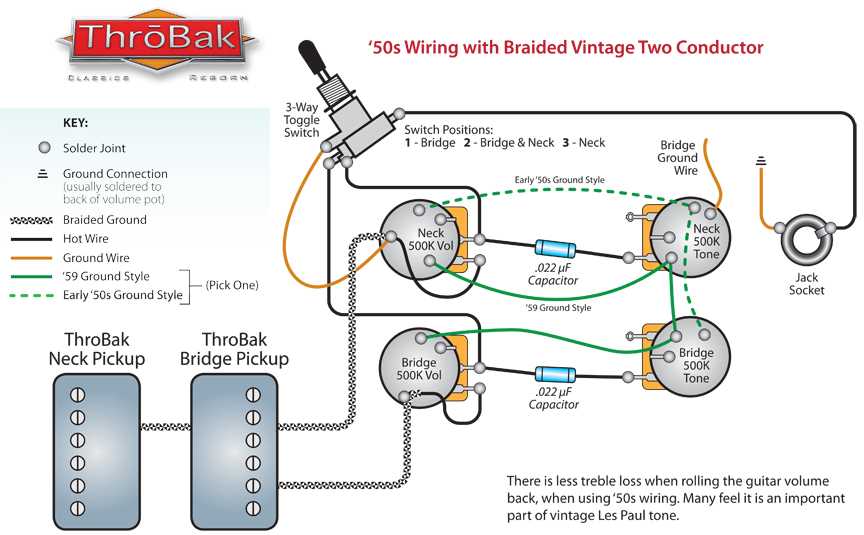
For a more responsive and dynamic control over your instrument’s tone and volume, start by modifying the standard electronics setup. By switching to an older circuit configuration, you can achieve smoother transitions between pickups and a clearer sound with better definition. This method provides a distinct change in how your guitar reacts to your playing style, especially at lower volumes.
The key modification involves reconfiguring the way the tone knobs interact with the rest of the signal path. This leads to a higher level of control and a more consistent sound when adjusting your settings mid-performance. If you’ve noticed your guitar sounds muddy or overly compressed when you roll off the volume, this modification can restore clarity and reduce signal loss.
While the process is relatively straightforward for someone familiar with basic electronics, attention to detail is critical. You’ll need to ensure that every connection is properly soldered and that the capacitors are correctly placed for optimal performance. A reliable circuit not only boosts your sound but also prevents unwanted interference or poor connection issues down the line.
How to Implement Classic Guitar Circuit for Better Tone Control
To achieve clearer and more precise tone adjustments, modify your guitar’s electronic setup by adopting an older circuit style. This will result in a more responsive control when adjusting both volume and tone, especially in terms of smoothness when lowering the volume. The result is a more articulate and natural sound across a wide range of frequencies.
Key components in this setup include using a specific wiring method for the tone controls that separates them from the master volume, allowing for more independent control. One crucial step is ensuring the capacitors are placed correctly in the signal chain, as they have a significant impact on filtering high frequencies and preserving clarity at lower volumes.
Steps to Wire the Circuit Correctly
Start by carefully disconnecting the original wiring and preparing your pickups for the reconfiguration. You’ll need to attach the volume pots to the center lug of the tone controls. After this, connect the capacitors to the tone pots to fine-tune the treble roll-off as desired. This modification ensures that the sound remains punchy and present even when you lower the tone or volume.
Expected Results and Tone Characteristics
Once the new setup is complete, you’ll notice a more dynamic response from your guitar. The tone will have more clarity without losing warmth, and the treble frequencies will not become overly harsh. With this configuration, your guitar will exhibit a smoother tonal transition, especially when adjusting the volume pot during a performance. The clarity at lower volumes also improves, making it ideal for a wide range of musical genres.
How to Wire a Guitar Using the Classic Circuit Setup
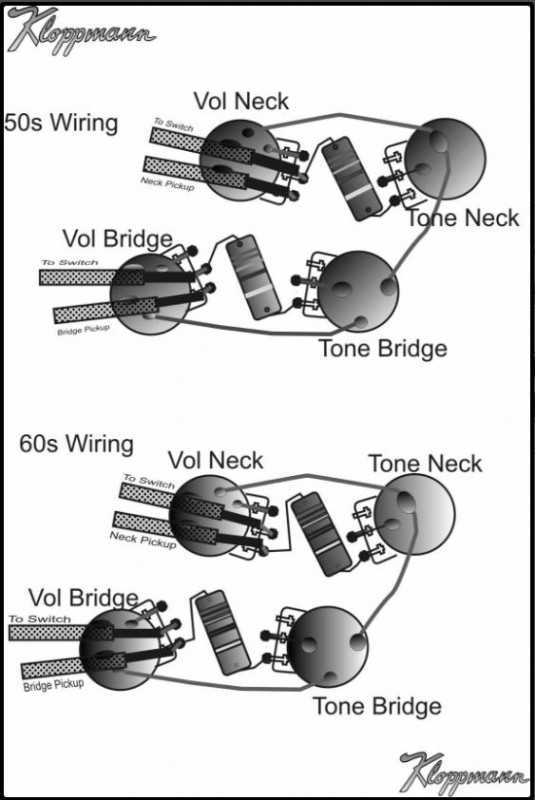
To reconfigure your guitar using the classic circuit setup, start by carefully removing the current electronics from the body. You will need to access the pots, capacitors, and pickups to rewire them according to this method. Make sure to take notes or photos of the existing configuration to avoid confusion during the reassembly.
Step 1: Begin by disconnecting the tone and volume pots from the pickups. You will then need to wire each pickup directly to a volume pot and connect the output of the volume pot to the output jack. This allows the volume controls to affect only the signal from each pickup.
Wiring the Tone Controls
Step 2: Connect the tone pots to the volume pots. The center lug of the tone pot should be soldered to the output of the corresponding volume pot. Then, connect the other lugs of the tone pot to the capacitors that will filter the high frequencies. This setup allows for more precise control over the tonal quality of your signal.
Finalizing the Circuit
Step 3: Attach the capacitors to the tone controls. The value of the capacitor will determine how quickly the treble frequencies are rolled off as you adjust the tone control. Use a 0.022µF capacitor for a more traditional, smooth tone roll-off.
- Ensure that the ground wire from the pickups is properly connected to the metal casing of the pots to avoid hum or unwanted noise.
- Double-check all soldering points to ensure there are no cold joints or short circuits that could disrupt the signal flow.
Step 4: Once all connections are made, carefully test the circuit with your guitar’s electronics before reassembling the guitar. Play through your amp to check the tonal differences. You should notice a more responsive and clearer control over the tone and volume.
After the circuit is confirmed to be working properly, reassemble the guitar, and adjust the pots to your preference. This setup offers a noticeable improvement in tone clarity and provides a more consistent sound across different volume levels.