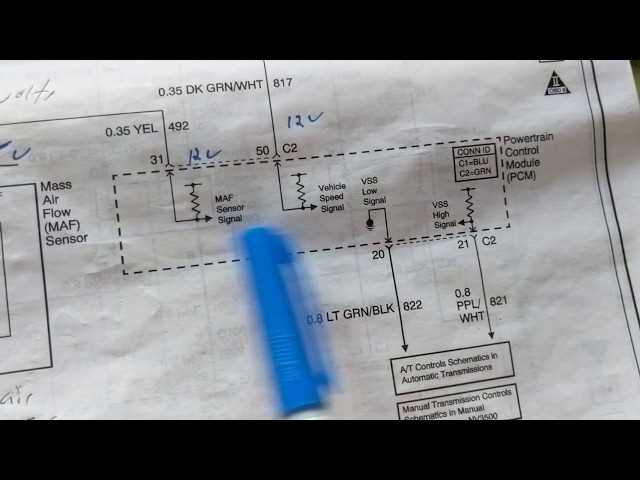
If your engine is experiencing rough idling or poor acceleration, it could be due to a malfunction in the airflow measurement system. A common cause of these issues lies in the connections related to the mass airflow sensor. Understanding how to properly identify and repair these electrical connections can save time and money. Start by locating the sensor and checking for any visible damage to the connectors or wires.
Next, use a multimeter to test the continuity of the wires connected to the sensor. A broken wire or faulty connector may cause inconsistent readings, leading to incorrect air-fuel mixture ratios. If the sensor is receiving no power or the ground connection is weak, these problems can often be traced back to issues in the vehicle’s main electrical system.
If you’ve ruled out wiring damage, the next step is to test the sensor’s output. Many models provide a voltage signal that can be checked with a multimeter to confirm whether the sensor is functioning within specified parameters. If the output is outside the normal range, the sensor may need to be replaced. Regular inspection of the connections and wires associated with the sensor can prevent these issues from becoming more serious over time.
Understanding the Electrical Connections for the Mass Airflow Sensor
When working with a vehicle’s air intake system, it’s crucial to verify the electrical connections for the sensor that monitors air flow. Check the sensor’s power and ground pins first. Ensure there are no breaks or corrosion that might cause unreliable data being sent to the engine control unit (ECU). A faulty connection here can lead to improper fuel delivery and affect the engine’s overall performance.
The sensor’s signal wire transmits data about air intake volume. If this wire is loose or has a poor connection, you may notice erratic engine behavior or error codes related to air-fuel mixture. Use a multimeter to test the continuity of the signal wire and check that the voltage range falls within the specified limits. If the signal is not within range, it may indicate a wiring issue or sensor failure.
In many cases, issues related to the sensor’s output can be traced back to a faulty connector. Inspect the connector closely for dirt, corrosion, or any damage. Cleaning the connector can often resolve minor issues, but if there is physical damage, it may need to be replaced entirely. Always confirm that the connector is securely fastened to avoid intermittent contact.
If your vehicle is still exhibiting problems after inspecting the connections, it may be necessary to replace the sensor itself. Over time, sensors can degrade and fail to send accurate information. Before replacing the unit, ensure that all related wiring is intact and properly routed to avoid unnecessary parts replacement and potential future failures.
How to Identify MAF Sensor Wiring Connections
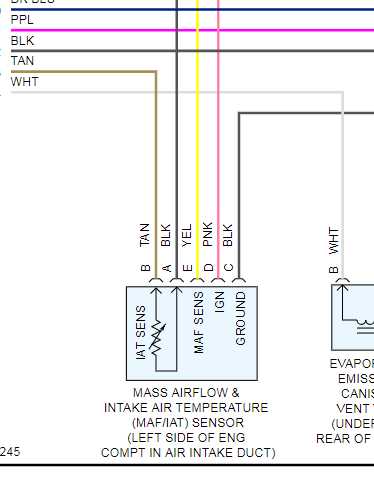
Start by locating the sensor in your vehicle’s intake system. It is usually positioned between the air filter and throttle body. Once you’ve identified the sensor, carefully inspect the electrical connectors attached to it. Look for any visible damage such as frayed or broken wires. If the wires appear intact, the next step is to check the connector for dirt, corrosion, or any signs of wear.
To identify the specific pinout for the sensor, refer to the vehicle’s service manual or a wiring reference guide. This will provide the exact location of the power, ground, and signal pins. You can then use a multimeter to test for voltage on the power pin and continuity on the ground pin. If these pins show no power or grounding issues, the signal pin should be tested to confirm it is delivering a proper output.
Use a multimeter to check the sensor’s signal wire for voltage. With the engine running, measure the voltage drop on the signal wire while observing the readings. The voltage should fluctuate within a specified range. If the voltage is static or out of range, it indicates a problem with the connection or the sensor itself.
Finally, after testing the electrical connections, ensure that the wiring is securely fastened. Loose connections can lead to intermittent issues that are difficult to diagnose. If all connections are intact and voltage is within specifications, but issues persist, the problem may lie within the sensor or related control systems.