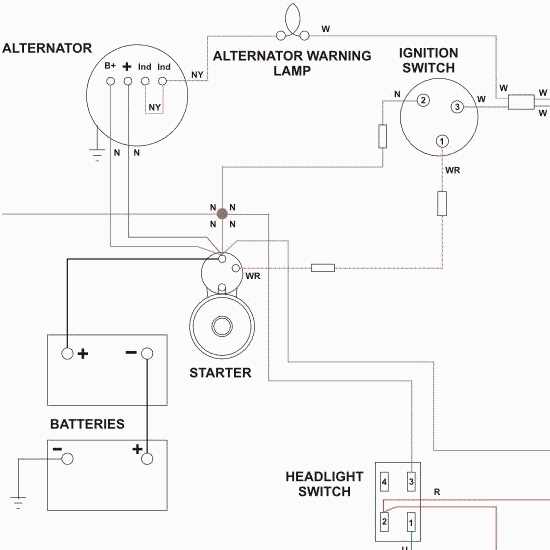
To properly connect the starting system, first ensure you have a clear understanding of the key components. The main elements are the battery, solenoid, relay, and the wiring between them. Start by connecting the positive terminal of the battery to the solenoid’s input. The solenoid, when activated, sends power to the starter, engaging it to turn the engine. Ensure all connections are tight and free from corrosion to avoid system failure.
The next step is to connect the relay to the ignition switch. This switch should control the flow of current to the solenoid, completing the circuit when turned on. Use appropriate gauge wires to handle the current load, as undersized wires can cause overheating and potential damage. Double-check each connection for accuracy before powering the system to avoid short circuits or malfunctions.
Wiring a Starting System Correctly
To begin, connect the positive terminal of the battery to the main input of the relay or solenoid. This is the first step in creating a functional electrical loop that allows your engine to start. Always check the battery voltage before proceeding; a weak or damaged battery can affect the entire system’s performance.
The next component to focus on is the ignition switch. This switch is responsible for activating the circuit and sending power to the relay when the key is turned. Make sure the switch is properly connected to the vehicle’s electrical system and that the wires are in good condition to handle the current flow. A damaged ignition switch can prevent the starting process from beginning correctly.
Connecting the Relay and Solenoid
The relay works as a switch that allows current to flow to the solenoid when the ignition is turned on. It needs to be wired from the ignition switch to the solenoid, which activates the gear mechanism to engage the engine flywheel. Incorrect wiring of the relay can result in no power being sent to the solenoid, causing failure to start the engine.
The solenoid itself has two terminals: the large terminal connected to the battery’s positive terminal, and the small terminal that connects to the relay. Proper connection between these terminals ensures that the solenoid gets enough current to engage the starter motor. Always ensure the wire gauge is adequate to prevent overheating or short circuits.
Connecting the Engine’s Starting Gear
The starter gear must be attached to the solenoid. The solenoid sends power to the starter motor, which engages the flywheel and begins turning the engine. If the starter gear is improperly connected or worn out, it can prevent the engine from starting, leading to costly repairs.
Additionally, the ground connection from the engine must be secured to the battery’s negative terminal. If this connection is weak or disconnected, the starting system will fail to complete the electrical circuit, preventing the system from working altogether.
Once all connections are properly made, it’s important to double-check for any loose wires or exposed connections that could lead to short circuits. Electrical insulation should be intact, and all terminals must be tightened securely to ensure a stable connection during operation.
Before testing the system, verify that the key turns smoothly and that there is no resistance. A poorly functioning key switch or jammed solenoid could hinder the starting process. Once everything is connected and inspected, turn the ignition key and observe whether the engine engages correctly.
Understanding the Key Components of a Starting System
The core components of the system include the power source (typically the battery), the solenoid, the ignition switch, and the relay. The battery provides the necessary power to activate the system. The solenoid acts as a high-current switch, which engages the engine by sending power to the starting gear. The ignition switch is responsible for triggering the process when the key is turned, while the relay ensures that the power is distributed correctly from the ignition to the solenoid and starter gear.
Each of these parts plays a specific role: the ignition switch closes the electrical loop to send power, the relay handles the current flow to the solenoid, and the solenoid delivers the necessary force to turn the engine’s flywheel. It’s important to check the health of each component regularly, as failure in one can prevent the entire starting system from working. Make sure all connections are secure and free from corrosion to maintain system performance.